Contents
1. What Amber Warning Light Is Designed to Do
2. Visibility, Contrast and Its Limits
3. Choosing Applications by Risk
4. A Buyer Specification Checklist
5. Installation and Control Trade-offs
1. What Amber Warning Light Is Designed to Do
Amber lighting is not a universal replacement for white task lighting, red stop signals or emergency colours defined by local rules. Its practical role is to attract attention and communicate caution. That makes amber warning lights relevant to maintenance vehicles, slow-moving equipment, loading areas, construction interfaces and selected smart-city signals.
The buying decision should begin with the hazard, not the colour. Ask who must see the signal, from which direction, at what speed, and under which ambient-light conditions. A beacon that is conspicuous at night can be lost against a bright daytime background; an overly intense unit can create glare at close range. Colour, intensity, flash pattern and mounting position work together.

2. Visibility, Contrast and Its Limits
Amber sits between yellow and orange in the visible spectrum. In warning applications, its value comes from established colour conventions and contrast with many road and worksite backgrounds. The frequently repeated claim that amber automatically “cuts through” fog is too broad. Rain, fog and dust reduce visibility for all light colours; beam distribution, luminous intensity, lens cleanliness, background luminance and observer distance still control the result.
For road-going and service vehicles, the applicable jurisdiction matters more than a generic product claim. In the United States, NHTSA describes flashing amber lamps as warning equipment typically fitted to slow-moving and utility vehicles, while SAE J595 addresses flashing warning lamps for authorised emergency, maintenance and service use. A buyer should confirm local vehicle, worksite and airport rules before selecting colour or flash mode.

3. Choosing Applications by Risk
Amber LEDs can be useful in several environments, but each needs a different optical and mechanical brief. A warehouse aisle may need a clear warning at a forklift crossing. A construction machine needs a robust, weather-resistant beacon visible around its working envelope. An airport, highway or public-road installation may be controlled by standards that prescribe colour, photometry and placement.
| Application | Primary need | Key check |
|---|---|---|
| Service vehicle | All-round conspicuity | Legal colour, flash pattern and mounting angles |
| Warehouse crossing | Local hazard recognition | Glare, sightlines and equipment movement paths |
| Outdoor worksite | Durability and detection | Ingress protection, vibration and corrosion exposure |

4. A Buyer Specification Checklist
A useful RFQ for amber LED lights should identify the required function rather than simply request an “amber lamp.” Compare the following with the supplier’s data sheet and the governing rule for the site:
Required colour and whether the unit is steady-burning, flashing or strobing.
Photometric coverage, viewing distance and any required warning-lamp standard.
Input voltage, cable length, connector type and control interface.
Ingress protection, operating temperature, vibration and corrosion requirements.
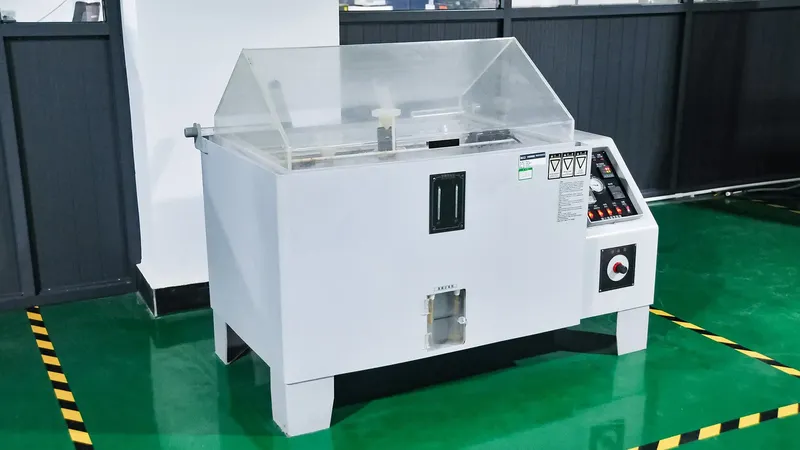
Outdoor reliability is not established by an IP rating alone. Coastal or industrial sites may need a more specific housing, finish and maintenance plan. CPS Lighting’s overview of luminaire salt-spray testing explains why corrosion exposure, seals and mounting hardware need separate attention.
5. Installation and Control Trade-offs
The optical result is only one part of the installation. Raising a beacon can improve its visibility above obstacles, but it may increase cable length, vibration and maintenance difficulty. Adding more units can reduce blind areas, but uncontrolled overlap can produce distraction or glare. Before handover, check the warning device from representative approach routes, not only directly in front of the installation.
Connected controls can schedule or monitor outdoor lighting, but safety signals must remain predictable. Define normal, alarm, maintenance and emergency states, then test the controller’s response to communications or power loss. For adjacent area lighting, a BUG rating review can help limit unnecessary backlight, uplight and glare.

6. CPS Smart-Outdoor Reference
Amber warning fixtures are only one element in a wider outdoor control strategy. CPS Lighting’s Hangzhou Asian Games smart-pole project documents 400 integrated poles around the venues, combining lighting, monitoring and multi-scene management. It is not an amber-warning project, but it illustrates the value of defining lighting and monitoring functions as one managed system.
For product selection, start with the relevant CPS Lighting product range, then validate the proposed optical distribution, environmental protection and control arrangement against the project’s actual risk assessment.
7. Technical Sources
NHTSA: interpretation of flashing amber warning lights.
SAE International: SAE J595 flashing warning lamps.
Core Keywords:
amber lights, amber warning lights, amber LED lights, vehicle warning lights, construction safety lighting, outdoor warning lighting, industrial safety lights