Contents
1. Start with the Solar Lighting Application
2. Compare Ten Suppliers by Their Current Offering
3. Choose Integrated or Separate-Panel Systems
4. Check the Daily Energy Budget
5. Connect Product Data to Useful Illumination
6. Verify Certificates, Delivery and Service Responsibilities
1. Start with the Solar Lighting Application
Solar light manufacturers in China supply everything from small garden lights to pole-mounted systems for roads and public spaces. A useful shortlist should help contractors, importers and municipal buyers compare the right configuration. The ten companies below are purchasing candidates, not a tested ranking of quality or market share.
Define the site, required illumination, mounting constraints and operating schedule before requesting prices. Solar lighting combines a photovoltaic panel, battery, controller and LED luminaire. A competitive fixture price is meaningful only when that complete system supports the intended duty and maintenance plan.

2. Compare Ten Suppliers by Their Current Offering
The original list mixes specialist solar suppliers with broader lighting manufacturers. Retain that distinction when requesting samples. The table summarises publicly described product categories; it does not establish that every model meets a particular tender, certification scheme or environmental condition.
| Supplier | Relevant published offering | Question for the quotation |
|---|---|---|
| Vorlane | All-in-one solar street lights | Which exact solar configuration is offered? |
| CPS Lighting | Solar, road, flood and sports lighting | Which solar model matches the site? |
| Entelechy Energy | Integrated and split solar street lights | Who supplies local spares and service? |
| SOKOYO | All-in-one, all-in-two and split systems | Which layout suits panel exposure? |
| Hongzhun | Solar street lights and solar floodlights | Are actual input and battery data documented? |
| Betterled | LED lighting with solar street-light ranges | Which configuration has complete reports? |
| Leadsun | Off-grid street and pathway systems | What schedule and control options apply? |
| HeiSolar | Solar street, area and flood lighting | Can the panel and light aim independently? |
| SRESKY | Solar street, garden and wall lighting | Is the product designed for the intended duty? |
| Kingsun | Broader public lighting with solar offerings | Confirm the legal entity and exact model |
On smaller screens, swipe within the table to view all columns.
Compare the contracting company, manufacturing scope and after-sales route alongside the brand. Founding dates, factory size and patent totals are not substitutes for documented product performance. For project work, use a consistent solar-lighting specification brief across all bids.


3. Choose Integrated or Separate-Panel Systems
An all-in-one solar street light combines major components into one assembly. It can simplify mounting and cabling, but panel orientation, battery space and servicing access remain constraints. A split system can place the panel for better solar exposure while aiming the luminaire toward the required surface.
That flexibility adds brackets, connections and installation work. Confirm foundation loading, panel wind exposure, protected wiring and safe maintenance access. Ask suppliers to explain why their proposed configuration suits the site; a larger panel or battery is not automatically easier to install or maintain.


4. Check the Daily Energy Budget
Compare energy in watt-hours (Wh), rather than battery amp-hours alone. As an illustrative calculation, a nominal 12.8 V, 30 Ah battery stores 384 Wh. At an assumed 80% usable fraction, it provides 307.2 Wh before subsequent delivery losses and auxiliary consumption. This is not a recommended discharge setting or a product rating.
| Hypothetical nightly LED schedule | LED energy demand | Idealised reserve from 307.2 Wh |
|---|---|---|
| 30 W for 12 h | 360 Wh | 0.85 nights |
| 30 W for 4 h, then 10 W for 8 h | 200 Wh | 1.54 nights |
On smaller screens, swipe within the table to view all columns.
The second schedule uses less energy but delivers a different lighting profile. Daily charging must replenish consumption; repeated cloudy-day deficits reduce reserve. A hypothetical 80 W panel at 4 peak sun hours and a 0.75 delivery factor supplies 240 Wh daily. Verify local design-season irradiation, temperature effects and actual losses before making a night-time runtime commitment.


5. Connect Product Data to Useful Illumination
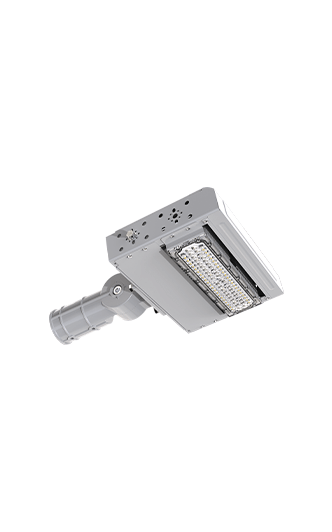
The Hulk-E-3rd range lists 5,000–18,000 lm options and programmable lighting periods. The Sunflower solar range lists 1,000–4,000 lm options with microwave sensing. These ranges help shortlist equipment; they do not determine pole spacing or prove year-round autonomy.
Request the exact model’s photometric file, controller schedule, panel rating and usable battery specification. Lumens describe emitted light; lux describes illumination reaching a surface. Model the actual layout for maintained illumination, uniformity, glare and spill. A claimed wattage or LED-chip brand cannot establish that result.

6. Verify Certificates, Delivery and Service Responsibilities
Request test documentation matching the quoted model and destination market. An enclosure IP rating addresses ingress protection, not every corrosion, surge or battery-temperature risk. For lithium batteries, request applicable transport documentation and clarify replacement arrangements. Avoid assuming a certificate shown for one product covers the entire catalogue.
Separate supply, installation guidance, commissioning and warranty responsibilities in writing. Compare lead time, sample approval, spare-part availability and service access as well as price. Solar-versus-grid trade-offs also matter when an existing electrical supply is available or reliable solar exposure is limited.

7. Use Relevant Project Evidence
Ask for a comparable project with its location, configuration, schedule and measurement conditions. CPS Lighting’s Hangzhou Asian Games smart-pole project describes remote dimming and unified device management. It illustrates control integration, not solar autonomy, battery endurance or an independently measured energy-saving percentage.
For a solar proposal, agree how installation and commissioning will be assessed. Record panel orientation, programmed periods, charging status and measured lighting performance. Check representative operating conditions rather than accepting one bright demonstration after a sunny day. This gives buyers a clearer basis for comparing suppliers and handling later service questions.
8. Technical and Supplier Sources
Supplier websites describe their own portfolios; they do not establish an independent ranking. Confirm current model documentation and local requirements before placing an order.
1. U.S. Department of Energy: photovoltaic system design basics
2. Vorlane: all-in-one solar street lights
3. Entelechy Energy: company and product scope
4. SOKOYO: system configurations
5. Hongzhun: solar product portfolio
6. Betterled: lighting and solar ranges
7. Leadsun: off-grid lighting systems
8. HeiSolar: solar-lighting categories
Core Keywords:
solar light manufacturers in China, solar street light suppliers, commercial solar lighting, OEM solar lights, solar lighting energy budget, solar light procurement