LED lighting retrofit for one hall and several sports
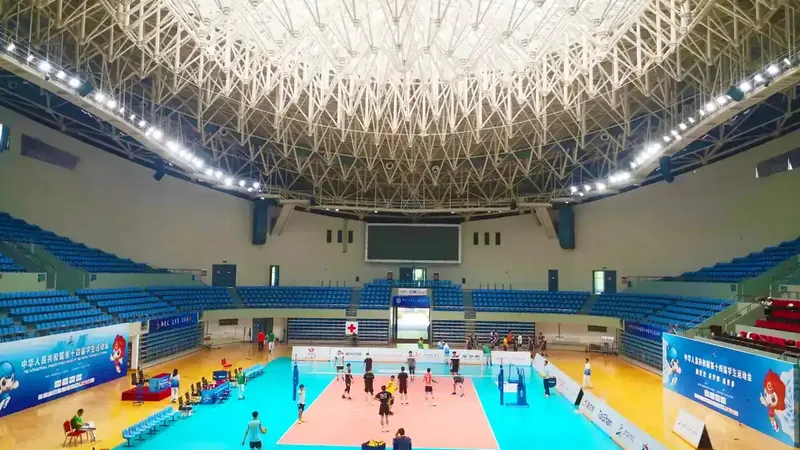
CPS Lighting designs and supplies multi-sport gymnasium lighting systems. At Yunhe County Gymnasium in Lishui, Zhejiang, the retrofit replaced an older metal-halide arrangement with LED sports luminaires and selectable lighting scenes for basketball, volleyball and badminton.
The project account lists 48 units of 300W and 20 units of 120W, with an average field illuminance of 1006 lx reported in the CPS summary. For a similar hall, start with a free DIALux lighting simulation based on your court layout and mounting positions.
68 LED fixtures
Two rated-power groups
48 × 300W and 20 × 120W in the CPS record.
1006 lx
Reported average field illuminance
Project value, not a universal target for every sport.
48 m × 32 m
Multi-sport inner field
Venue dimensions supplied in the project account.
1. A county gymnasium with a multi-sport brief
Yunhe County Gymnasium serves county-level competitions and public fitness. The supplied record gives a site area of 19,607 m², a building area of 12,320 m² and 2,021 spectator seats. These are venue-scale figures, not the dimensions of a single basketball court.
The earlier lighting was described as scattered across the roof, with uneven brightness and limited control. The replacement brief combined a Class III competition objective with training and recreational use. For an operator, that means a useful match scene without running the same output for every booking.
2. Reported lighting results and fixture power
CPS describes third-party photometric testing and publishes the following summary. The values are retained as reported project results; the complete signed test report, measurement grid and uniformity definitions are not included in the supplied material.
| Parameter | Original system | LED retrofit record |
|---|---|---|
| Average field illuminance | Insufficient; no numerical baseline | 1006 lx |
| Illuminance uniformity | Uneven; no numerical baseline | U1 = 0.60; U2 = 0.78 |
| Fixture configuration | Metal-halide system; quantity not given | 48 × 300W + 20 × 120W |
| Rated fixture power (calculated) | Not established | 16.8 kW |
| Lighting operation | Single control mode described | Selectable lighting scenes |
On smaller screens, swipe the table to see all columns.
The listed powers total 48 × 300W + 20 × 120W = 16.8 kW at their rated values. That is not a measured electricity bill. Without the old system’s power and a comparable operating schedule, a project-specific saving percentage cannot be calculated.
The Class III description belongs to this CPS project brief under JGJ 153; it is not FIFA or FIBA approval. Competition requirements must be agreed for the actual sport and event. A bright photograph alone cannot establish uniformity, flicker performance or compliance.
3. Upper-side lighting for different player sightlines
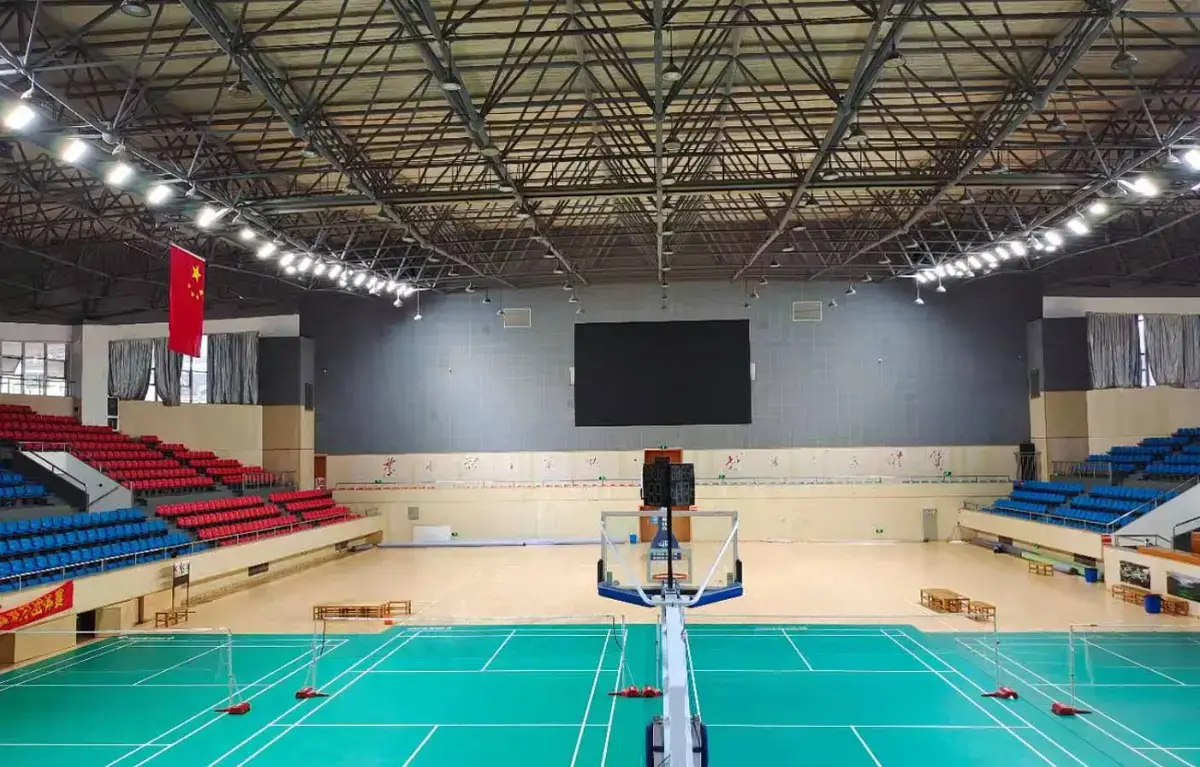
The project account describes lighting positions along the upper sides of the venue rather than a scattered central-roof arrangement. The supplied roof photograph shows rows around the perimeter and makes the mounting approach easy to understand.

Side placement can help keep bright sources away from some upward sightlines, but the result depends on height, beam distribution and aiming. Basketball shooting positions and badminton shuttle tracking create different viewing directions. Review both before treating one layout as suitable for the whole hall.
The FIBA Venue Guide discusses player glare, floor reflections and the need for specialist lighting design. It is a useful basketball reference, not evidence that this county gymnasium or its fixtures have FIBA approval.
4. The supplied fixtures and new-project options
The historical supply is identified by quantity and wattage: 48 × 300W and 20 × 120W LED sports fixtures. The original material does not establish complete model codes or allocate the two groups to specific zones, so the proposal should confirm both rather than infer them from the photographs.
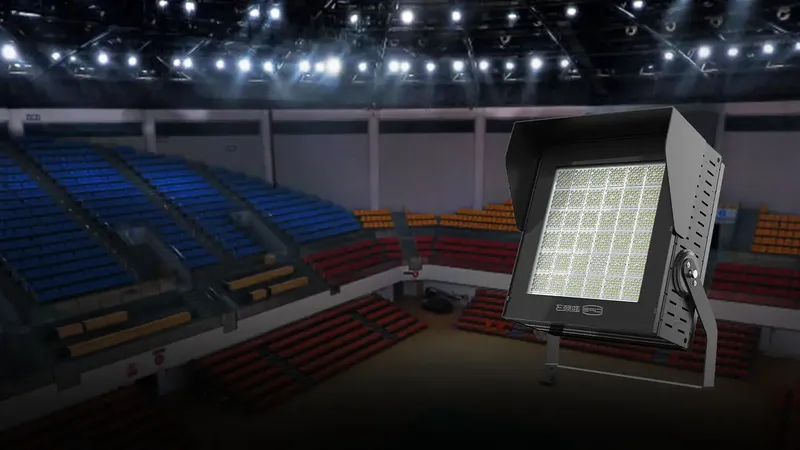
For a new project, the current Dubhe 300W floodlight and SD2D range, including a 120W option provide catalogue starting points. They are shown below as new-project references, not identified as the historical units installed at Yunhe.

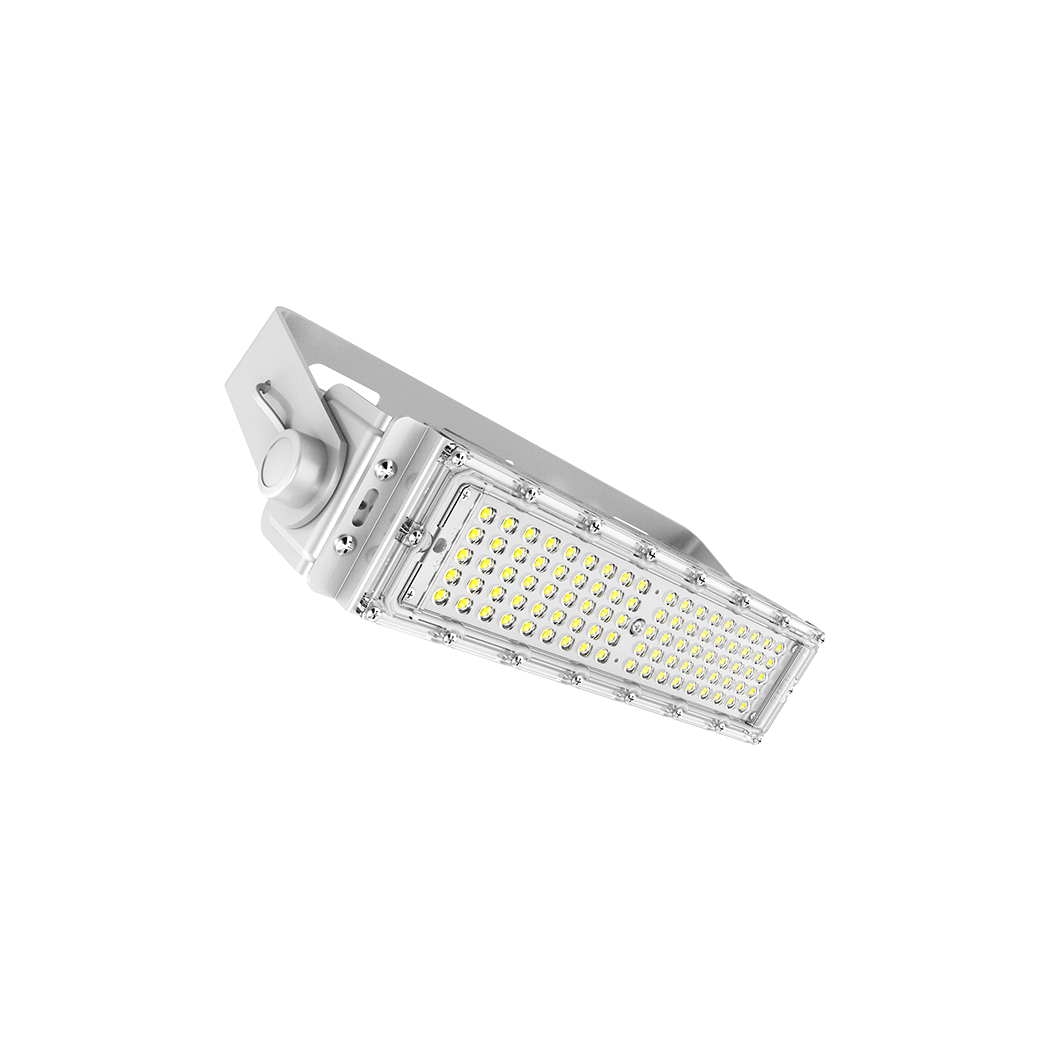
Choose the final model by the calculated distribution, mounting arrangement and verified dimming compatibility, not wattage alone. Request the proposed photometric file and relevant test data through the CPS lighting laboratory.
5. Scene control and CPS project support
The on-site touchscreen is a practical part of this retrofit. The photographed interface shows selectable scenes, including a full-brightness mode, while the narrative describes recreational and competition settings. The exact output assigned to each scene is not published.
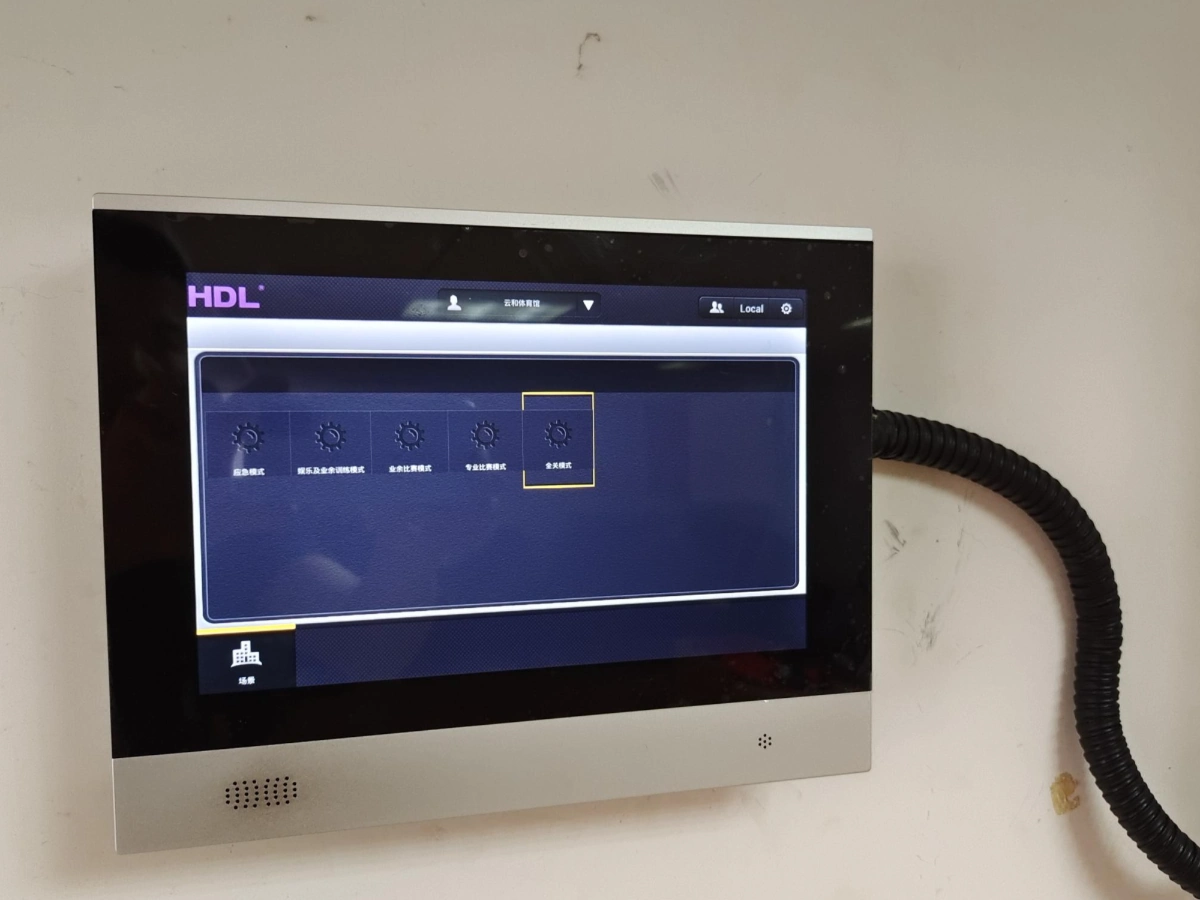
A stored scene should correspond to a tested lighting condition, not merely a button name. At handover, check each sports mode, document the circuit groups and confirm manual operation. An “emergency” label on a screen does not by itself demonstrate compliant emergency lighting or backup power.
CPS’s company profile and OEM/ODM services give buyers a starting point for design and manufacturing discussions. Agree the luminaire supply, control integration, commissioning support, warranty and local installation responsibilities in the quotation.
6. Start with your gymnasium layout
Planning a gymnasium LED lighting retrofit for several sports? Send CPS the hall dimensions, court markings, roof or mounting drawings, existing fixture schedule and your expected competition level.
Request a free DIALux lighting simulation and a fixture proposal for your sports and operating scenes. Include spectator areas and any broadcasting plans so the design brief reflects the whole venue, not just a headline lux figure.
Email: info-cps@cps-lighting.com