Indoor Pool Lighting designed around Visibility and Reflection
CPS Lighting designs and supplies indoor swimming pool lighting systems. At Tianjin University’s Beiyangyuan Campus, the retrofit addressed low brightness and glare around a 50 m, 10-lane pool used for teaching, training and amateur events.
The CPS record lists 18 replacement 300W TL-series LED fixtures in a two-sided wall-mounted layout. For your own natatorium, CPS offers free DIALux lighting simulation to review coverage and fixture positions before selection.
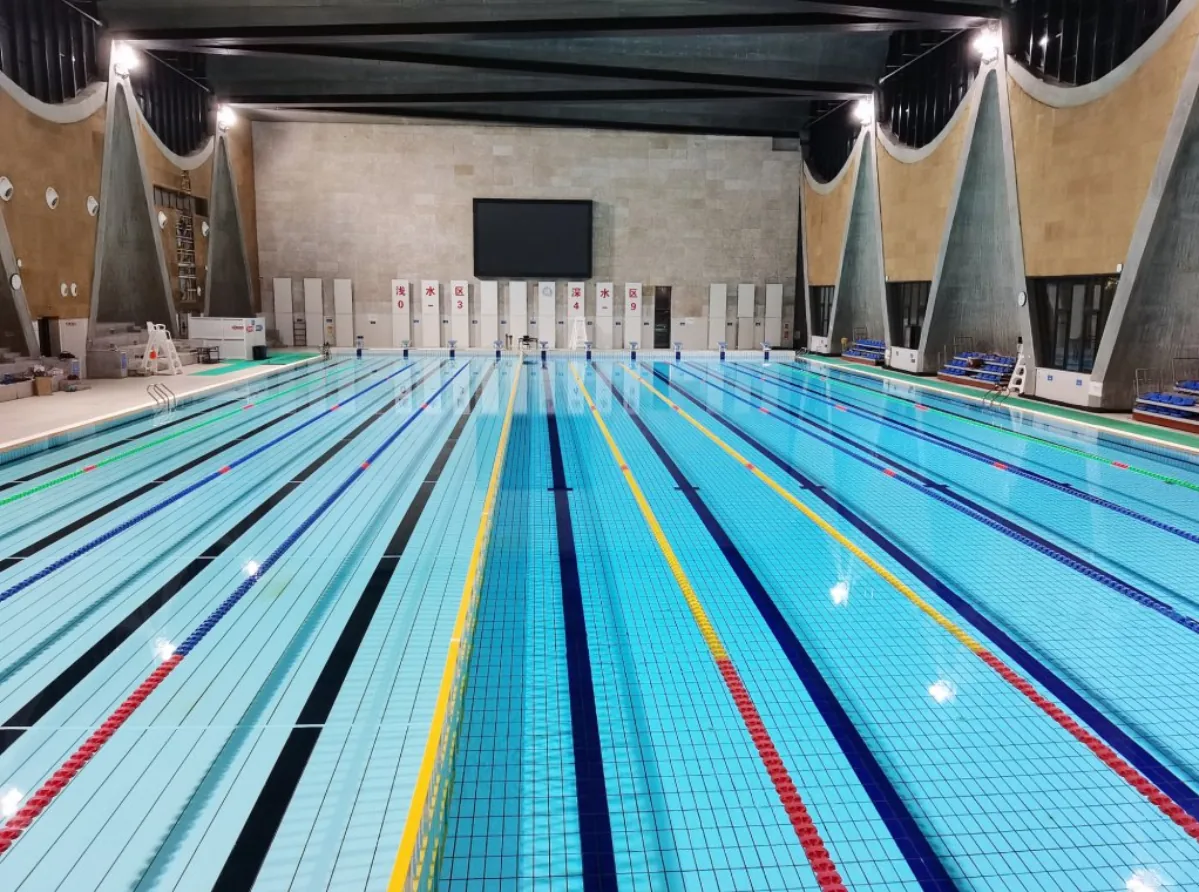
50 m
10-lane swimming pool
Pool scale reported in the CPS case.
18 × 300W
Replacement lighting scheme
5.4 kW of calculated rated fixture power.
≥300 lx
Reported average illuminance
Value listed in the CPS performance summary.
1. A campus pool with a visibility problem
The Beiyangyuan Campus natatorium is an indoor swimming facility with approximately 3,000 m² listed in the project record. That is a facility-area figure, not the water surface area alone. The original system was described as having average illuminance below 100 lx, poor colour rendition and distracting glare.
Pool lighting has a different viewing problem from a dry sports court. Water can reflect a bright source towards a swimmer or a person on the deck. Increasing light output without reviewing its direction may brighten the hall while leaving troublesome reflections in important sightlines.
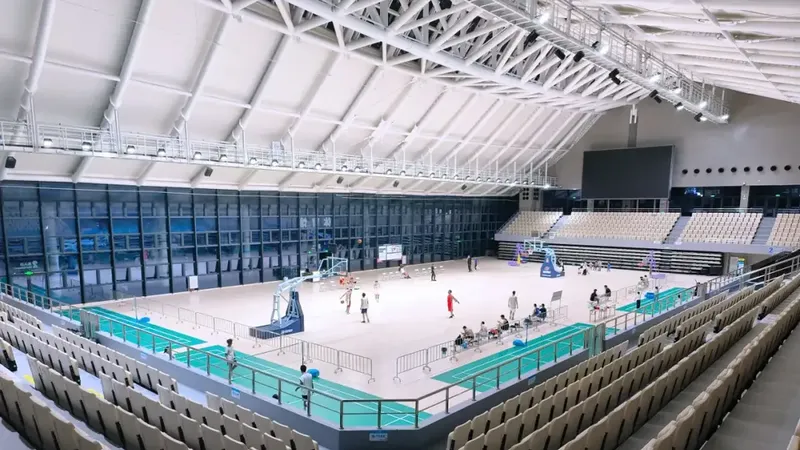
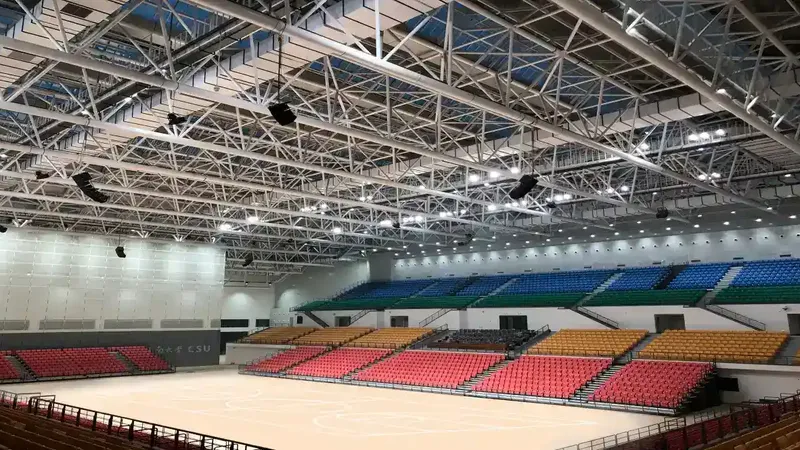
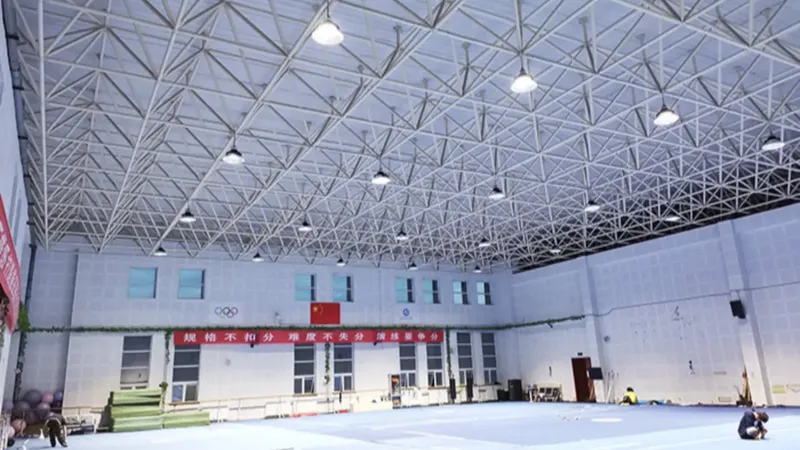
The aim was therefore a more useful distribution across the pool and surrounding deck, not simply more lamps. The supplied photographs show both the lane arrangement and the high-level lighting positions along the sides of the hall.
2. Reported results and the replacement scheme
The following comparison combines the supplied fixture schedule, original narrative and CPS performance summary. The reported lighting values are retained with their source; they are not presented as an independently verified acceptance report.
| Parameter | Original account | Retrofit account |
|---|---|---|
| Fixture quantity | 27 | 18 |
| Rated fixture configuration | Not specified | 300W TL series |
| Total rated fixture power (calculated) | Not established | 5.4 kW |
| Average illuminance | <100 lx | ≥300 lx |
| Illuminance uniformity | Not reported | ≥0.5 |
Sources: original performance summary and original fixture schedule. The uniformity ratio, measurement grid and test date are not specified.
The replacement uses nine fewer luminaires, a one-third reduction in fixture count. Its rated total is 18 × 300W = 5.4 kW. Because the old lamps’ ratings are missing, that count reduction cannot be converted into a defensible electricity-saving percentage.
CPS identifies a JGJ 153-2016 Grade II brief for training and amateur competition. This is not a claim of international-event certification. For sanctioned events, consult the World Aquatics facilities and certification requirements separately and agree the relevant lighting criteria before design.
3. Side-wall lighting and water reflections
The original schedule specifies mounting along both side walls. This can direct light towards the lanes while keeping access closer to the pool perimeter, subject to the actual mounting and maintenance arrangement. The beam angles and aiming still need to suit the hall geometry.

Reflection control depends on the relationship between the luminaire, water surface and observer. Check the pool from the intended supervision positions, with realistic water movement and daylight conditions. A calculation of average lux alone does not prove that the pool bottom will remain visible from every position.
The UK Health and Safety Executive’s pool-management guidance identifies inappropriate illumination, glare and reflection as factors affecting supervision. It is a useful operational reference, not a replacement for the applicable local requirements or a site-specific risk assessment.
4. Fixtures for a humid pool environment
The project record identifies 18 300W TL-series LED lamps, without a complete model code. For a new installation, ask CPS to specify the proposed model and its suitability for your pool environment in the quotation.
The current Dubhe 300W modular floodlight and Polaris TS-BJX floodlight family below are starting points for discussing a new proposal, not confirmed chlorine-resistant replacements for this pool. CPS should confirm the selected optics, housing, driver and mounting materials for the actual pool environment.


Catalogue images are not the historical TL model or evidence of pool suitability. Display sizes are not physical-scale comparisons.
An IP rating describes enclosure ingress protection; it does not alone demonstrate long-term resistance to pool chemicals. Review coatings, seals, fasteners and cable entries separately. The IEC’s water-sports lighting guidance discusses both ingress protection and the need to protect indoor-pool equipment from chlorine exposure.
5. What CPS brings to the project
CPS’s source account covers lighting calculations, layout design, luminaire supply and commissioning support. Buyers can review its company and manufacturing profile and lighting testing laboratory, then request documentation for the proposed model and pool conditions.
For customization, discuss the OEM/ODM capabilities and agree the supply scope, warranty, maintenance access and installation responsibilities. Electrical and mounting work around water should be reviewed by qualified local designers and installers under applicable requirements.
At handover, retain the approved layout, aiming information and measurement records, and review visibility with the pool operator. The original Tianjin University pool lighting case video is preserved as an additional project reference link.
6. Start with your indoor pool layout
Planning an indoor swimming pool LED lighting retrofit? Send CPS the pool and hall dimensions, lane layout, mounting heights, surrounding windows, current fixture information and intended use.
Request a free DIALux lighting simulation to discuss coverage and product options. Include supervision positions, operating hours and known humidity or chemical-exposure conditions so the proposal reflects the actual pool rather than a generic floodlight installation.
Email: info-cps@cps-lighting.com