Table Tennis Hall Lighting for Training and Competition
CPS Lighting designs and supplies indoor table tennis lighting systems. This case covers a retrofit at No. 4 Hall of Dalian University Table Tennis Vocational School, where the original metal halide arrangement created glare, uneven light and a high operating load.
The project record lists 108 replacement 200W LED fixtures and improved lighting values. For your own training hall, CPS offers free DIALux lighting simulation to review table positions, lighting coverage and product selection.

No. 4
Hall identified in the case
Part of the school’s wider training facilities.
108 × 200W
Reported replacement scheme
21.6 kW of calculated rated fixture power.
≥1,800 lx
Reported horizontal average
Value reproduced from the CPS project summary.
1. A table tennis hall within a larger training complex
The CPS account describes a school training complex with four halls, 100 table tennis tables and approximately 6,042 m² of training space. Those are wider-facility figures, not a confirmed area or table count for No. 4 Hall alone.
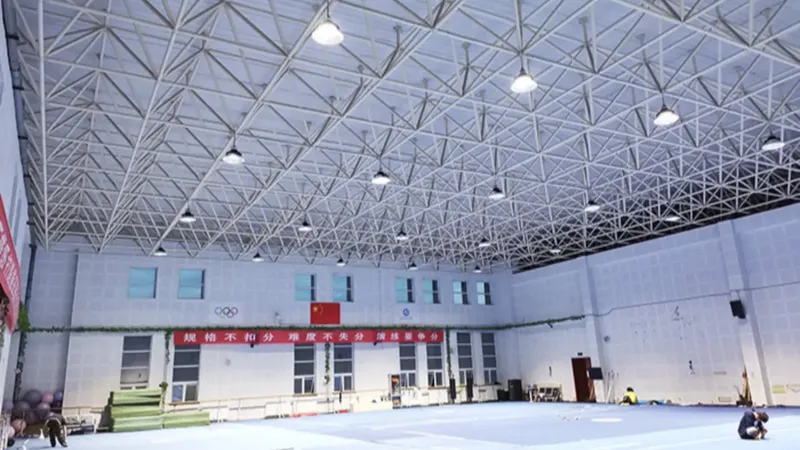
The original lamps were installed obliquely from both sides. The renovation moved towards a distributed overhead arrangement. For table tennis, useful light must cover the table and the space in which the ball travels, while limiting distracting sources in players’ forward and upward sightlines.
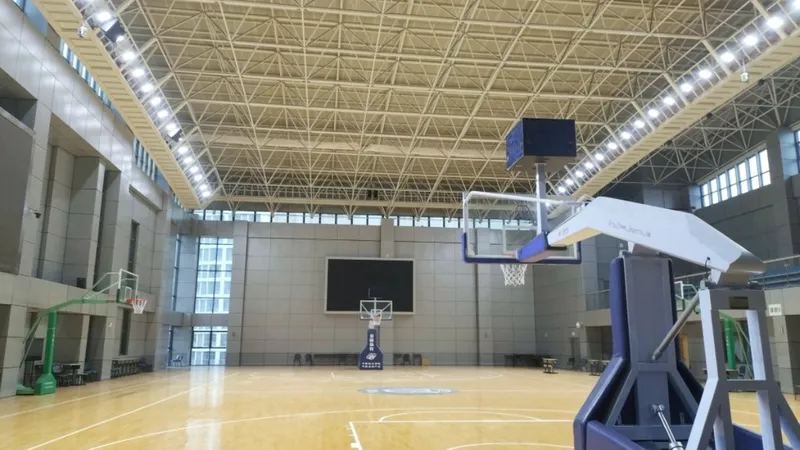
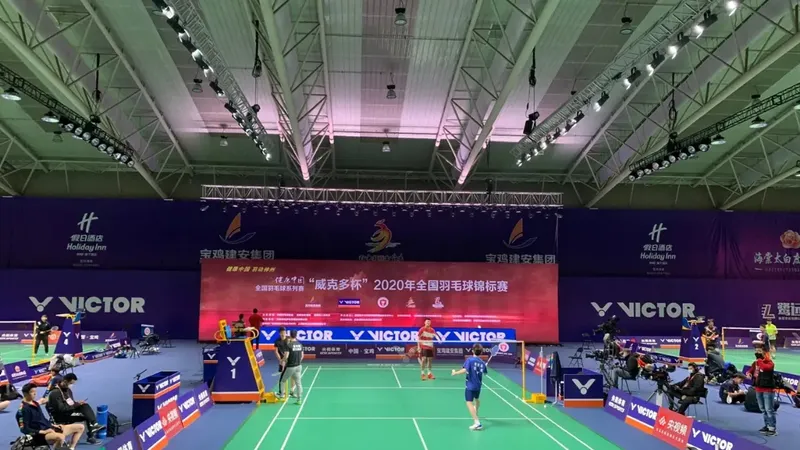
The supplied photographs show table positions, barriers and the steel roof structure. This gives buyers a view of the installation setting: lighting must work with existing beams, access routes and the final training layout, not just a catalogue wattage.

2. Reported lighting results and connected load
The following values come from the CPS project performance summary. They provide a before-and-after reference, but the source does not include the full measurement grid, test date or the definition used for its uniformity ratio.
| Parameter | Original account | Retrofit account |
|---|---|---|
| Average horizontal illuminance | 210 lx | ≥1,800 lx |
| Illuminance uniformity | Described as uneven | ≥0.6 |
| Glare value, labelled GR | Described as strong glare | <30 |
| Colour rendering index (Ra) | Described as poor | >80 |
Source: original lighting comparison table. “GR” is retained as the source’s label; its assessment method is not provided.
The replacement schedule totals 108 × 200W = 21.6 kW rated fixture power, compared with the source’s stated 48 kW original load. Confirm that both figures cover the same circuits before using them to calculate savings. Actual electricity use also depends on operating hours and dimming.
The case uses a JGJ 153-2016 Grade III brief. For international events, consult the ITTF Statutes and playing-condition requirements separately: their major-event lighting provisions distinguish horizontal and vertical illuminance. The reported horizontal average alone does not establish ITTF approval or broadcast readiness.
3. The 200W scheme and current product options
The historical record specifies 200W CPS LED indoor luminaires, but does not provide an as-built model code. The current CPS case index links to an LED high bay family. A similar shape or matching wattage is not enough to identify the exact original fixture.
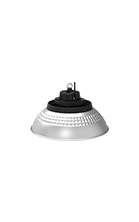
For a new enquiry, the Uranus GK-TWX external-power-supply and Uranus GK-TWX built-in-driver pages provide current catalogue references, including 100W, 150W and 200W configurations. Their optics and driver must still be matched to your table layout and mounting height.

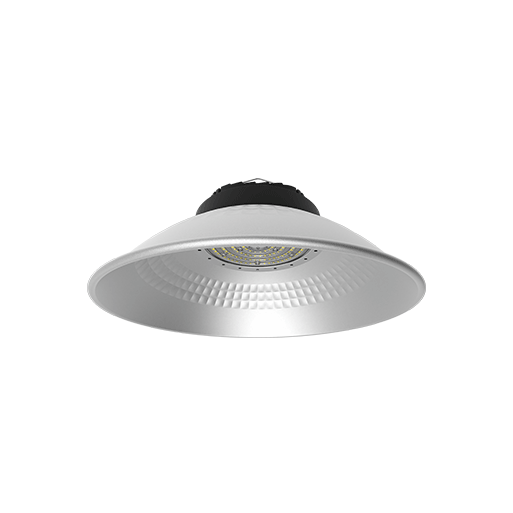
Current catalogue images, not an identification of the historical project model. Display sizes are not physical-scale comparisons.
A table tennis lighting proposal should compare beam distribution and glare from both ends of each table. Confirm colour rendering, dimming compatibility and flicker behaviour for the selected configuration; do not assume every high bay has the same performance.
4. Layout, operating scenes and handover
The source describes centralized lighting control with competition, training and cleaning scenes. For a new project, define which table zones operate independently and what level each scene must provide. A label such as “competition mode” is not proof that a measured lighting target has been reached.
The final layout should be commissioned with the tables and barriers in place. Measure the agreed planes and grid, check visibility from player positions and record the circuit and scene settings. Emergency escape lighting should be specified separately from a dimmed cleaning scene; normal LED dimming does not establish emergency-lighting compliance.


5. What a buyer can verify about CPS
CPS’s project account covers lighting calculations, layout development, product supply and installation support. Buyers can review the company and manufacturing profile and lighting testing laboratory when assessing the supplier, then request photometric files and test documentation for the proposed fixtures.
The OEM/ODM capabilities provide a route to discuss configuration requirements. Confirm the supply scope, warranty, installation responsibilities and after-sales support in the quotation, particularly for an overseas retrofit.
The original Dalian table tennis lighting case video is retained as a project reference. The case evidence should support a venue-specific proposal, not a blanket promise that one wattage or layout will suit every training hall.
6. Start your table tennis lighting proposal
Planning an LED table tennis lighting retrofit? Send CPS a hall plan, table positions, ceiling and fixture mounting heights, existing lamp information and the intended training or competition level.
Request a free DIALux lighting simulation to review coverage and fixture options. Include operating hours, control zones and any camera requirements so the proposal can address player visibility and running cost together.
Email: info-cps@cps-lighting.com