1. CCT Describes Appearance
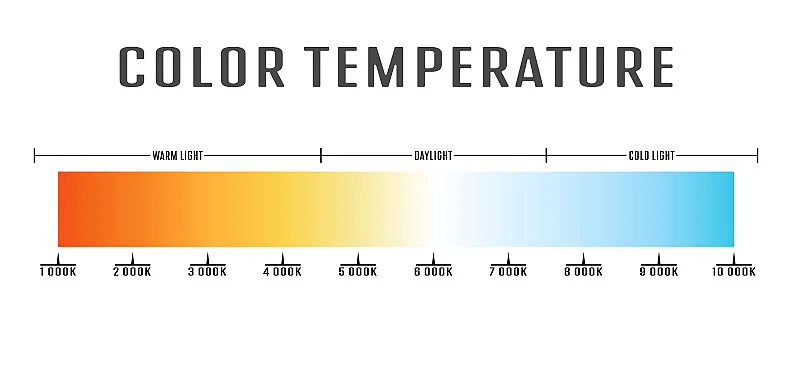
Correlated color temperature (CCT) describes the apparent color of nominally white light in kelvins; it does not measure brightness, efficiency or color accuracy. 5000 K generally appears warmer than 6000 K, but perception also changes with surrounding finishes, daylight and adaptation.
Two products with the same CCT can differ in tint and spectral distribution. Begin with the visual task and user expectations, then compare samples from the actual product family instead of selecting a number from a screen image.
For related planning resources, review the CPS Lighting product center.
2. How the Two CCTs Look in Use
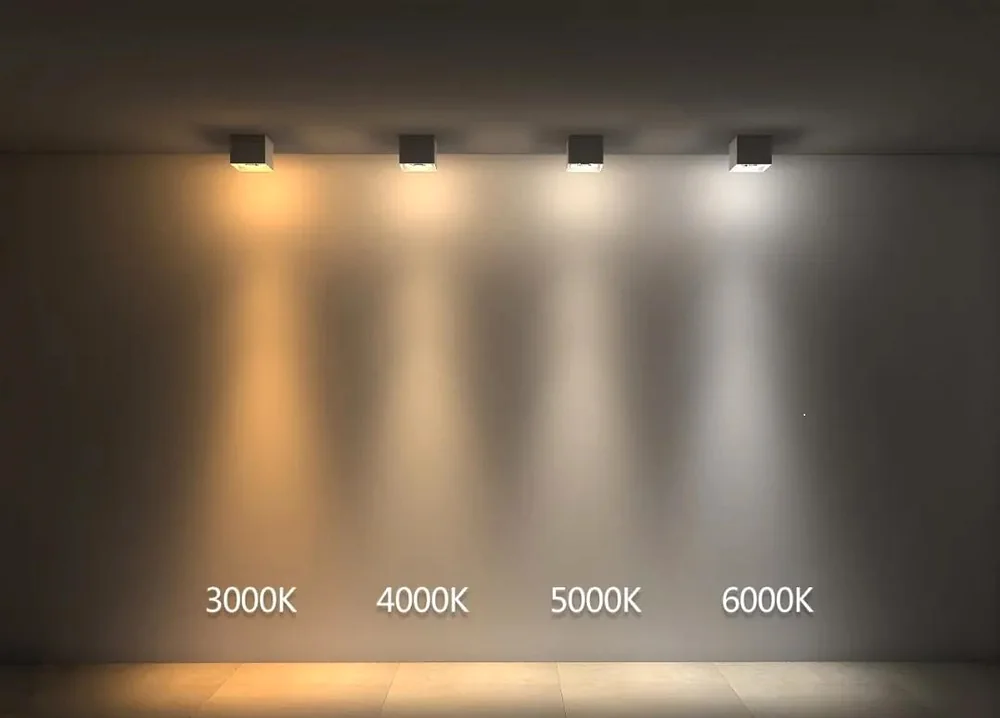
The practical difference between 5000 K and 6000 K is most visible on white surfaces, wood, skin tones and colored merchandise. The cooler option can make a space feel crisper, while the warmer option often feels less clinical.
Neither choice automatically improves acuity. Illuminance, glare, contrast and color rendering remain separate. For warehouses, security areas and sports facilities, test how the source interacts with materials and daylight because the same lamp can look different after surrounding surfaces and window light are included.
| Parameter | What it describes | Do not infer | Verification |
|---|---|---|---|
| CCT (K) | White-light appearance | Brightness or CRI | Approved sample |
| Lumens | Total light output | Distribution or glare | Photometric file |
| CRI/TM-30 | Color rendering | CCT consistency | Color report |
| Dimming | Controlled output range | Color match at every level | Mock-up test |

For related planning resources, review the CPS Lighting case center.
3. CCT and Color Rendering
Color rendering index (CRI) is not a substitute for CCT, and CCT is not a substitute for color fidelity. Review CRI and, where color judgment matters, supporting values such as R9 or TM-30 fidelity and gamut information.
Chromaticity tolerance also matters in projects using many luminaires. A nominal value can still show visible unit-to-unit variation, so buyers should request binning or color-consistency information and approve samples from the intended production specification.

For related planning resources, review the CPS Lighting news center.
4. Application and Environmental Trade-Offs
Higher CCT usually contains a greater short-wavelength contribution, but application impact depends on spectrum, intensity, timing and exposure. Outdoor projects may be subject to local CCT limits, while evening residential settings often favor warmer light.
Industrial or inspection areas may use neutral or cooler light when it supports the task. The correct decision balances visibility, environmental context and operating schedule rather than applying one CCT to every room or site.
For related planning resources, review the CPS Lighting company profile.
5. Use a Side-by-Side Mock-Up
A side-by-side mock-up is the most reliable selection method. Mount candidate luminaires at the intended height, set equal measured illuminance where possible, and observe representative surfaces from normal viewpoints.
Compare glare, color appearance, dimming behavior and camera rendering if video is important. Avoid comparing a high-output cool sample with a lower-output warm sample because the difference in illuminance can bias the judgment. Record the exact model, CCT and control setting selected.
For related planning resources, review the CPS Lighting consultation team.
6. Write a Consistent CCT Specification
For procurement, specify nominal CCT, permitted tolerance, color-rendering requirement, dimming range, lumen output and replacement consistency. Tunable-white systems can cover several scenes but add control, commissioning and compatibility work.
A fixed CCT is simpler and may provide better batch consistency. Verify the supplier’s photometric and color data for the full luminaire, not only the LED package, then retain an approved sample for future deliveries.
For related planning resources, review the CPS Lighting.
Document the approved visual condition with the exact luminaire, output setting, surface materials and time of observation. If daylight enters the room, review both daytime and nighttime operation. For cameras, check white balance and color appearance under the proposed source. Purchasing teams should retain a physical approved sample because screen images and printed swatches cannot reproduce emitted light. Future replacement batches can then be compared against a real reference.
7. Technical Sources
ENERGY STAR — Learn About Brightness
Core Keywords:
5000K vs 6000K, cool white LED, daylight color temperature, industrial lighting CCT, sports lighting color temperature, LED CCT comparison