Contents
1. Start at Home Plate and the Mound
2. Different Directions Need Different Checks
3. Understand What GR Can Describe
4. Control the Source Before Adding Flux
1.Start at Home Plate and the Mound
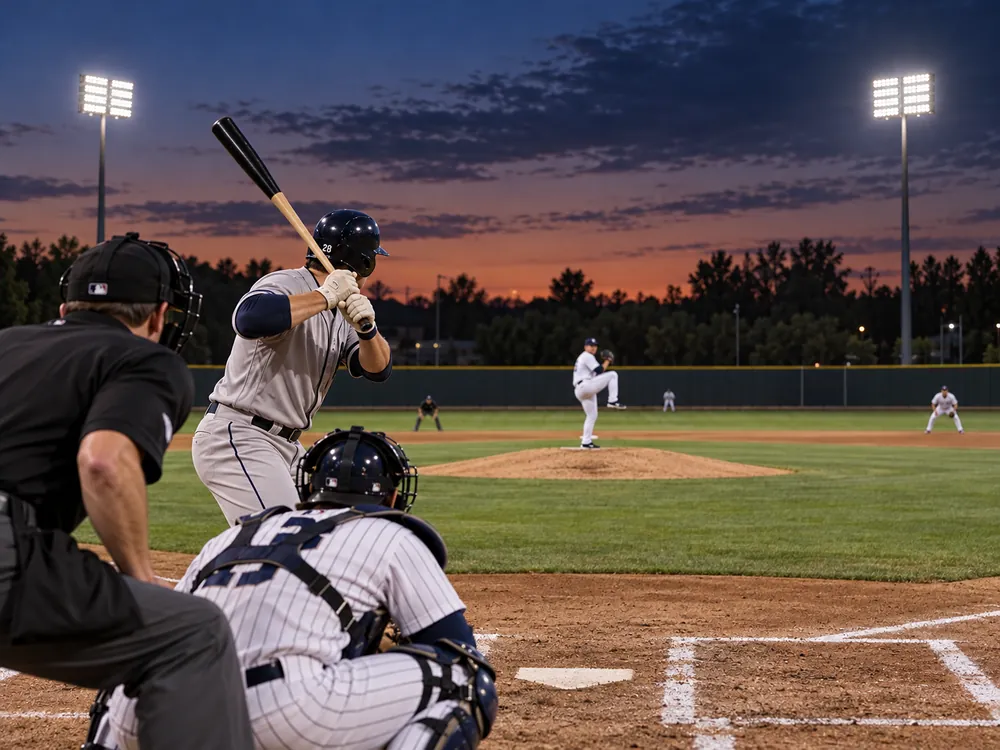
Imagine a batter who can see the infield clearly but loses contrast around the approaching ball when a light bank appears beyond the pitcher. The pitcher looks in the opposite direction and may see another bank beyond the catcher. An acceptable average lux reading does not resolve either view. This scenario shows why baseball glare cannot be assessed from one spectator seat.
Baseball lighting glare depends on source brightness, viewing direction, background, and the position of the ball. Engineers should map both batter boxes, the catcher area, the mound, and relevant fielding positions. The baseball illuminance guide covers ground-light priorities; the glare review must add player-specific observations.
2.Different Directions Need Different Checks
A batter primarily follows the pitch toward home plate and can also look upward after contact. A pitcher faces the catcher before delivery, then follows play in several directions. The model should include both left- and right-handed batting positions and realistic posture ranges. A single eye height is a documented assumption, not a complete representation of all players.
The table describes the main viewing tasks rather than fixed exclusion angles. Engineers should apply the appropriate federation or owner guidance to each field geometry. The pole-height article explains why mounting elevation changes aiming paths, but a taller support is only useful when the optic and source position suit the player view.
3.Understand What GR Can Describe
CIE 112 provides a Glare Rating method for outdoor sports and area lighting. It accounts for the arrangement, aiming, source output, and illuminated surroundings. Its validity is restricted to viewing directions below eye level. A passing GR result therefore cannot establish comfort when a player looks upward directly at a luminaire during a fly ball.
The CPS glare-rating guide is useful background, but the project should state its required limit, observer coordinates, and calculation directions. Engineers should pair relevant GR calculations with a source-visibility review. They should also distinguish glare close to the field from obtrusive light at neighbouring properties, which needs separate assessment.
4.Control the Source Before Adding Flux
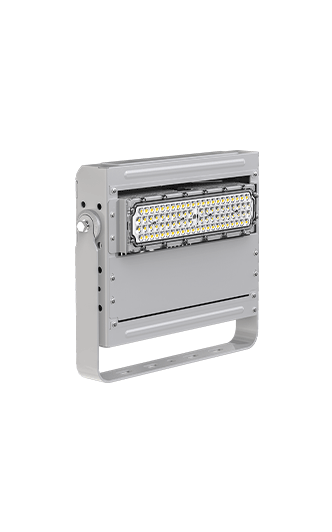
The first correction is often a revised mounting position, beam distribution, or aiming direction. A visor or recessed optical module can reduce exposed light, but shielding also changes useful flux. Engineers must use the photometric file for the actual shielded configuration. The Dubhe 1000W product page lists an optional anti-glare hood; the design should verify its specific distribution.
Little League’s 2025 guide advises avoiding its defined glare zones. For certain unavoidable positions, it requires shielding and less than 1,000 cd per fixture when viewed from home plate at 60 inches, about 1.52 m, above the field. That is a programme-specific directional check, not a general baseball lux limit. Other venues need the limits in their approved brief.
5.Commission the Real Viewing Conditions
The final design should balance uniformity, useful vertical light, and controlled source views. Adding fixtures changes mast weight and wind area, so the structural calculation guide remains relevant during a glare retrofit. Operators should not accept a new hood or extra fixture without reviewing the associated optical and structural changes.
CPS describes optical matching and commissioning in its four-pole football lighting case. That project reports performance for a football pitch, not batter or pitcher glare measurements. It supports the value of an aiming-and-measurement workflow while leaving baseball acceptance to the specific field design.
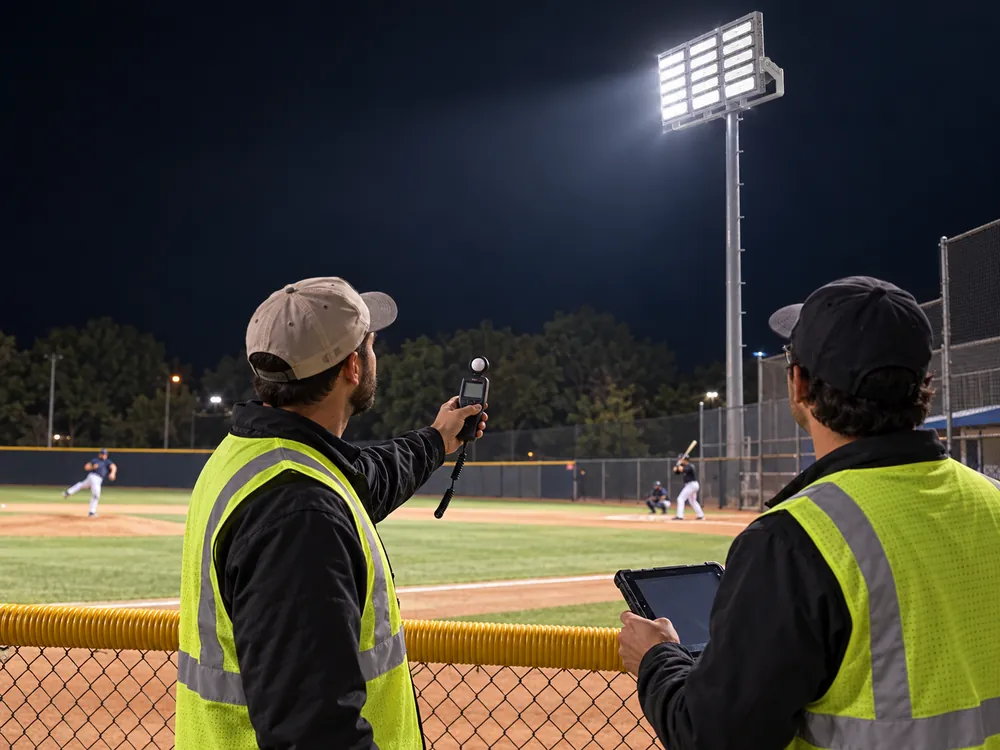
On site, engineers should confirm fixture codes, shields, tilt, and control scenes before checking both batter boxes and the mound. They should inspect additional fielding and upward views, measure the approved grid, and record the observer geometry. A photograph can document source position, but it does not replace calibrated photometry or a declared glare assessment.
Reliable baseball glare control preserves useful light while reducing problematic source exposure. The handover should include final aiming marks, calculation assumptions, measurement results, and maintenance instructions. Changes to optics or fixture orientation should trigger a review of the same player positions.