Contents
1. What an Illuminance Gradient Means
2. Why Basketball Zones Need Different Checks
3. Targets, Uniformity and Broadcast Light
4. How Engineers Correct a Steep Gradient
1.What an Illuminance Gradient Means
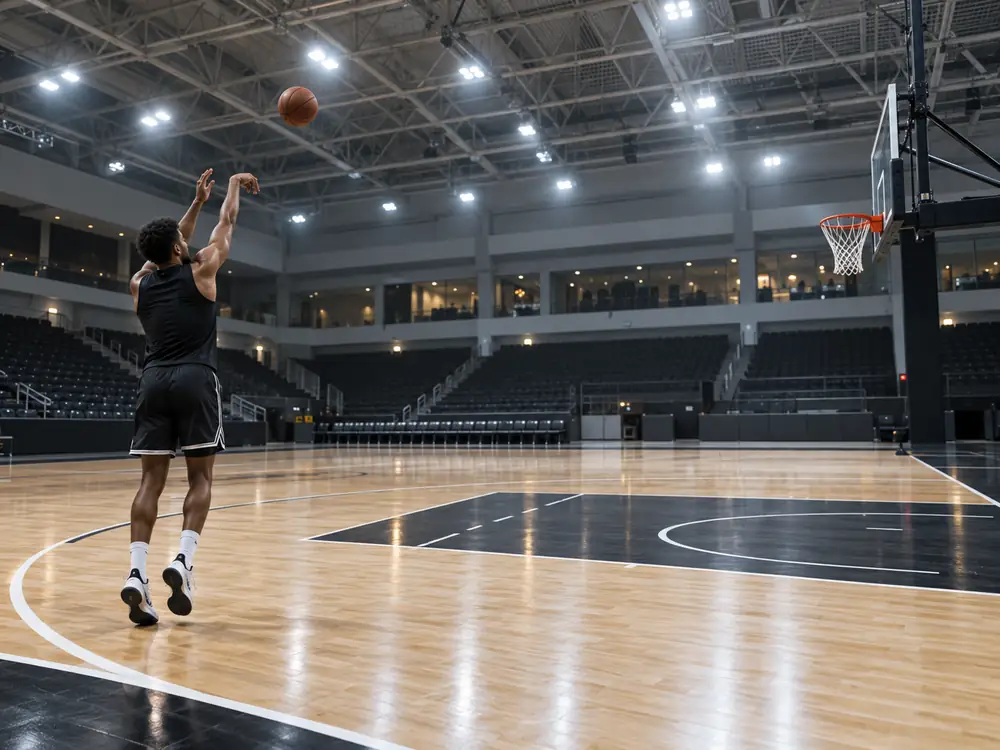
An illuminance gradient is the speed of change between nearby light levels. A court can meet its average lux target and still have a sharp step from the baseline to the painted key, or from the three-point line to the hoop. Players notice this during a fast cut because their eyes adapt to the brighter zone while the ball and floor move across it.
Good basketball court lighting is not completely flat. The floor, backboard, players, and cameras have different visual tasks. However, the transition must be controlled. A bright hot spot under the rim and a darker baseline create poor depth judgement and make the court look uneven on video.
2.Why Basketball Zones Need Different Checks
The baseline carries fast drives, inbound play, and camera views. The free-throw lane carries vertical action. The three-point arc is a long decision line where a player judges defender spacing and the basket. Each area needs light from more than one direction. A roof grid that is centred on the floor can leave a shallow beam angle at the ends of the court.
The FIBA calculation method separates the 19 m × 32 m Principal Playing Area from the 22 m × 35 m Total Playing Area. The larger area includes the 1.5 m surrounding strip and team benches. This wider view helps designers avoid a bright centre court with weak transition areas around the active game.
3.Targets, Uniformity and Broadcast Light
FIBA requires the court to be uniformly and adequately lit, and its major-event table uses maintained PPA values of Ec 2,000 lx toward the main camera, Ev 1,700 lx, and Eh 1,500–3,000 lx. The PPA minimum-to-average ratio is 0.80 for these parameters. A local club will often use a lower target, but it should still set a uniformity target before selecting luminaires.
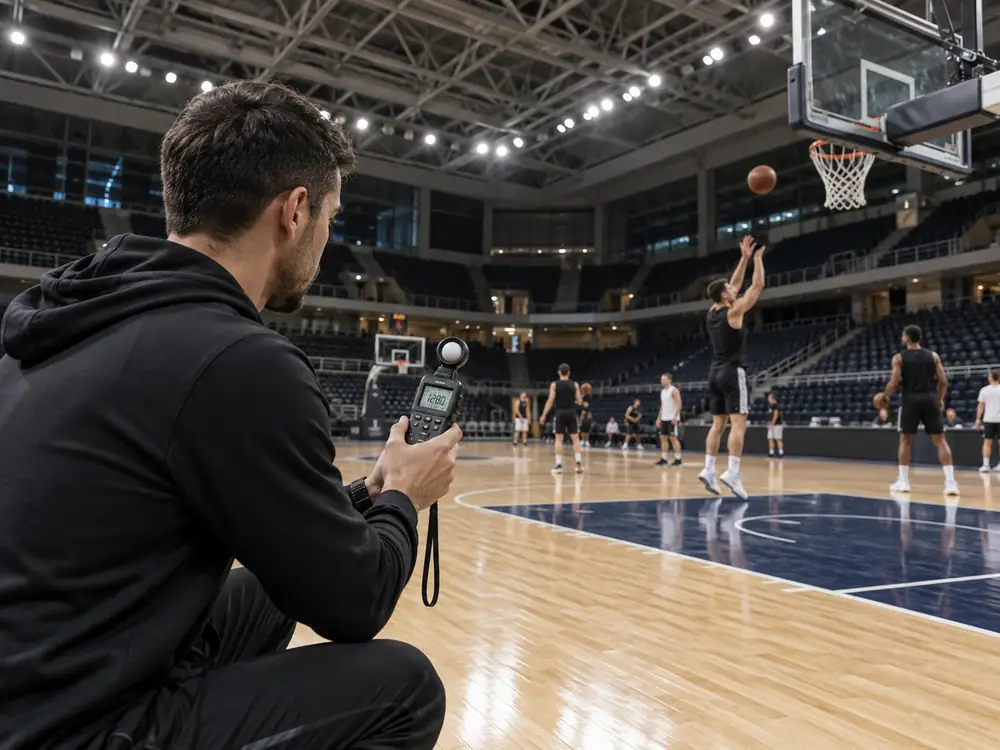
Average Eh alone cannot predict the picture quality. Ec and Ev give cameras information about faces, jerseys, and the ball above the floor. FIBA also warns that reflections from bright sources on glossy court surfaces can create camera glare, especially near court lines. This is why indoor sports lighting must consider aiming and floor finish together.
4.How Engineers Correct a Steep Gradient
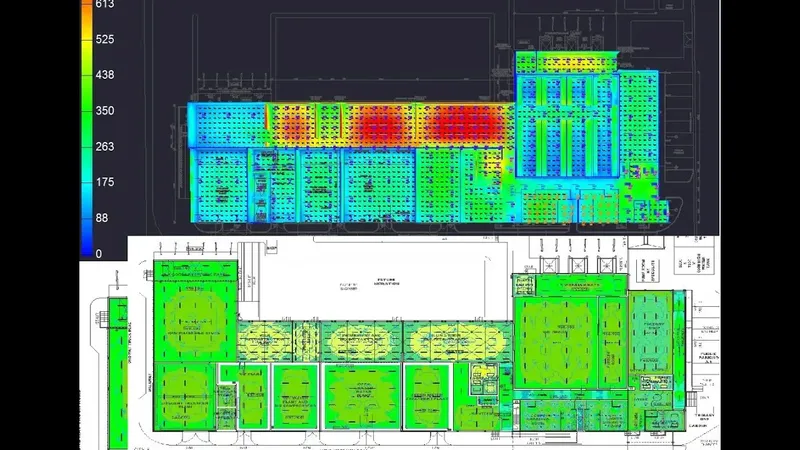
A lighting model should compare these options with verified IES or LDT files. The CPS simulation guide describes why calculated grids, camera planes, and aiming schedules must come from the same verified luminaire data.
5.Commissioning the Full Court
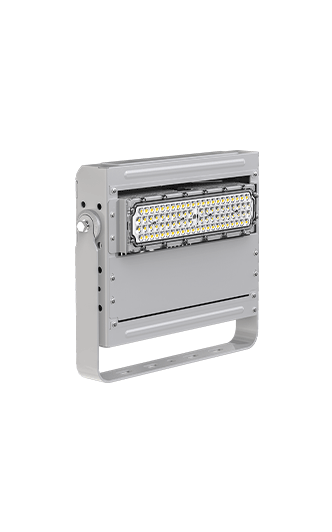
Commissioning should measure the defined grid, inspect both baskets, and record the final tilt and rotation of every adjustable fitting. The team should also test dimming modes, flicker, and the camera view if the venue records games. A Dubhe Projection Light 1000W can be evaluated for output and optic choice, but the final installation must prove smooth basketball lighting uniformity across the real court.
A smooth gradient is a practical sign of a complete design. It protects visual comfort at high speed and keeps the floor, rim, and people readable from every important angle.