Contents
1. CCT Changes Appearance, Not Lux
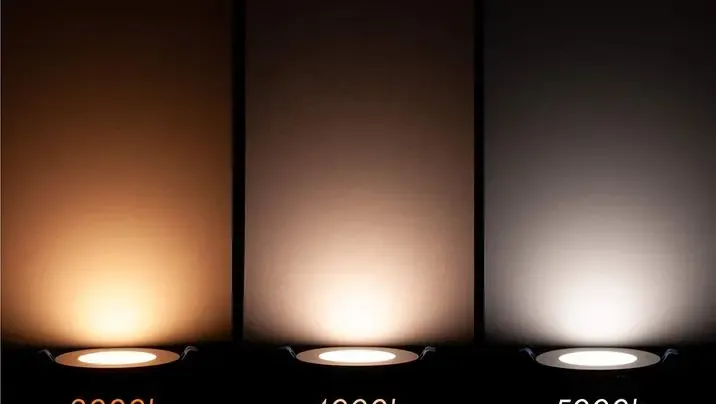
2. Compare 4000K, 5000K, and 5700K
3. Add CRI, R9, and Colour Consistency
4. Test Water, Tile, and Skin Together
1.CCT Changes Appearance, Not Lux
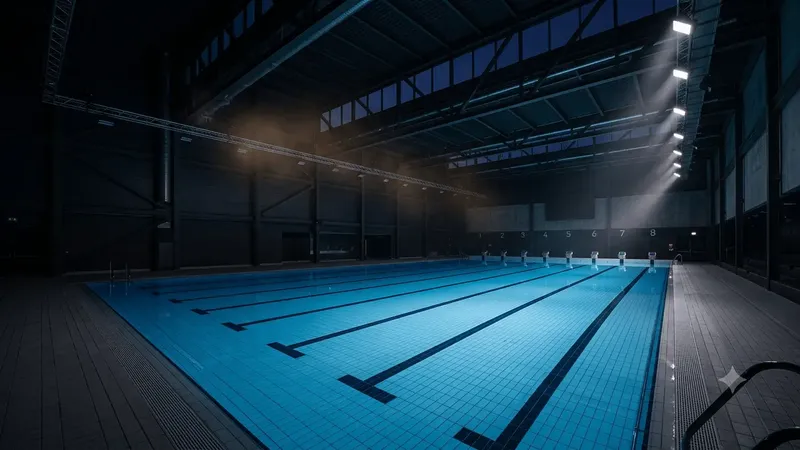
A pool can meet its illuminance target and still look wrong. Very warm light can make white tiles and blue water appear dull. Very cool light can make skin look pale and can exaggerate the clinical character of an indoor hall. Correlated colour temperature, or CCT, describes the apparent warmth or coolness of white light in kelvin.
CCT does not state lumen output, colour rendering, glare, or flicker. The best pool lighting color temperature therefore depends on the venue use, finishes, daylight, camera system, and desired visual atmosphere. Engineers should treat it as one part of a complete spectral and optical specification.
2.Compare 4000K, 5000K, and 5700K
A 4000K source gives a balanced neutral-white appearance and often suits community pools, wellness facilities, and halls with warm architectural materials. A 5000K source gives a cleaner daylight appearance and often suits training and competition. A 5700K system can align with some sports-broadcast packages, but it needs careful finish and camera testing.
These are engineering starting points, not mandatory pool classes. The CPS 4000K versus 5000K guide explains the general visual difference. The final choice should be reviewed inside the actual natatorium.
3.Add CRI, R9, and Colour Consistency
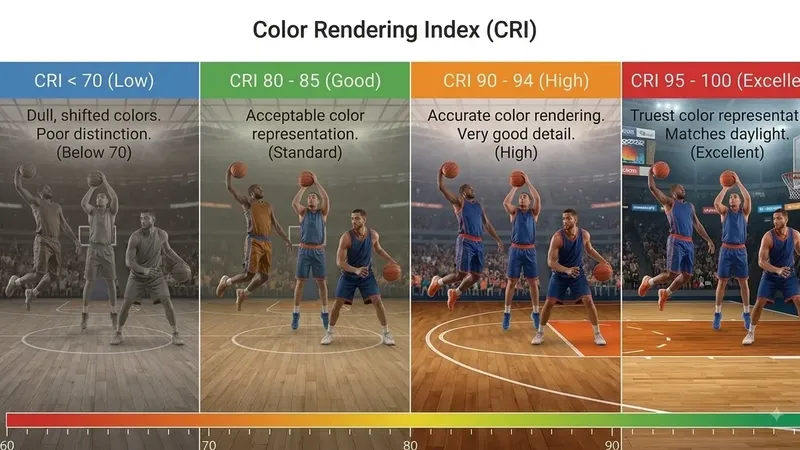
Two 5000K luminaires can render the pool differently because their spectral power distributions differ. A basic project may specify Ra at least 80. Broadcast or colour-critical work can justify Ra at least 90, an R9 requirement, and camera testing. The CRI, R9, and TLCI guide explains why one Ra value cannot describe every colour.
Colour consistency also matters. A tight bin such as SDCM no greater than 3 can reduce visible differences between fixture groups. The specification should state CCT tolerance or chromaticity limits, not only a nominal label. Replacement luminaires must match the approved batch closely enough to avoid patchy white tones across the water.
4.Test Water, Tile, and Skin Together
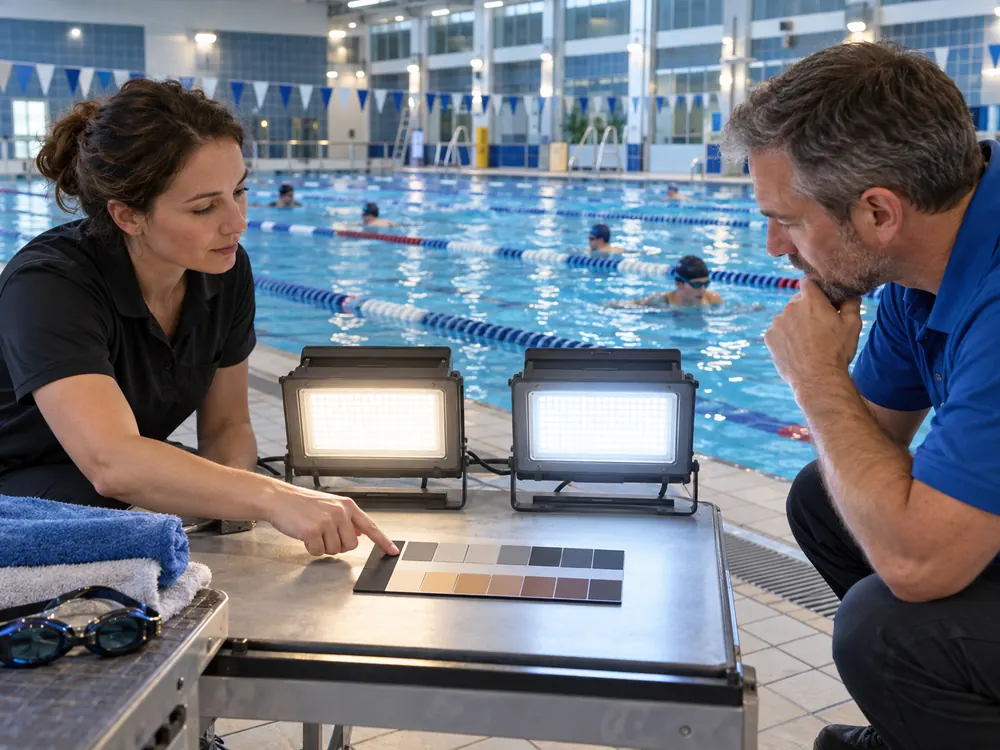
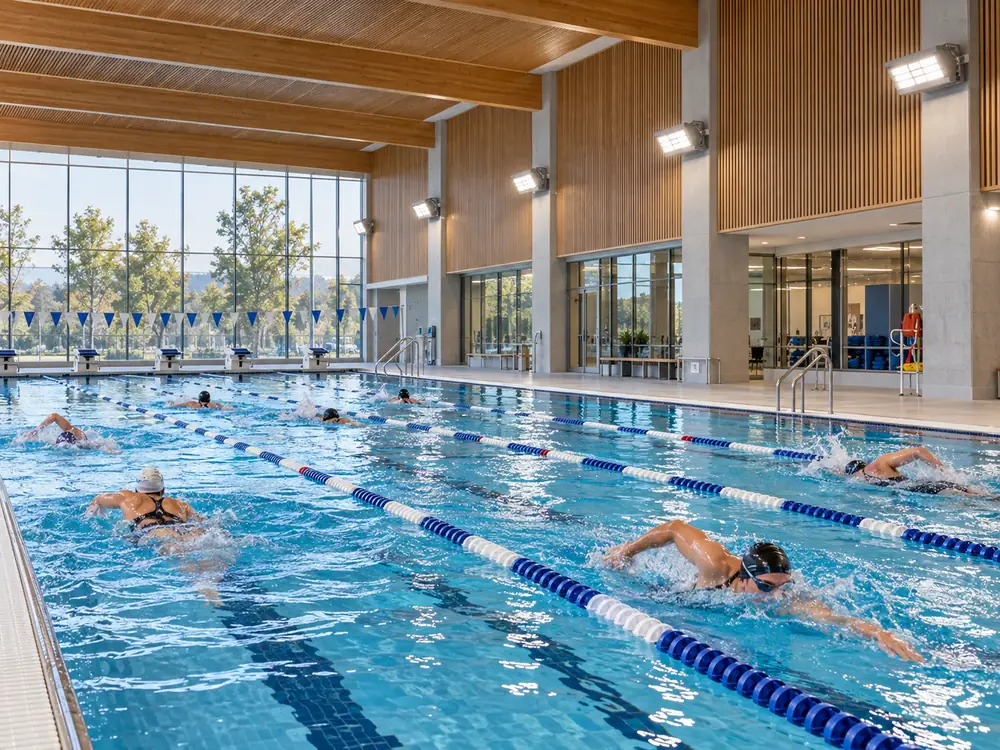
Water colour comes from the source spectrum, tile colour, pool depth, daylight, and viewing angle. Reflection can also make a good spectrum appear harsh. The pool reflection and humidity guide explains why aiming and material durability remain separate design tasks, while the GR and UGR guide covers observer-based glare checks.
A useful mock-up compares wet tile, lane ropes, starting blocks, skin tones, signage, and camera images under the shortlisted sources. The team should observe the pool from swimmer, lifeguard, spectator, judge, and main-camera positions. Daylight conditions should also be tested where glazing changes the daytime white balance.
5.Write a Measurable Specification
The luminaire schedule should record nominal CCT, allowed tolerance, colour consistency, Ra, any R9 or TLCI target, lumen output, optic, dimming method, flicker data, IP rating, corrosion system, and replacement policy. The indoor pool durability guide covers the environmental part of this schedule.
DIALux or AGi32 can compare illuminance and aiming, but a photometric model cannot fully predict subjective colour appearance. The sports lighting simulation guide should therefore be paired with a physical mock-up and field commissioning.
For many general pools, 4000K to 5000K provides a practical decision range. Competition and broadcast halls often move toward 5000K or a coordinated 5700K system. The correct answer is the measured source that keeps water, people, finishes, and cameras visually consistent without creating glare.