Contents
1. Map the Equipment and Eye Positions
2. Separate Direct and Reflected Glare
3. Use Different Layout Checks for Each Zone
1.Map the Equipment and Eye Positions
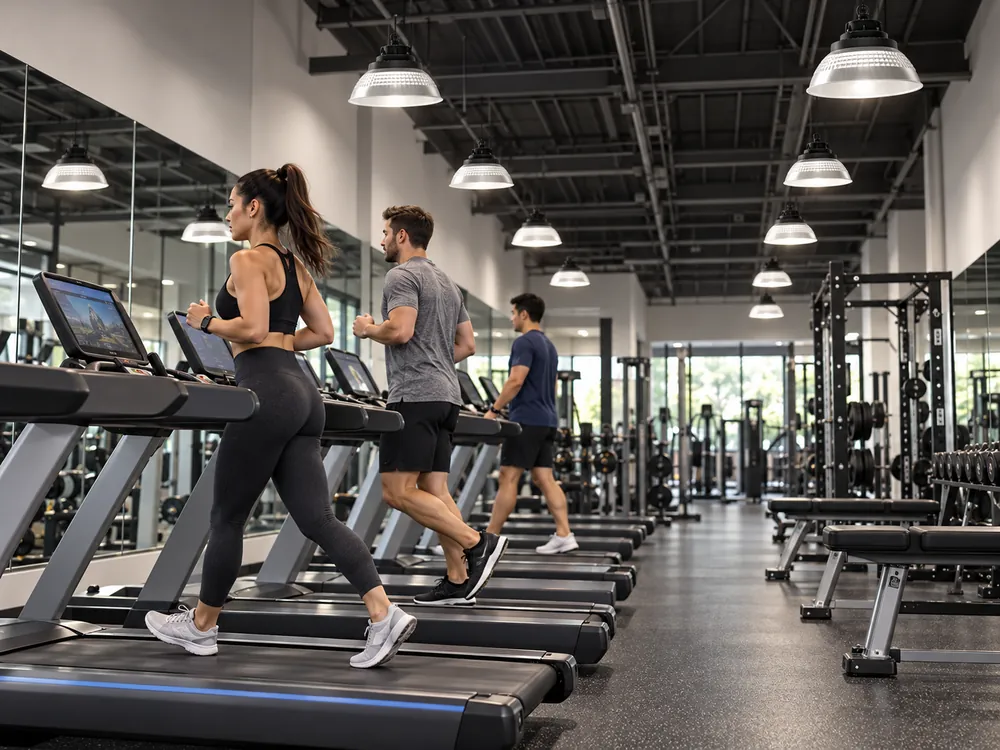
Imagine a treadmill user looking at the display and then lifting their head toward a wall mirror. A ceiling source appears comfortable from the floor but becomes bright in the mirror at belt height. A rider on a nearby spin bike has a lower eye position and a different forward view. One glare check cannot represent both users.
Gym glare control should start with the equipment plan, including platform heights, display angles, mirrors, and likely head movement. Engineers need to test standing treadmill views and seated or forward-leaning cycling views. Any eye heights used in calculations should be stated assumptions and checked against the actual equipment.
2.Separate Direct and Reflected Glare
Direct glare comes from a bright luminaire entering the view. Reflected glare comes from its image on a mirror, glossy screen, or polished surface. It can reduce the contrast of display markings even when floor illuminance is acceptable. Increasing lux may leave that reflection problem unchanged.
A useful design manages source luminance in cd/m², luminous area, viewing angle, and background brightness. Shielding, a suitable reflector, and controlled light distribution can help. The CPS GR and UGR guide introduces glare metrics, but the project limit must come from the applicable standard and brief. A marketing label cannot replace the room assessment.
3.Use Different Layout Checks for Each Zone
Treadmill users often face a screen, window, or television. Engineers should keep intense sources out of those forward views and inspect reflected source images with the display switched on. Moving a luminaire row between machines may help, but the resulting light distribution must still cover control panels and circulation routes.
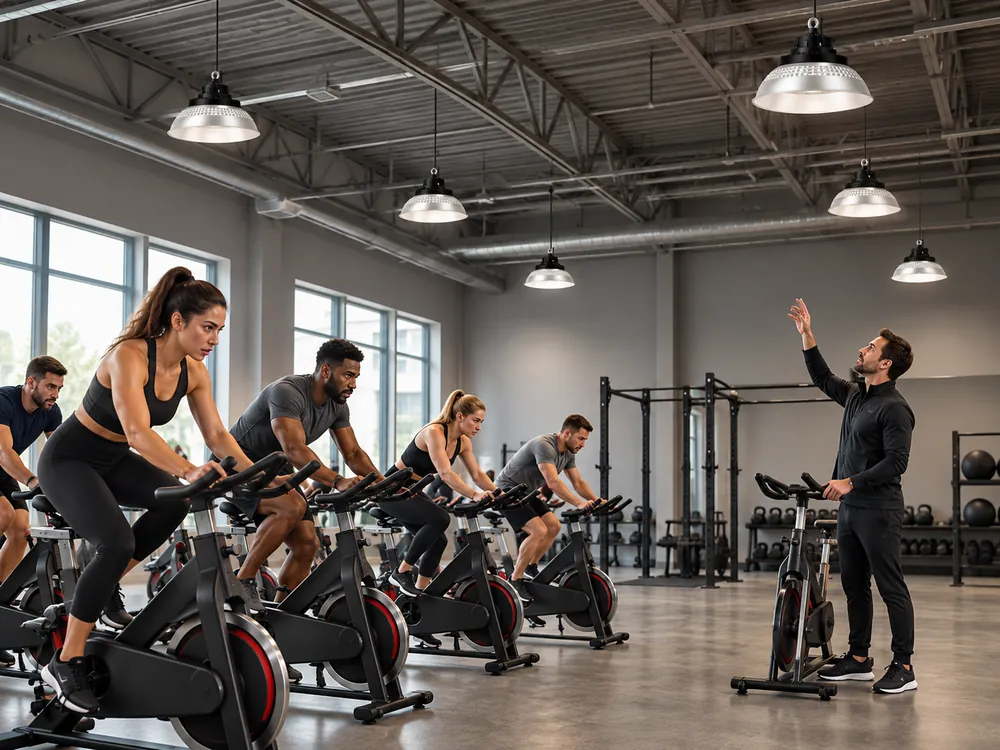
Spin-bike users change posture during a class and may look toward an instructor or front wall. The design should review those directions at several seat settings. The table gives example modelling inputs, not mandatory dimensions. Quiet exercise areas need a separate assessment, as described in the Yoga and Pilates lighting article.
4.Use UGR Within Its Limits
The Unified Glare Rating describes predicted discomfort glare for an indoor arrangement. It depends on luminaires, background luminance, observer position, and viewing direction. CIE 190 tabular values use prescribed room and layout conditions. A catalogue UGR entry therefore does not prove that every equipment position meets the project requirement.
CIE 232 also identifies limitations when LED sources have highly uneven luminance. A small exposed chip can create stronger discomfort than an average source value suggests. Engineers should review luminous-surface images, optics, and real viewing directions. Mirror reflections and screen contrast also need direct inspection, beyond the tabular UGR result.
5.Verify the Layout at Operating Scenes
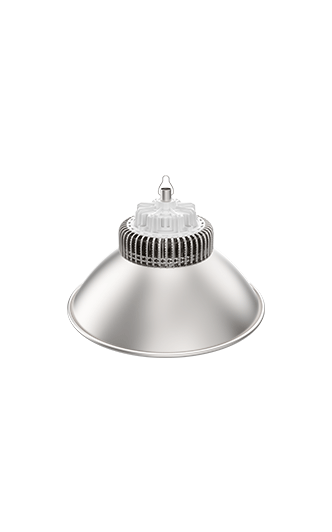
The procurement review should connect optical files to the exact fitting, reflector, mounting height, and shielding arrangement. The CPS Uranus high-bay listing gives beam and CCT options, but its suitability must be checked against the gym geometry. A nominal wattage or beam angle alone cannot establish low glare.
Lower output may reduce source brightness, yet a dark background can keep the source visually prominent. The flicker engineering guide covers a separate driver issue that should be checked at the actual class scenes. Staff must still see moving equipment, pedals, walkways, and display labels clearly.
CPS reports that its Lanzhou multi-sport retrofit addressed glare, uneven illuminance, colour rendering, and flicker together. That case concerns indoor sports courts, not a tested treadmill or spin-bike installation. Its relevant lesson is to couple layout design with commissioning. Engineers should keep a record of the observer points, mirror checks, aiming settings, and scene levels.
For anti-glare gym lighting, acceptance should include full-output and class-scene checks with the installed machines. A lux grid documents coverage; observer-based calculations and a physical mock-up document visual comfort. The colour-quality guide adds the final check on skin and material appearance without confusing colour rendering with glare.