Contents
1.A Useful Quote Starts With a Defined Scope
Imagine a club requesting a price for “20 LED floodlights” without a site drawing or lighting target. One supplier prices luminaires only. Another includes brackets, controls and installation support. Their totals look different because the scope is different, before anyone has compared lighting performance. A useful sports lighting quote therefore starts with a shared project brief, not just a wattage and quantity.

Send a coordinated information pack with a revision date and one contact for technical questions. Separate confirmed measurements from estimates, and list unresolved items. This gives each supplier the same basis for pricing and makes exclusions visible. The following checklist is a practical procurement method, not a claim that every project needs the same documents at its first enquiry.
2.Send Geometry That Supports a Real Layout
Provide a scaled CAD drawing or a dimensioned PDF showing the playing area, run-offs, proposed or existing poles, stands and property boundaries. Label the units and identify pole positions consistently across drawings and photographs. A pole-placement review needs setbacks and mounting heights as well as the pitch size. An aerial image without a checked scale is useful context, but it should not become the final installation drawing.
For a retrofit, add pole-base elevations, crossarm dimensions, bracket details and clear photographs of each mounting point. Send available structural records and identify who must approve reuse. Similar-looking poles may have different remaining capacity. A lighting calculation does not certify foundations or wind resistance, so an unverified support must remain a stated assumption rather than a promised saving.

3.Define the Lighting Task Before Selecting Fixtures
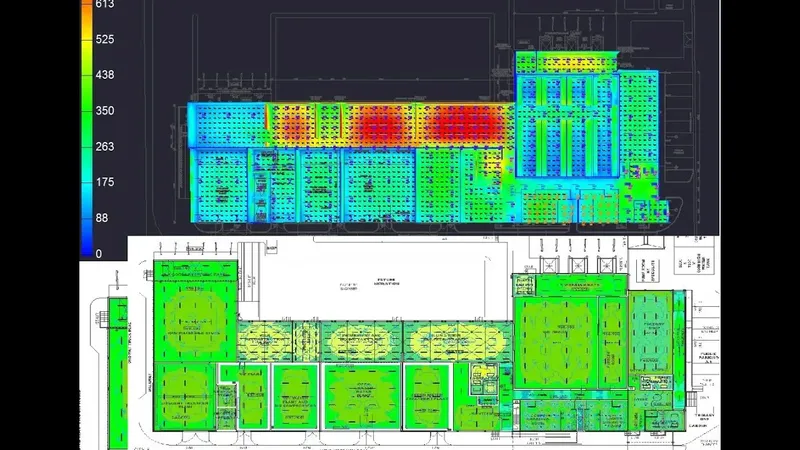
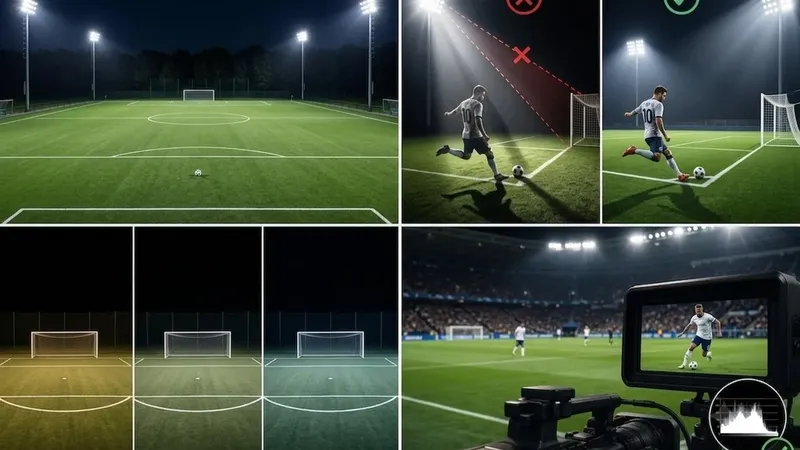
State the sport, highest expected competition level and whether recording or broadcast is required. FIFA’s stadium guidance explains why anticipated camera use changes the lighting brief. Name the applicable rules and edition, then define horizontal and vertical illuminance, calculation planes, uniformity ratios, glare criteria and operating scenes where relevant. Do not ask only for “500 lux” without specifying whether that value is an average and whether it is initial or maintained.
Ask the supplier to show its maintenance assumptions and exact luminaire configuration in the photometric simulation. The calculation must match the quoted optic, output and mounting arrangement. For camera-facing targets, provide camera positions and directions, not just a general “TV-ready” label. The CPS guide to Eh and Ev explains why a horizontal result cannot replace a vertical requirement.
4.Confirm Interfaces and Commercial Boundaries
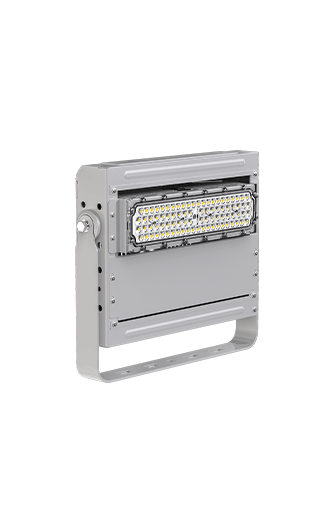
Ask the site electrician to confirm the supply voltage, frequency, available capacity and relevant distribution records. State the required control interface and dimming scenes. For example, 20 nominal 1000W luminaires total 20 kW by simple multiplication. That figure does not confirm circuit capacity, starting behaviour or the complete installation load. These checks require the selected equipment and electrical design, not a guess based on wattage.
Include neighbouring homes, roads, sensitive areas and permitted operating hours. CIE 150:2017 addresses obtrusive-light assessment, but local requirements still need confirmation. Then separate luminaire supply from poles, foundations, cabling, lifting access, installation, aiming and testing. Specify the delivery destination, required programme, warranty scope and quotation validity so a lower equipment price is not mistaken for a lower completed-project cost.
Examples below explain the brief, not mandatory values. Swipe sideways on narrow screens.
5.Use a Budget Estimate Without Hiding Unknowns
You can start before every survey is complete. Send the best available dimensions, labelled photos, intended use and a list of missing information. Ask for a provisional budget with explicit allowances and exclusions. A supplier should distinguish a preliminary fixture count from an approved design and identify which assumptions could change the price, such as pole replacement or additional electrical work.
Before placing an order, resolve the critical inputs and request a coordinated package: fixture schedule, calculation report, mounting interfaces, control scope and acceptance plan. Record who supplies each item and who signs off the retained structures. Use the same revision for technical approval and commercial comparison. This reduces the risk of buying a configuration that differs from the one calculated.
6.A Case Shows Why the Brief Matters
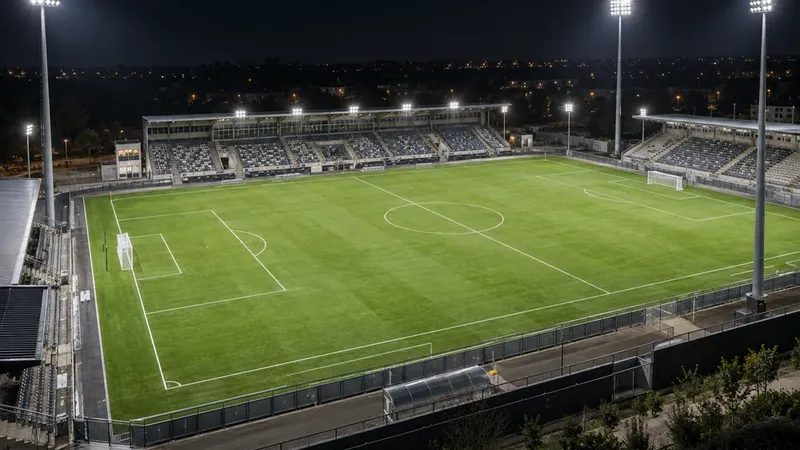
The CPS Grade III high-pole football project reports four 18 m lifting poles and an average illuminance above 550 lx after commissioning, with several operating scenes. Those figures describe one project, not a standard package for every football field. Another site may have different setbacks, viewing directions or neighbours, so copying its pole count cannot establish a compliant quotation.
The transferable lesson is to connect the brief, calculated layout and final checks. CPS lists simulation and bid technical support among its engineering services. When you send a lighting enquiry, attach the site drawing, performance brief and scope checklist together. Ask the reply to identify missing inputs and exclusions before comparing prices. That makes the next decision specific: confirm an assumption, revise the design or approve a clearly defined supply scope.
7.Technical Sources
Keywords: sports lighting quote, sports lighting quotation, lighting project brief, photometric simulation, site survey, floodlight specification, pole placement, lighting retrofit, commissioning.