Contents
1. Start with the Room’s Lighting Needs
2. Compare Ceiling Fixture Types
3. Coordinate Scale, Placement and Materials
4. Specify Color Quality and Visual Comfort
5. Compare Energy Use and Dimming Compatibility
6. Plan Safe Installation and Accessible Maintenance
1. Start with the Room’s Lighting Needs
Choosing ceiling lighting fixtures starts with the room’s function, ceiling height and desired atmosphere. A decorative centrepiece may look appropriate yet leave a worktop in shadow. Define the activities and furniture positions before selecting fixture size, finish or quantity.
Use three complementary layers: ambient lighting for general visibility, task lighting for activities, and accent lighting for selected features. Consider a living room where soft overhead light supports circulation while a reading lamp serves the chair. This is an illustrative design approach, not a documented project. The layers should work together without making every surface equally bright.

2. Compare Ceiling Fixture Types
Choose the mounting form around the task and building constraints. The same visual style can contain different optics, lamps or drivers, so appearance alone does not establish performance.
| Fixture or method | Useful application | Design check |
|---|---|---|
| Pendant | Islands and dining tables | Adjust drop, sightlines and task coverage. |
| Flush or semi-flush | Rooms with limited ceiling clearance | Check diffuser brightness and service access. |
| Recessed downlight | Discreet general or task lighting | Check ceiling depth, spacing and insulation compatibility. |
| Track lighting | Displays and flexible accent lighting | Check aiming, glare and track compatibility. |
| Chandelier | Decorative focus in larger rooms | Verify support, scale and cleaning access. |
| Cove lighting | Indirect ambient light | Coordinate ledge geometry and reflective surfaces. |
On smaller screens, swipe within the table to view every column.
Wall sconces can supplement the scheme, but are wall-mounted fixtures rather than ceiling lights. Where a broad luminous surface is appropriate, compare ceiling LEDs and panel lights against the space and ceiling construction.
3. Coordinate Scale, Placement and Materials
There is no dependable rule that converts room area directly into fixture diameter. Use a scale drawing or mock-up to check proportions, circulation and views. A pendant over a table needs a different clearance assessment from a fixture above a walkway; follow local requirements and the manufacturer’s installation limits.
For recessed lights, model spacing and beam distribution at the actual working plane. More fixtures may increase average illuminance without correcting shadows or glare. Dark finishes absorb more light than pale surfaces. Metal, timber and glass can all suit the interior, but assess their optical effect, cleaning needs and compatibility with the selected lamp.

4. Specify Color Quality and Visual Comfort
Correlated color temperature (CCT) describes the warm or cool appearance of white light, not its brightness. Compare color temperature samples with the actual finishes. Color rendering index (CRI) describes color fidelity and is a separate specification; a higher CCT does not automatically improve color rendering.
A visible bright lamp can cause discomfort even when the average lux level is acceptable. Review shielding, diffuser brightness and reflections from screens or glossy surfaces. A “low-glare” label or patented optic alone does not prove comfort in the proposed room. Check a sample from seated and standing positions before approving the scheme.

5. Compare Energy Use and Dimming Compatibility
Compare lumens for emitted light and watts for input power. This illustrative comparison assumes four lamps, each producing 800 lumens, operated for 3,000 hours annually. It is not a product quotation or a measured project result.
| Lamp option | Combined output | Combined input | Annual energy |
|---|---|---|---|
| Four 8 W lamps | 3,200 lm | 32 W | 96 kWh |
| Four 6 W lamps | 3,200 lm | 24 W | 72 kWh |
On smaller screens, swipe within the table to view every column.
Annual energy equals input watts × operating hours ÷ 1,000. The second option uses 25% less energy at equal rated output, but different shades or distributions can still change useful illumination. LED dimming also needs compatible lamps or drivers and controls. Test the required range for flicker, dropout and smooth operation; not every LED lamp is dimmable.
6. Plan Safe Installation and Accessible Maintenance
Specify the complete fixture, mounting arrangement and electrical supply. IEC 60598-1:2024 addresses general luminaire safety requirements; it is not a room-layout formula or proof that a particular product is certified. A qualified installer must also check applicable local rules, ceiling support, recessed clearances and suitability for damp or wet locations where relevant.
Choose service access before installation, especially for high ceilings and integrated LEDs. Confirm whether lamps, drivers or LED modules can be replaced and by whom. Follow the manufacturer’s cleaning method for glass, coatings and metal finishes rather than prescribing one cleaner. Budget for access and replacement parts alongside the purchase price.
7. Choose Useful Controls and Verify the Finished Scheme
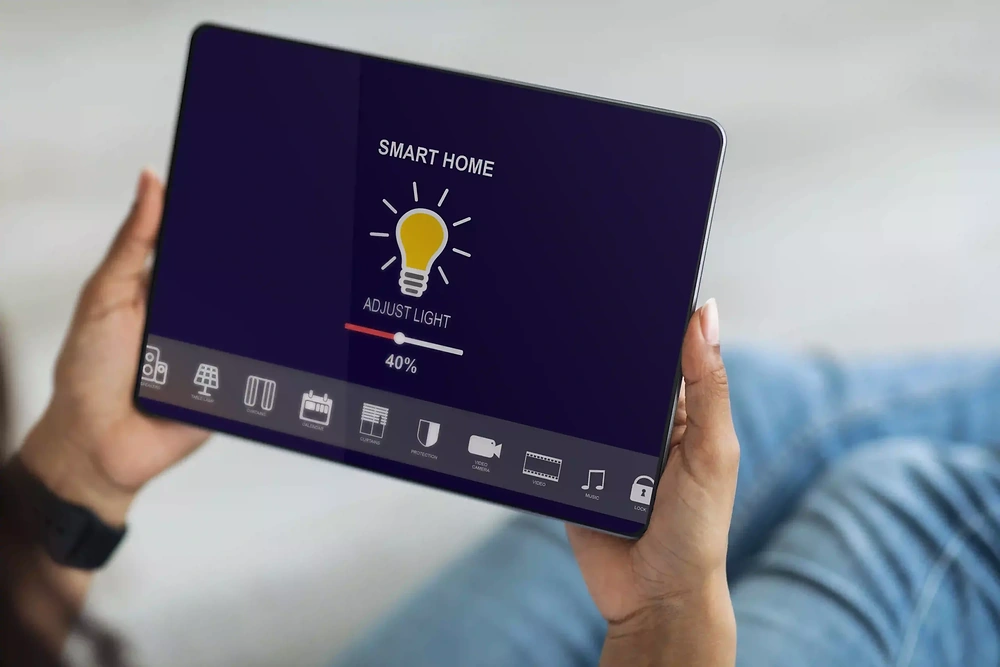
Separate lighting layers onto useful control groups so occupants can choose a scene without running every fixture at full output. Smart lighting controls may add scheduling or remote operation, but compatibility, offline switching and commissioning matter more than an app demonstration. Color tuning requires suitable light sources; a dimmer alone cannot provide it.
At handover, check task coverage, unwanted reflections, dimming and everyday switching. Record settings and replacement specifications. Sculptural forms and natural finishes can contribute to the design, but are aesthetic choices rather than performance guarantees. A coordinated specification balances visual character, useful light, operating cost and maintainability.
8. Technical Sources
1. U.S. Department of Energy: Residential Lighting Guide — Layered design principles; not current product benchmarks.
2. Federal Trade Commission: Shopping for Light Bulbs — Compare light output separately from input power.
3. U.S. Department of Energy: LED Basics — Color appearance, color fidelity and luminaire considerations.
4. IEC 60598-1:2024 — General safety requirements and tests for luminaires.
Core Keywords:
ceiling lighting fixtures, ceiling light selection, pendant lighting, recessed lighting, layered lighting design, LED dimming, indoor lighting quality