Contents
1. What a Solar Light Runtime Claim Actually Means
2. Why Solar Light Duration Changes
3. Calculate Runtime from Usable Battery Energy
4. Match Daily Charging to the Nightly Demand
5. Use Controls Without Losing the Required Light
6. Investigate Early Switch-Off Before Replacing Parts
1. What a Solar Light Runtime Claim Actually Means
How long do solar lights stay on? Until the programmed schedule ends or usable battery energy reaches the controller’s cutoff. All-night operation is possible when stored energy and replenishment match the required lighting. A universal “6–12 hours” promise cannot describe every model, location or operating mode.
Separate nightly runtime from product service life. Also distinguish hours switched on from hours at full output. A light operating dimly until dawn has not necessarily delivered its rated brightness throughout the night. Ask which charge level, temperature and output schedule support the advertised duration.

2. Why Solar Light Duration Changes
The main performance factors work together, rather than acting as independent guarantees. Battery capacity limits stored energy, while sunlight determines how much returns the next day. LED efficacy can lower demand for equivalent useful lighting, but brighter operation can consume that gain.
| Factor | What to check | Runtime implication |
|---|---|---|
| Stored energy | Voltage, capacity and battery condition | Compare usable Wh, not mAh alone. |
| Solar input | Panel rating, shade and season | Check daily energy, not daylight hours alone. |
| Light output | Useful illumination and total load | Compare equivalent lighting before claiming savings. |
| Controls | Schedule, sensing and standby load | Long operation may include dimmed periods. |
| Temperature | Permitted charging and discharge conditions | Protection limits are model-specific. |
On smaller screens, swipe within the table to view every column.
Installation and maintenance affect several rows at once. Shade can reduce charging, dirt can reduce solar collection, and ageing batteries may hold less energy. A larger battery is not automatically the first or most effective remedy.
3. Calculate Runtime from Usable Battery Energy
Convert capacity first: nominal Wh = battery voltage × Ah. Thus, a hypothetical 3.2 V, 10 Ah battery stores 32 Wh nominally. If 80% is assumed available after reserve and operating limits, the calculation uses 25.6 Wh. This is an illustrative allowance, not a recommended discharge setting.
For a constant load, runtime ≈ usable Wh ÷ total battery-side W. Include the driver, controller and sensors. The comparison assumes a fully charged battery, no recharging during operation and constant loads; it is not a CPS product test.
| Usable energy | Assumed total load | Calculated continuous runtime |
|---|---|---|
| 25.6 Wh | 2 W | 12.8 h |
| 25.6 Wh | 4 W | 6.4 h |
| 25.6 Wh | 8 W | 3.2 h |
On smaller screens, swipe within the table to view every column.
The same battery produces very different durations. A mAh-to-hours table without voltage, usable capacity and load is therefore incomplete. Cold conditions, ageing and the actual cutoff can further change the result.
4. Match Daily Charging to the Nightly Demand
A full-charge runtime test answers only one question. Sustainable nightly operation also needs enough daily charging under the design-season conditions. Check sunlight and shading at the actual panel position; a long day does not equal the same number of equivalent full-sun hours.
For illustration, a 15 W panel with two equivalent full-sun hours and a 70% net yield delivers 21 Wh daily. A schedule drawing 24 Wh nightly has a 3 Wh daily deficit. Extra storage can bridge a shortfall temporarily, but cannot correct that continuing imbalance. These assumptions are not a local weather forecast or a product-sizing guarantee.

5. Use Controls Without Losing the Required Light
For varying loads, add power × time across each operating period. A hypothetical 4 W for four hours plus 1 W for eight hours consumes 24 Wh over twelve hours. Those values describe total battery-side demand, not an assumed linear relationship between dimming percentage and power.
Motion-triggered boosts can extend useful service, but frequent activation increases demand. Road and security applications still need an appropriate background level and detection coverage. For example, Hulk-E-3rd programmable lighting periods and Sunflower sensing and dimming illustrate control options—not guaranteed runtimes for every site.
6. Investigate Early Switch-Off Before Replacing Parts
If solar lights last only a few hours, distinguish low stored energy from an intentional timer, dimming stage or protection event. Compare observations after normal charging and after the manufacturer’s specified full-charge procedure. Use qualified service personnel for sealed or elevated equipment.
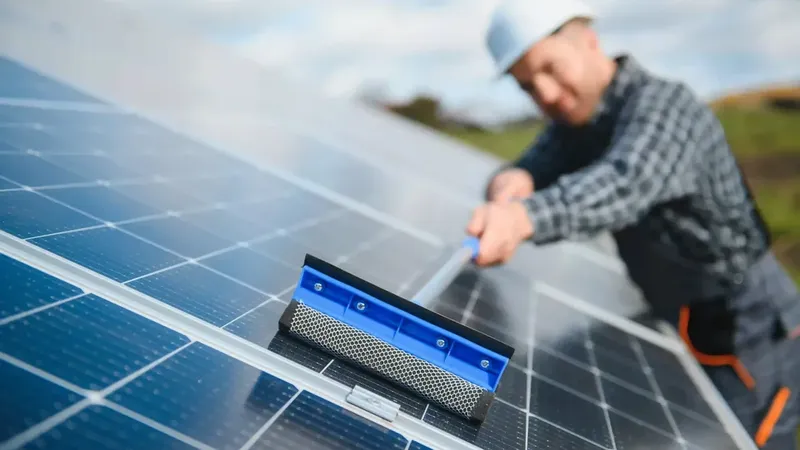
Check shade, debris and the approved panel-cleaning procedure.
Review charge state, output schedule and unusual sensor activity.
Check battery condition and model-specific temperature or protection warnings.
A battery management system (BMS) and compatible controller must implement the specified charging and discharge limits. Certification logos alone do not demonstrate those settings or prove all-night operation. Never bypass protective cutoffs to gain runtime; follow the battery and luminaire service instructions.
7. Select and Commission for the Application
Roadway, landscape and security lighting need different schedules and coverage. A full-night road requirement should not be replaced by a decorative motion-only mode. Compare solar and grid-powered alternatives when charging space or reliable illumination requirements constrain the design.
A site-specific selection and installation plan should document seasonal solar input, required illuminance, output periods, reserve assumptions and replacement support. At commissioning, record light levels and operating behaviour through the agreed schedule. Runtime matters only when the required lighting is delivered, not merely when an LED remains visibly on.
8. Technical Sources
1. DOE: Solar Energy and Storage Basics — Stored energy, power demand and solar variability.
2. DOE: Solar Radiation Basics — Geographical, seasonal and weather-related sunlight variation.
3. Victron: Lithium Smart Battery Manual — Operation — Example of model-specific charging, protection and temperature conditions; not a CPS battery specification.
Core Keywords:
how long do solar lights stay on, solar light runtime, solar light duration, usable battery capacity, solar charging, solar lighting control, all-night solar lighting