Contents
1. Decide Where Solar Outdoor Lights Make Sense
2. Compare Panel and Battery Specifications
3. Check the Nightly Energy Budget
4. Specify Useful Light and Practical Controls
5. Compare Models Without Unverified Promises
6. Plan Installation and Commissioning
1. Decide Where Solar Outdoor Lights Make Sense
Solar outdoor lights can avoid a new grid connection, but reliable operation depends on sunlight, stored energy and the lighting task. Before quoting, record the location, shaded areas, mounting positions and required operating hours. A sunny garden path and a shaded security yard should not receive the same specification.
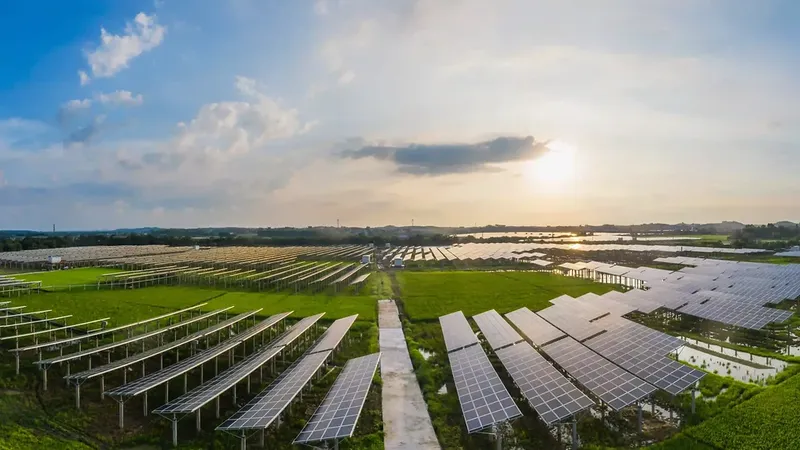
These lights combine a photovoltaic (PV) panel, rechargeable battery, LED luminaire and controller. The panel generates electricity during daylight; the battery supplies the night load. Compare solar, grid-powered and hybrid options where uninterrupted lighting matters. Include foundations, installation access, battery replacement and maintenance in the cost comparison, not just the purchase price.

2. Compare Panel and Battery Specifications
Choose the panel by rated power, dimensions and expected local energy yield, rather than assuming one cell type always delivers the best value. Monocrystalline, polycrystalline and thin-film labels do not prove complete-system performance. Seasonal sun, nearby trees and the installed orientation affect charging; a larger battery cannot fix a persistent daily generation shortfall.
Compare battery capacity in watt-hours (Wh), not amp-hours alone: nominal energy equals volts × amp-hours. Check chemistry, usable discharge range, permitted charging temperatures and replacement access. LiFePO4 means lithium iron phosphate, one lithium-ion chemistry used in solar lighting. Ask how the controller protects the actual battery, rather than treating the chemistry name as a reliability guarantee.
3. Check the Nightly Energy Budget
For an illustrative calculation, a 12.8 V, 20 Ah battery stores 256 Wh nominally. Assuming 80% is usable gives 204.8 Wh. The schedules below exclude additional controller and conversion losses, ageing and temperature effects. They are not product specifications or a guaranteed number of autonomous nights.
| Illustrative schedule | Lighting energy per night | Balance against 204.8 Wh |
|---|---|---|
| 20 W for 12 hours | 240 Wh | 35.2 Wh short |
| 20 W for 4 hours, then 10 W for 8 hours | 160 Wh | 44.8 Wh remaining |
| 15 W for 12 hours | 180 Wh | 24.8 Wh remaining |
On smaller screens, swipe within the table to view every column.
Calculate energy for each operating period as watts × hours, then add the periods. Dimming reduces the energy demand, but also changes the lighting result. Nightly runtime therefore needs a declared schedule, not an unexplained “all-night” claim. Confirm that charging can replenish the nightly use during the design season and that the reserve covers the agreed poor-weather period.
4. Specify Useful Light and Practical Controls
Lumens describe source output; lux describes light reaching a surface. A lighting layout simulation should check mounting height, spacing, illuminance and uniformity. Review glare and spill toward neighbouring properties. Color temperature describes warm or cool appearance, not the amount of useful illumination.
For motion sensing, define detection coverage, background level, full-output level and hold time. Busier sites may spend longer at high output than expected. Do not assume every solar controller supports remote monitoring, DALI or DMX512. These functions require the specified hardware and a realistic energy allowance; they are not universal features of solar outdoor lighting.
5. Compare Models Without Unverified Promises
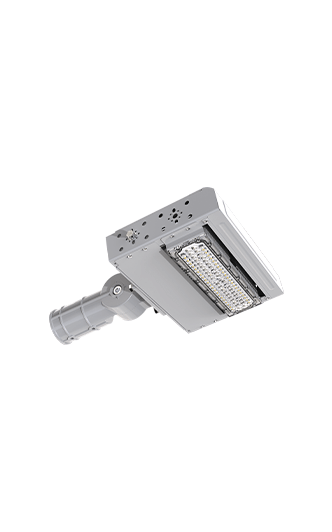
Request the exact panel, battery, controller and optic specification with each quotation. As a verifiable product example, the Solar Street Light Hulk-E-3rd is specified with LiFePO4 batteries and IP65 enclosure protection. Those are model-specific details, not ratings for every solar light or evidence of any particular project result.
Under IEC 60529, an IP rating concerns enclosure ingress protection. It does not establish hail resistance, corrosion durability or unlimited operation in heat. Ask for relevant test reports, warranty exclusions and spare-part availability. Compare integrated designs with split-panel arrangements: a separate panel offers positioning flexibility but adds mounting and connection requirements.
6. Plan Installation and Commissioning
Survey shading through the year and set panel orientation for the project’s seasonal demand. Confirm pole and foundation capacity for the panel and luminaire, including wind exposure. Use the manufacturer’s mounting hardware and connector arrangements; improvised sealant is not a substitute for the specified protection. Work at height and electrical servicing require appropriately qualified personnel.
Commission the installation after the prescribed initial charge. Check dusk switching, sensor coverage and every programmed lighting period. Measure the agreed lighting grid, record the settings and compare actual operation under documented weather conditions. A single bright demonstration at installation does not prove winter charging or several consecutive nights of reserve.

7. Maintain Performance and Choose Useful Upgrades
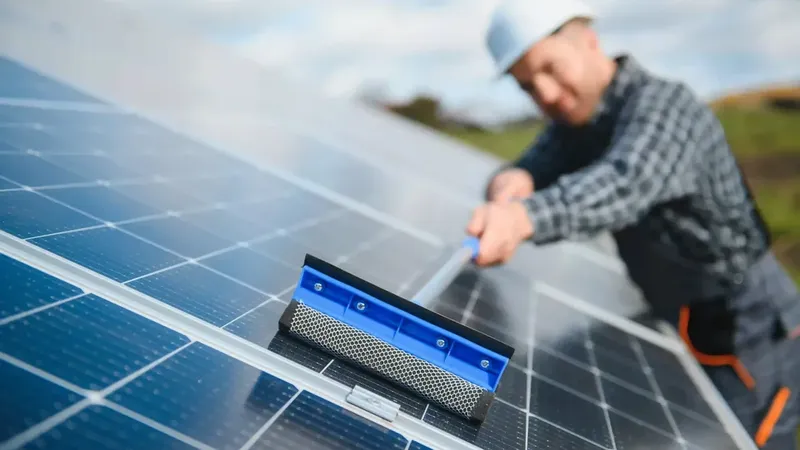
If a light switches off early, compare recent sunlight, shading and settings before assuming battery failure. Check panel cleaning needs using the panel manufacturer’s method; do not prescribe detergent for every surface. Inspect fixings, lenses and visible cable damage without opening sealed compartments unnecessarily.
Give clients a maintenance record covering inspections, settings and service contacts. Replace batteries only with an approved compatible specification. Better controls and monitoring can simplify maintenance, but cannot replace adequate solar collection and storage. Prioritise documented performance, repair access and replacement support over speculative “smart lighting” promises.

8. Technical Sources
1. U.S. Department of Energy: Solar Radiation Basics — Site, season and weather affect available sunlight.
2. U.S. Department of Energy: PV System Design Basics — Mounting, orientation and battery storage.
3. U.S. Department of Energy: PV Cell Basics — Cell technologies and conversion principles.
4. IEC 60529: enclosure protection — The scope of the IP classification standard.
Core Keywords:
solar outdoor lights, solar outdoor lighting, solar light installation, solar battery capacity, solar light maintenance, solar street lights, lighting layout simulation