Contents
1.Separate Water Ingress From Corrosion Exposure
An IP rating does not prove corrosion resistance. A floodlight can exclude water during a specified test while its exposed bracket, screws or coating remain unsuitable for the site. Consider a hypothetical coastal court and an inland training ground buying the same IP66 model. Both need ingress protection, but their environmental specifications may differ because their salt exposure and cleaning conditions differ.

IEC 60529 classifies enclosure protection against access, solid objects and water ingress. It does not turn the IP code into a material durability score. The CPS guide to IP ratings for LED sports lighting explains the code format. Buyers should define water exposure and corrosion exposure separately before comparing otherwise similar LED floodlights.
2.Read the Digits Without Adding Extra Claims
The first 6 in IP66 means dust-tight protection. The second 6 describes protection against powerful water jets under defined conditions. IP65 uses a different water-jet classification. IP67 concerns temporary immersion. These descriptions identify specific tests; they do not state resistance to salt deposits, cleaning chemicals or long-term coating damage.
A higher-looking number also needs careful interpretation. Schneider Electric explains that an IP67 classification does not automatically establish IP66 compliance because immersion and jet tests differ. If a site needs both, request evidence for both. The table keeps ingress classifications and corrosion-test durations in their proper roles.
3.Review Materials, Coatings and Connections Together
A sealed optical chamber leaves many external interfaces exposed. Review the housing alloy, surface preparation, coating specification, bracket finish and fastener grade. Check coating edges, threaded joints and cable entries where damage or retained moisture can affect performance. Ask how the supplied parts manage dissimilar-metal contact. AMPP explains that electrically connected dissimilar metals in a conductive corrosive liquid can form a galvanic corrosion cell.
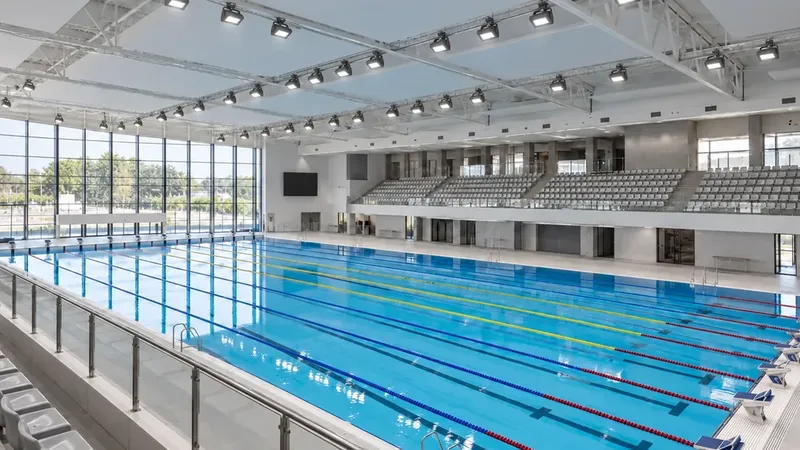
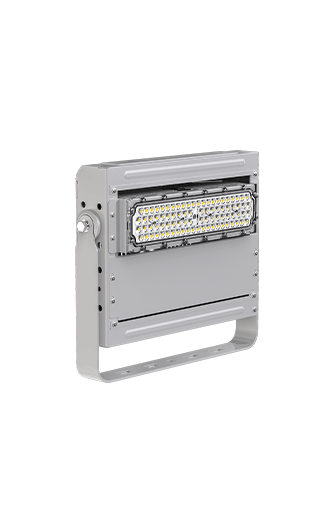
For pool buildings, the exposure review must also address the actual indoor atmosphere and cleaning agents. The indoor pool lighting guide discusses that application in more detail. The Dubhe 1000W product page lists IP66 and salt-spray resistance, but publishes no specific test duration there. Request the report for the proposed version instead of inferring hours, chemical compatibility or service life from the overview.

4.Read Salt-Spray Reports Beyond the Hour Count
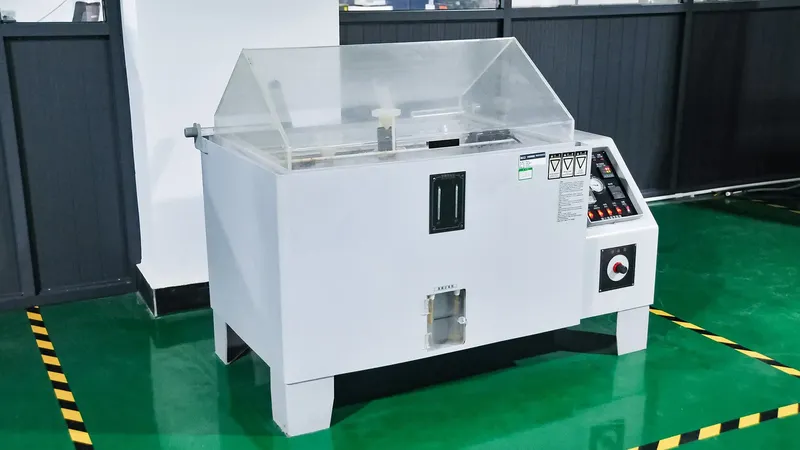
ISO 9227:2022 covers neutral salt spray, acetic acid salt spray and copper-accelerated acetic acid salt spray procedures. Its public scope says these tests are not intended to rank different materials or predict long-term corrosion resistance. A result stated as 480 h or 1,000 h therefore needs a defined method and assessment criteria. Those example durations are not CPS product results and cannot be converted directly into years outdoors.
Ask whether the specimen was a coating coupon, a component or an assembled luminaire. Then identify the coating system, hardware, exposure method, duration, assessment criteria and observed damage. A coupon report supports a narrower claim than an assembly assessment. The CPS overview of luminaire salt-spray testing introduces the process; ISO’s stated limitations still govern how a buyer should interpret the evidence. Specify any required post-exposure functional or ingress checks in the acceptance plan.
5.Turn the Site Conditions Into an Acceptance Plan
Application evidence adds context but cannot replace environmental qualification. The CPS Case Center describes a Grade II retrofit at Tianjin University’s Beiyangyuan Campus Natatorium, a 3,000 m² facility with a 50 m pool. That identifies a real operating setting. It does not establish a corrosion-test result, coating life or suitability for every pool atmosphere. Separate the project description from the evidence needed for the next installation.
Before ordering, send the supplier a written exposure schedule covering location, temperature, salt or chemical contact, cleaning method and maintenance access. The sports lighting quotation checklist helps organise the wider brief. Approve the exact housing, bracket, glands, seals and fasteners with matching reports. At installation, record coating condition, cable-entry assembly and approved tightening details. Base future inspections on that record and the manufacturer’s instructions, rather than treating the IP label as a lifetime guarantee.
6.Technical Sources
Keywords: IP rating vs corrosion resistance, IP66 LED floodlights, salt-spray testing, ISO 9227, galvanic corrosion, corrosion-resistant lighting.