Contents
1.Why Venue Lighting Raises Retrofit Questions
A sports hall may still look bright while its lighting costs keep rising. Staff may also face uneven coverage, glare-sensitive views and a system that runs every group at full output during quiet periods. These are practical reasons to review an older lighting installation, not reasons to buy the lowest-wattage replacement.

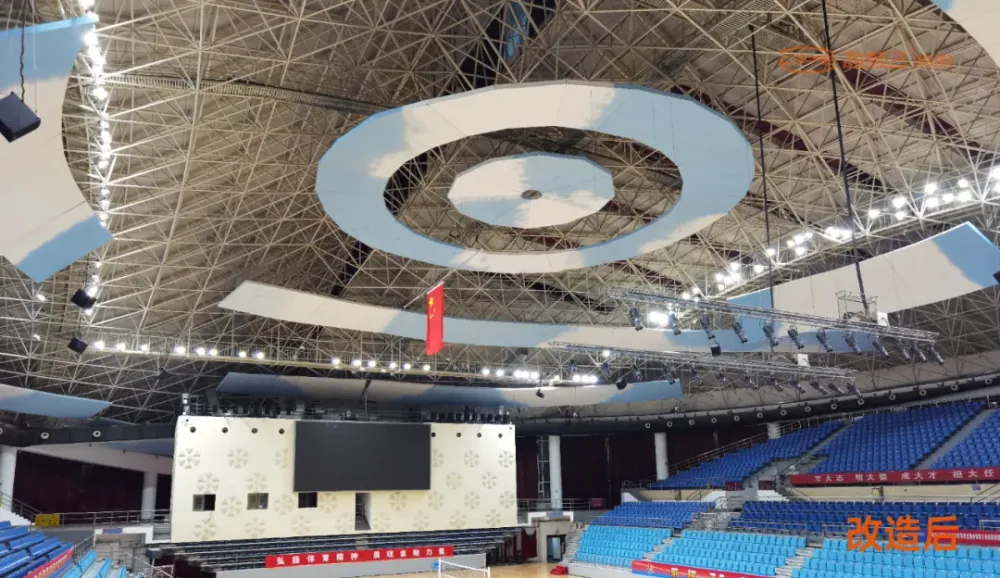
The original before-and-after gymnasium photographs illustrate the setting for that decision. They show a real retrofit, but different camera positions and exposure prevent a measured brightness comparison. The question is whether the new system delivers the required maintained light with less electricity, not whether one photograph looks brighter.
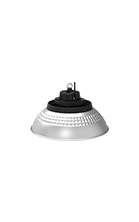
That question starts with the technology. A metal-halide lamp produces light through an electric arc in a discharge tube, controlled by a ballast. An LED produces light in a semiconductor, supplied by a driver. Neither is loss-free. Their main differences affect electricity use in three ways:
Conversion and auxiliary losses: modern LEDs can provide more lumens per system watt. Both ballast and driver efficiency matter; removing a ballast does not remove all losses.
Light distribution: metal-halide lamps emit in many directions and need reflectors. Compact directional LEDs and suitable lenses can reduce light outside the useful area, though their optics also lose light.
Operating time: compatible LED controls can reduce output or switch off unnecessary groups. This saves kWh beyond the full-output wattage reduction, if the lower scene remains suitable.
2.Metal Halide vs LED: A Worked Energy Comparison
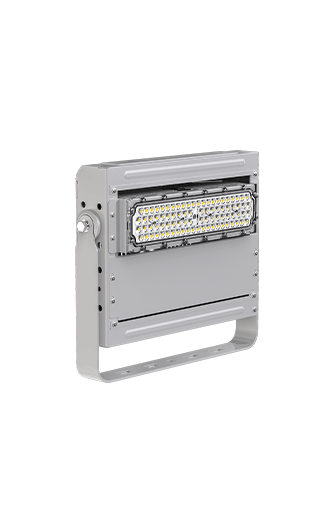
That performance requirement sets the comparison boundary. Count the metal-halide lamp plus ballast, as in the DOE fixture definition. The example assumes a 400W lamp and 50W gear losses: 450W total input. The LED assumption is 200W complete input, with driver losses already included. Actual ballast losses vary. The photographs below show real fixture types, not tested equivalent replacements.
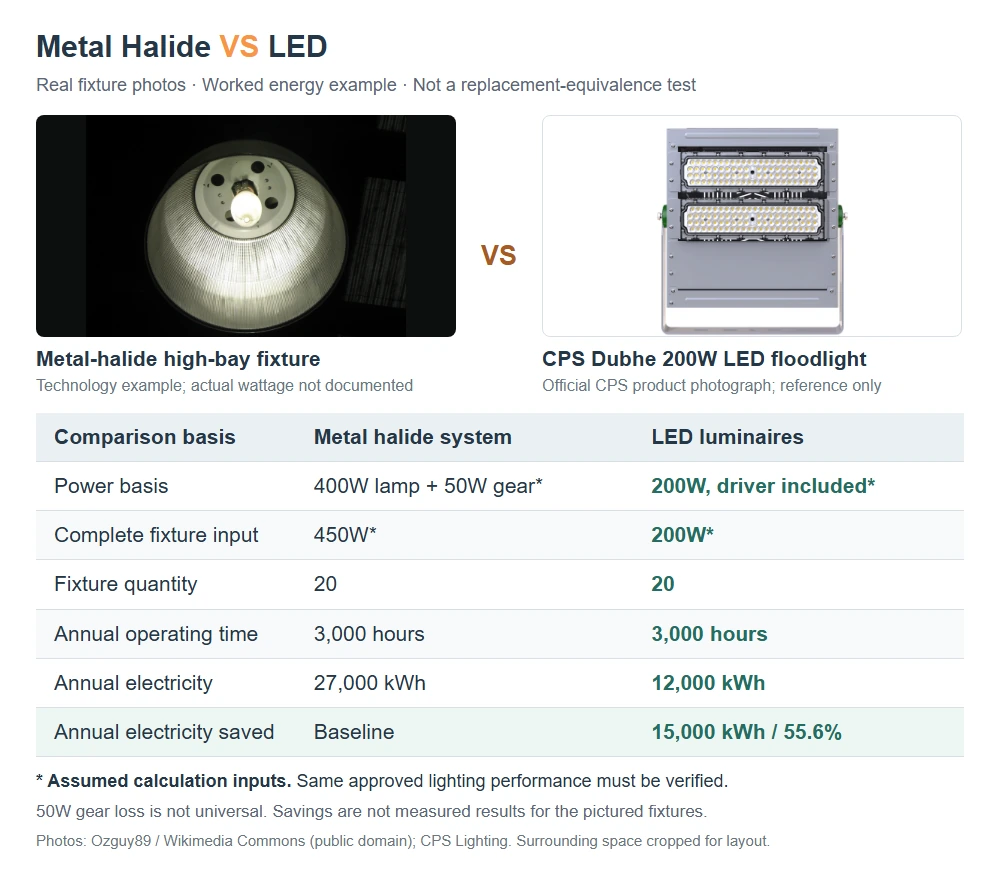
Use annual kWh = quantity × input watts × operating hours ÷ 1,000. At 20 fixtures and 3,000 hours annually, the assumed metal-halide installation uses 27,000 kWh and the LED installation uses 12,000 kWh. The difference is 15,000 kWh/year, or 55.6%, at unchanged hours. The editable table repeats the image data for easier reading on small screens.
Illustrative full-output comparison. Swipe the table sideways on narrow screens.
That result is a calculation, not a guaranteed product saving. The metal-halide photo’s actual wattage is undocumented, and the LED product photo does not establish equal court lighting. A 200W LED cannot automatically replace every 400W metal-halide lamp. Electricity and bill savings also differ when demand charges, tariff periods or fixed charges apply.
3.Build a Retrofit Solution around Light and Operating Hours
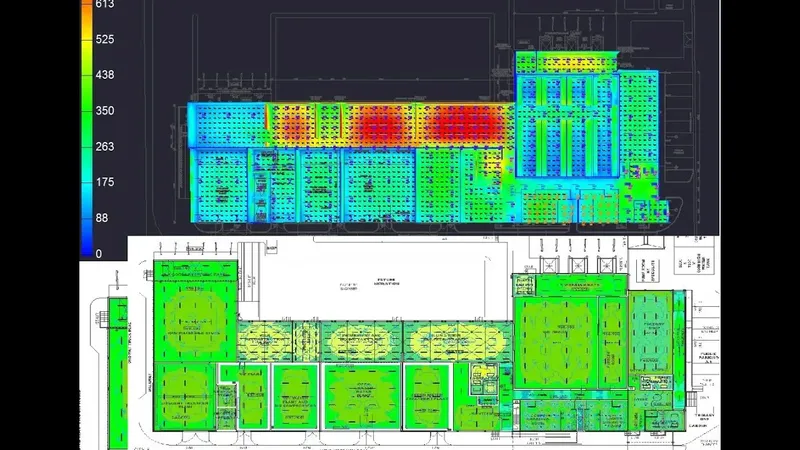
To turn the comparison into a solution, model the exact mounting positions, aiming and IES/LDT files in a photometric simulation. Check maintained horizontal and required vertical light, Emin/Eavg, glare-sensitive views and spill. The light-distribution guide explains optic selection. Luminaire efficacy is emitted lm/W, not useful lux at the task, so a high rating cannot correct a poor layout.
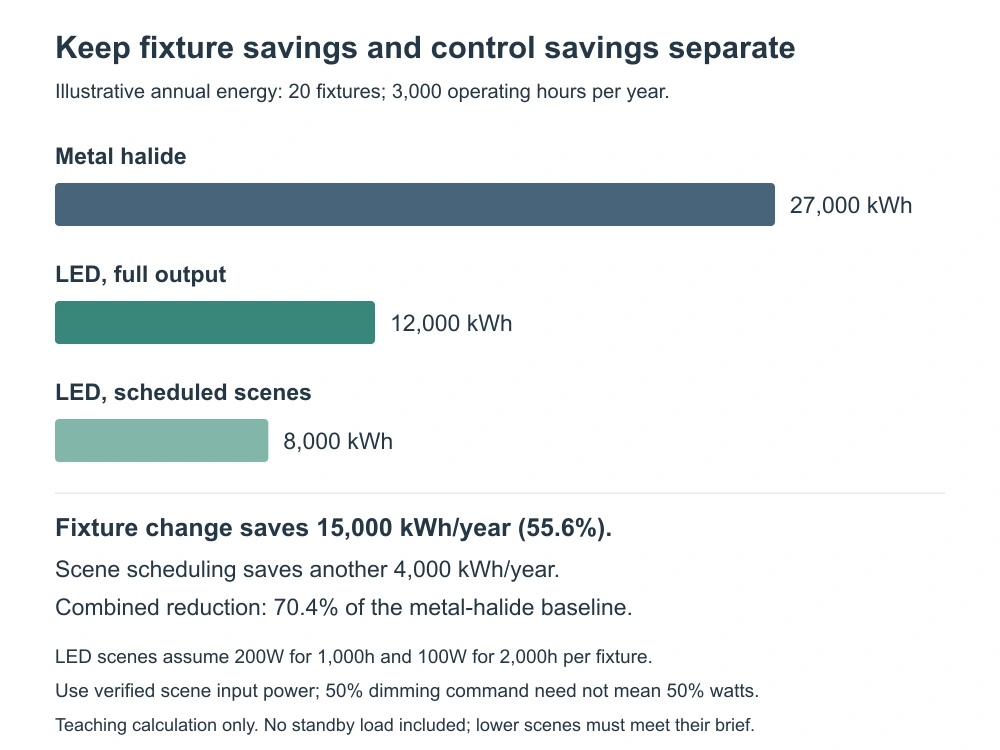
Once the layout works, add suitable operating scenes using compatible drivers and lighting controls. Assume each of the 20 LEDs draws 200W for 1,000 hours and 100W for 2,000 hours. Annual energy becomes 8,000 kWh. Controls save another 4,000 kWh; total savings reach 70.4% of the original baseline. This is not 55.6% + 33.3%, because those percentages use different baselines. Verify scene watts: 50% dimming command need not mean 50% electrical input.
Finally, test the installed lighting and record real power, kWh, hours and scene settings. ANSI/IES LM-79-24 supports laboratory product measurements, not annual site savings or venue certification. Include relevant standby loads and confirm every lower-output scene remains suitable. Calculate payback with the actual tariff and supported annual net savings; keep maintenance assumptions separate from electricity savings.
4.Two CPS Retrofit Cases: Equipment and Project Results
These checks help interpret the first case, the CPS Changchun basketball-gym retrofit. The account records 32 GP-MY-0150 LED fixtures at 150W each, replacing a system using 400W metal-halide lamps. The new rated fixture load totals 4.8 kW. Old fixture quantity, complete input and annual hours are not fully disclosed, so those figures cannot independently establish annual savings.
The second case, the Ocean University of China gymnasium retrofit, adds a project-level comparison. CPS reports 152 kW before and 87 kW after: a 65 kW reduction, or 42.8%, rounded to 43%. It also reports eight operating scenes. The table does not fully specify measurement boundaries or annual hours, so the published power reduction is not verified annual kWh or a 43% bill reduction.
Together, the cases show why product selection and project performance need different evidence. For a candidate such as the Dubhe Projection Light-200W, obtain configuration-specific input and photometry, then verify the installed result. The real before/after venue photos illustrate the second project, but their different viewpoints and camera settings do not provide a controlled brightness comparison.
5.Technical Sources
Keywords: metal halide vs LED, LED energy savings, metal-halide-to-LED retrofit, ballast losses, luminaire input power, annual kWh, lighting controls, maintained illuminance, photometric simulation.