Contents
1. Choose the Scope, Not Just the Supplier Label
2. When Product-Only Supply Is Appropriate
3. When You Need Design and Project Support
4. Match the Luminaire to the Lighting Layout
5. Ask What the Lighting Numbers Actually Prove
6. Six Questions Before You Appoint a Partner
7. A Retrofit Shows Why Layout Matters
1. Choose the Scope, Not Just the Supplier Label
Choose a sports lighting manufacturer for product-only procurement when the design is approved and your team owns installation, commissioning and acceptance. Choose a partner with verified design and delivery support when those tasks still need coordinating. A manufacturer can provide both services; the distinction is the agreed scope, not the company’s label.
For venue owners, contractors and procurement teams, the starting question is simple: who will turn the lighting brief into a working installation? Compare responsibilities before comparing fixture prices. A low equipment quote can exclude the calculations, aiming support or testing your project still needs.
2. When Product-Only Supply Is Appropriate
Product-only supply suits projects with confirmed mounting positions, heights, fixture schedules, optics and controls. Your consultant or contractor should already have a lighting calculation using the proposed luminaires, plus responsibility for electrical work, structural checks, installation and handover. Repeat purchases for an approved standard design can also fit this model.
A stadium lighting retrofit is not automatically a simple replacement. Keeping existing poles does not prove that new LED beams will reproduce the old distribution. Recheck the exact photometric files and mounting loads whenever equipment changes. Product supply may simplify procurement, but responsibility for the installed result must still be explicit.
3. When You Need Design and Project Support
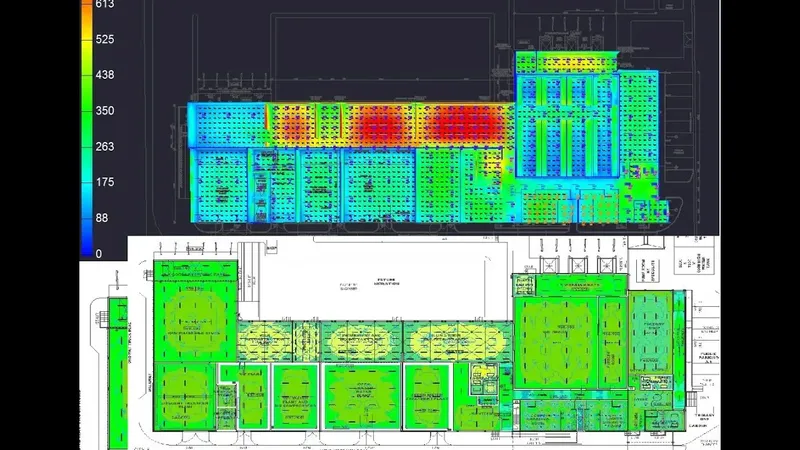
New venues, poorly lit existing courts and broadcast-oriented upgrades usually need coordinated sports lighting solutions. This includes site information, layout design, glare assessment, controls and commissioning support. Photometric simulation predicts where light falls using the selected fixture’s measured distribution; it is more useful than choosing wattage alone.
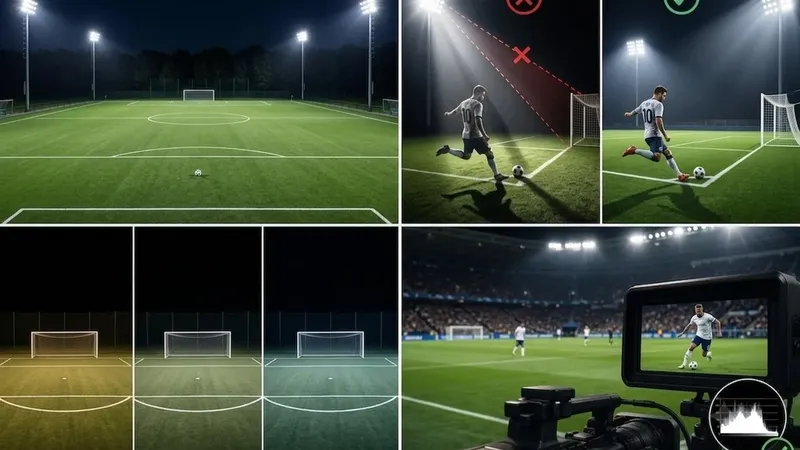
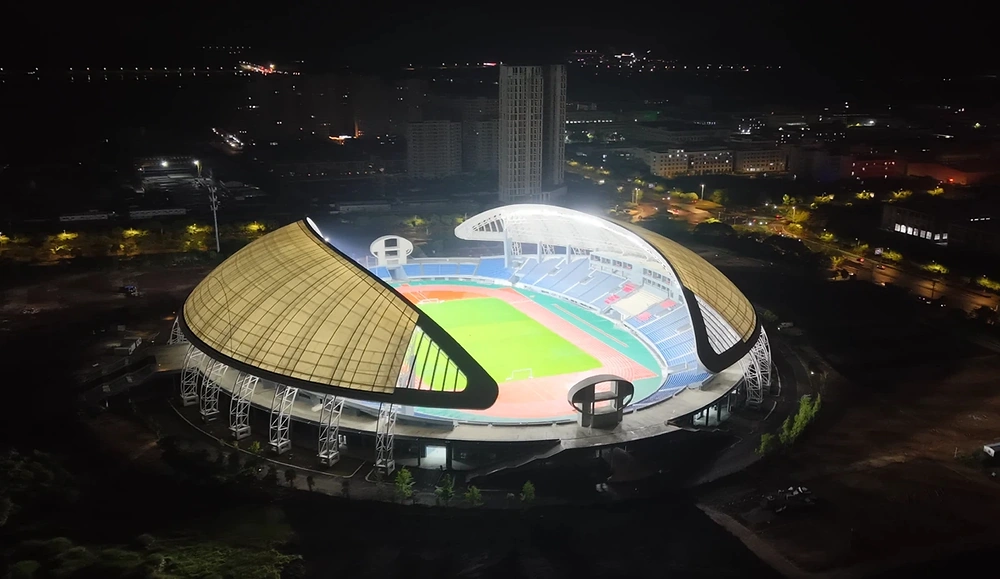
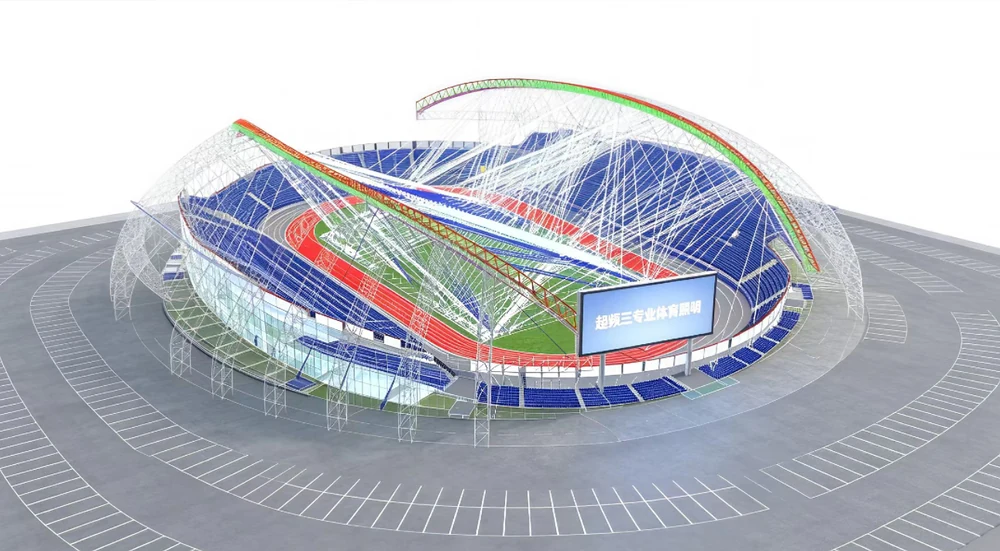
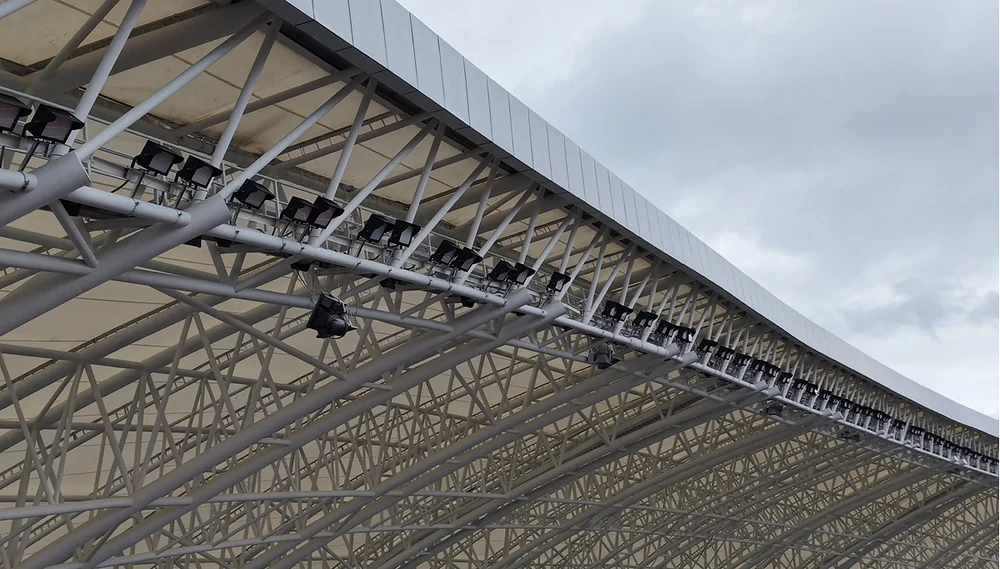
Agree the sport, competition level, operating modes and any camera requirements first. Horizontal illuminance describes light on the playing surface; vertical illuminance concerns upright planes, including camera-facing views. The geometry illustrated by the Jinlin Sports Center project also shows why roof positions and access matter. Confirm whether support is remote or on-site rather than assuming both are included.
4. Match the Luminaire to the Lighting Layout
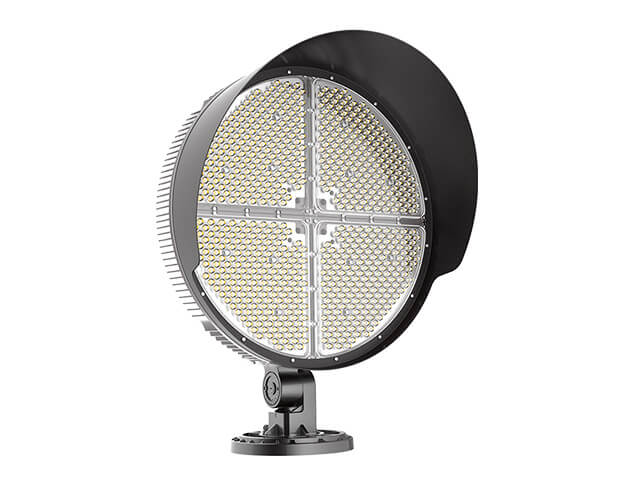
The Sirius LED floodlight family offers 200–1200W options, with listed 25°, 45°, 60°, 90° and 30-by-70-degree optics. Wattage indicates electrical demand; beam distribution determines where light goes. Request the exact IES or LDT photometric file for the selected configuration, not one generic file for the family.
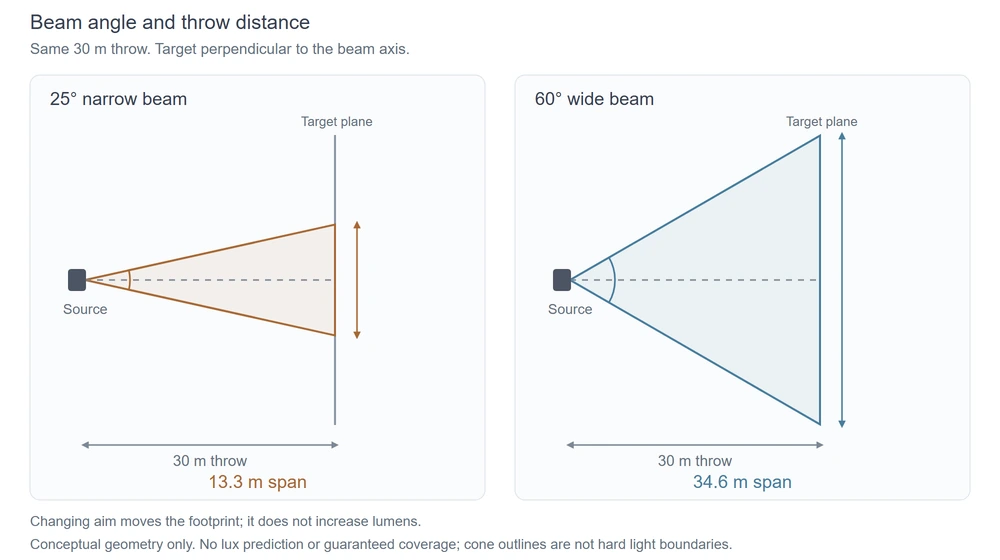
At an illustrative 30 m throw, ideal 25° and 60° cones span approximately 13.3 m and 34.6 m on a perpendicular plane. These are geometric examples, not useful-coverage boundaries or lux predictions. Actual intensity, tilt and beam overlap still matter. Narrow beams concentrate light but require more accurate aiming; wider beams spread it but may increase spill. Higher mounting increases throw distance and structural demands. A layout should verify these trade-offs before equipment approval.
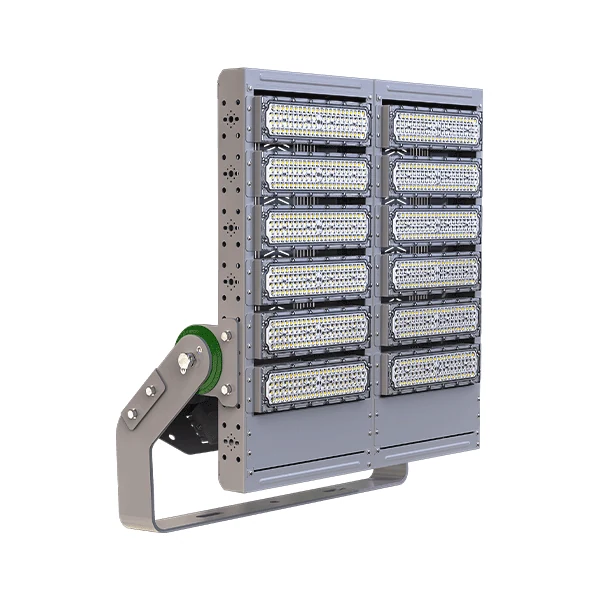
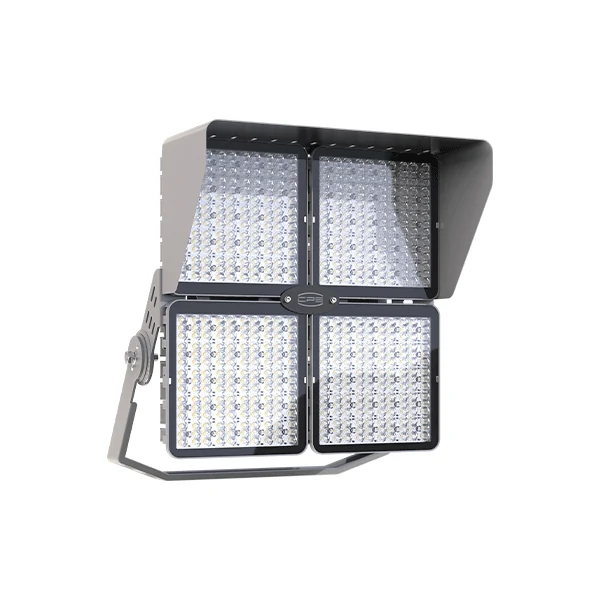
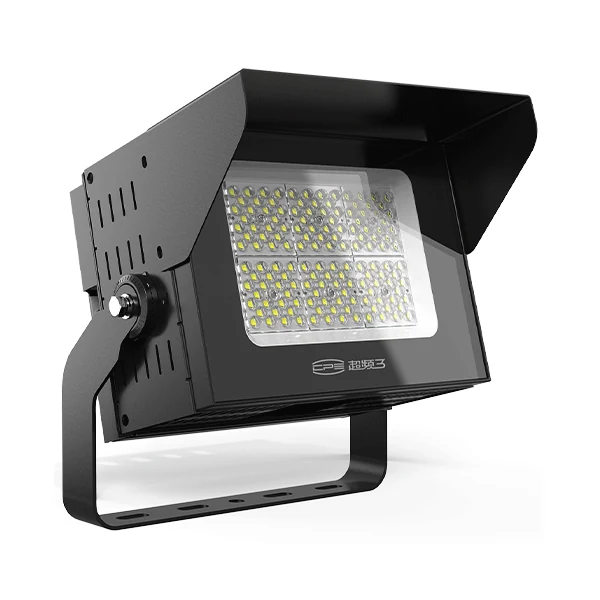
Current catalogue references, not a prescribed fixture mix. Images are not to physical scale.
5. Ask What the Lighting Numbers Actually Prove
Consider two hypothetical layouts calculated on the same grid. Both average 500 lux, but their darkest points differ. The minimum-to-average ratio is calculated by dividing minimum illuminance by average illuminance. These figures illustrate a comparison, not a standard requirement or a CPS project result.
| Illustrative measure | Layout A | Layout B |
|---|---|---|
| Average illuminance | 500 lux | 500 lux |
| Minimum illuminance | 350 lux | 150 lux |
| Minimum / average | 0.70 | 0.30 |
On smaller screens, swipe within the table to view every column.
Layout B leaves darker areas despite the identical average. Neither result alone proves acceptable glare, colour rendering or camera performance. For Chinese projects, identify the applicable provisions of JGJ 153-2016 and GB/T 38539-2020. The latter is a recommended national standard. International projects need the destination’s requirements and relevant competition or broadcaster brief, not an assumed universal threshold.
6. Six Questions Before You Appoint a Partner
Use these questions to compare suppliers on the same basis. Record the answers in the quotation or contract; a “full-service” description does not define deliverables.
Can you produce a project-specific design? Request the layout, calculation report, selected optics, maintenance assumptions and named design criteria.
Have you delivered a comparable venue? Ask for relevant football, indoor court or athletics references and available acceptance evidence, not photographs alone.
What supports the proposed performance? Request model-specific colour-rendering, flicker, safety and ingress-protection evidence. Assess glare through the actual layout and viewing positions.
Who supports installation and commissioning? Define technical briefings, aiming instructions, control setup, remote assistance and any agreed site attendance.
Who verifies the completed lighting? Agree the measurement grid, test conditions, independent testing arrangements and responsibility for correcting shortfalls.
What happens after handover? Confirm warranty coverage, response arrangements, spare drivers and optics, and access to project records.
7. A Retrofit Shows Why Layout Matters
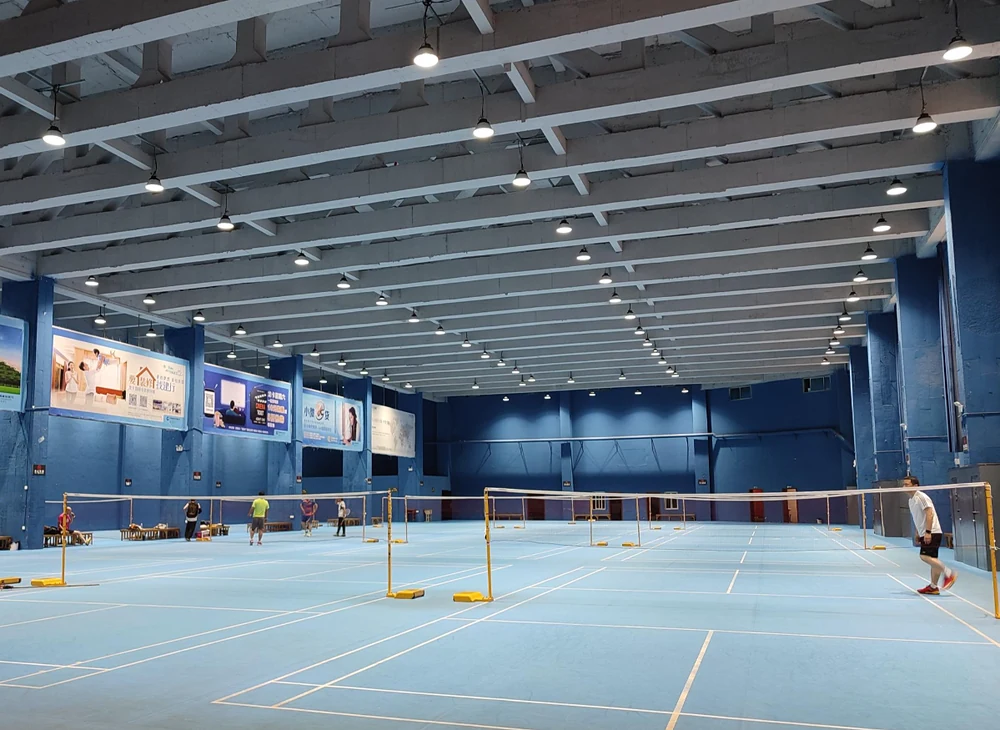
At Sitong Sports and Culture Art Center in Zunyi, CPS reports a 13-court badminton hall affected by uneven lighting, glare and inadequate brightness. The published replacement scheme changed 132 fixtures rated at 200W to 102 units rated at 150W.
That reduces calculated fixture power from 26.4 kW to 15.3 kW, approximately 42%. It is a case-specific rated-power comparison, not a promised electricity-bill saving. The useful lesson is that fixture positions and distribution were reconsidered together; buying lower-wattage lights alone would not demonstrate a successful retrofit.
8. How CPS Can Support Your Project
CPS combines luminaire manufacturing and lighting design support. Product-only buyers can discuss suitable fixtures against an approved design. Buyers needing broader support can discuss simulation, product selection, installation guidance and assistance with commissioning and acceptance, with the actual scope confirmed in the proposal.
CPS also reports lighting-engineering qualifications and patents. Request current certificates for the contracting entity and relevant scope rather than treating company credentials as certification of every installation. To start a free DIALux lighting simulation, share your site plan, mounting heights, photographs and intended use. Agree who supplies site data, performs local works and signs off the completed system.
9. Technical Sources
1. SAMR: GB/T 38539-2020 — LED sports lighting application requirements; current standard record.
2. Yuxi housing authority: JGJ 153-2016 implementation notice — Sports-venue lighting design and testing standard identification.
3. UEFA Stadium Lighting Guide 2023: Uniformity — Ratios must be identified by their formula and reference plane.
4. UEFA Stadium Lighting Guide 2023: Report Data — Illustrates reporting beyond average lux; applies within its competition context.
Core Keywords:
sports lighting manufacturer, sports lighting solutions, stadium lighting design, photometric simulation, stadium lighting retrofit, sports lighting commissioning