CPS Lighting supplies solar street lights and supports rural road-lighting projects. In Baise, Guangxi, China, CPS assisted the installation of 1,245 CPSL03 Haoxing series solar street lights across five townships within one county, bringing lighting to village main roads and residential areas.
The project addressed routes where lighting had been absent or existing lamps were too dim for residents’ night-time travel. Independent solar power enabled the new lights to operate without a mains connection. The county and individual township names are not disclosed in the published account.

| Project item | Published scope |
|---|---|
| Location | An unnamed county in Baise, Guangxi, China |
| Coverage | Five townships; village main roads and residential areas |
| Installed quantity | 1,245 solar street lights |
| Historical product | CPSL03 Haoxing series |
| CPS contribution | Assistance with the installation using CPS solar street lights |
1. Lighting village roads and residential routes
The photographs show narrow lanes between homes, road bends with dense vegetation and longer stretches framed by mountain slopes. These different conditions make route geometry and shading practical considerations. Pole positions need to follow the road while keeping light useful to pedestrians and local vehicles.
The original account places the installation within a wider programme of rural infrastructure improvements. It reports coverage of village main routes and areas where residents are concentrated. It does not provide a road-length schedule or an allocation of the 1,245 lights by township, so those details should be confirmed from project records when planning a comparable rollout.


2. Independent solar power and automatic controls
The Haoxing series is described as combining motion sensing, light sensing and time control. For a new project, agree the lighting hours, background output, triggered level and detection settings before choosing the solar package. A busy residential lane can demand more nightly energy than a lightly used connecting road.
The source describes lithium iron phosphate batteries and an intelligent charging controller. Solar charging and storage must be assessed together: seasonal sunlight, panel orientation, shading, usable battery capacity and the output schedule determine the available reserve. The published case does not establish a tested number of consecutive rainy nights.
Independent generation avoids the need to run a new mains supply cable between the lights. Foundations, secure mounting, internal wiring and maintenance access still require planning. For a similar rural route, review the panel’s exposure to sunlight as well as where the light is needed, especially near trees, buildings and hillsides.
3. What the project record establishes
The documented result is an installation of 1,245 solar lights across five townships. The night photographs show illuminated routes and residents using village streets. They are project views, rather than a controlled before-and-after comparison or a measurement report.
The original series description quotes luminaire efficacy above 170 lm/W and a battery cycle-life claim above 2,000 cycles. Test conditions and a site-specific equipment schedule are not provided. These historical product claims should not be treated as measured road illuminance, demonstrated battery life at this site or a basis for calculating financial returns.
For new orders, CPS’s manufacturing resources and laboratory equipment support equipment and documentation reviews. Request matching photometry, panel and battery ratings, programmed control modes and relevant model-specific reports. Establish installation and commissioning responsibilities alongside the supply scope.
4. Historical CPSL03 solar lighting configuration
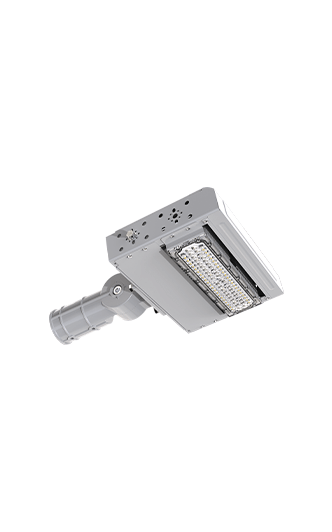
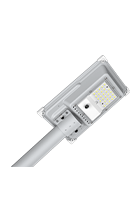
The original case identifies CPSL03 Haoxing as the installed series. It does not publish the fixture wattage, pole height, panel rating, battery capacity or measured lighting results. The project equipment photograph below keeps the product discussion tied to the actual installation.

CPSL03 Haoxing — historical installed series
| Parameter | Project configuration or catalogue reference |
|---|---|
| Installed quantity | 1,245 lights across five townships |
| Power approach | Independent solar generation; no mains connection required |
| Control functions described | Motion sensing, light sensing and time control |
| Battery chemistry described | Lithium iron phosphate |
| New-project information needed | Road geometry, mounting arrangement, optics, solar yield, battery reserve and operating schedule |

Related catalogue products are current options for new enquiries. They do not identify the historical CPSL03 batch. Select solar products against the charging and storage assessment; a mains-powered road light is a separate option where an appropriate electricity supply is available.
5. Plan solar lighting for your rural roads
Send a road plan or CAD drawing, widths, proposed pole positions and mounting heights, plus photographs of buildings, vegetation and potential shading. Include the location, required lighting hours, expected night-time activity, lighting criteria and poor-weather reserve requirement.
Request a free DIALux simulation to review the proposed distribution of light using matching photometric data. Check solar generation and battery sizing separately against the agreed operating schedule, then confirm control settings, site measurements and maintenance arrangements before commissioning.