Contents
1.A Credible Report Lets You Trace the Result
A contractor receives a bright venue rendering and a page stating “500 lux achieved.” The package looks complete, but it gives no calculation-plane height, maintenance basis or exact optic. The buyer cannot tell what was calculated or whether the proposed equipment matches it. A useful lighting calculation report must make those connections visible before the installation is approved.

Start with the project name, revision, intended use and applicable criteria. Name the software and version, then distinguish calculated predictions from measurements. The CPS DIALux and AGi32 guide introduces the modelling workflow. Neither a software logo nor an attractive false-colour image proves that the inputs match the site or that every required criterion has been checked.
2.Match the Photometry to the Proposed Installation
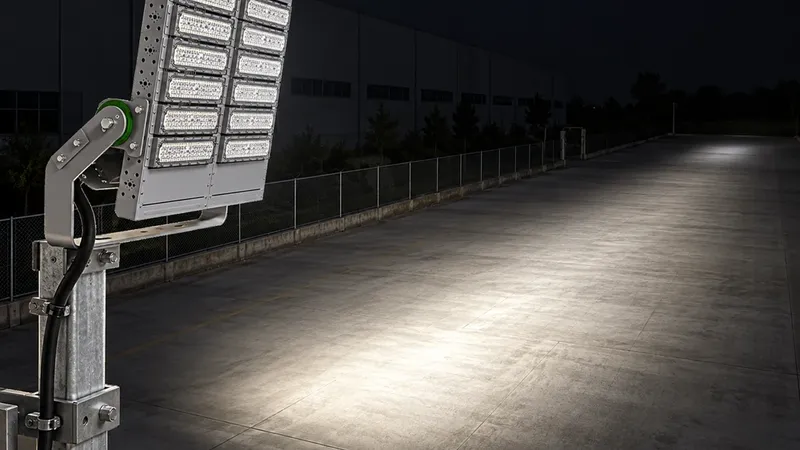
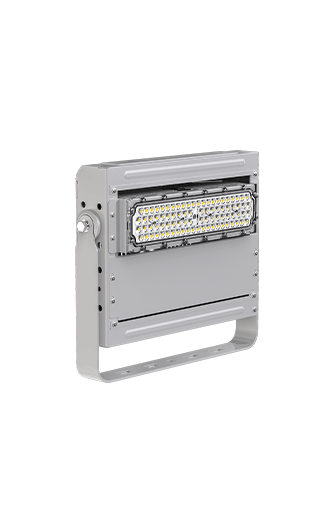
The luminaire schedule should identify the model, optic, IES/LDT file, quantity, output setting and any accessories affecting light distribution. A product such as the Dubhe 1000W floodlight still needs configuration-specific data. A nominal beam angle cannot replace the complete intensity distribution, and an unrecorded output multiplier makes later comparison difficult.
The layout should show coordinates, mounting heights, relevant obstructions and fixture aiming. Connect each luminaire ID to the schedule so the installer can reproduce the model. The CPS aiming-error guide explains why small deviations matter. If a pole position or optic changes, ask which calculation revision incorporates that change instead of accepting an unchanged summary page.
3.Separate Initial Results from Maintained Results
DIALux documentation supports fixed and detailed maintenance-factor methods and records them in the output. The factor needs a stated basis, not an unexplained default. ISO/CIE TS 22012:2019 describes a determination workflow for indoor and outdoor installations. Ask how the selected assumptions relate to the equipment, environment and planned maintenance.
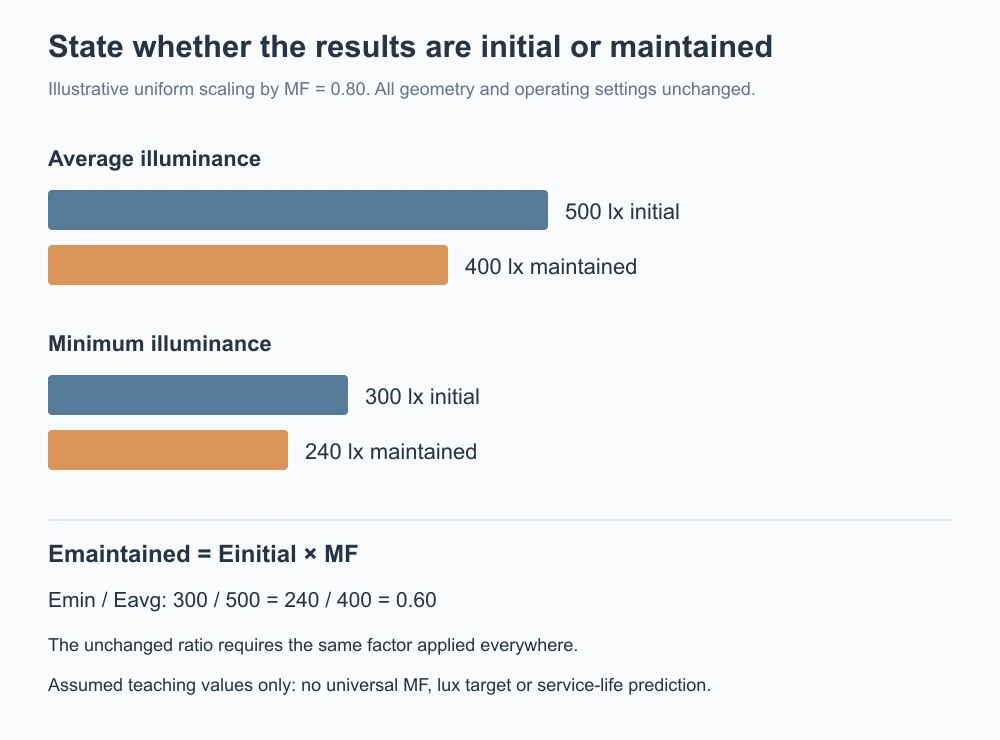
For a simple teaching example, apply one uniform maintenance factor of 0.80 to an initial average of 500 lx and a minimum of 300 lx. The maintained values become 400 lx and 240 lx. Emin/Eavg stays at 0.60 only because both values receive the same factor. These are assumed numbers, not universal targets. Do not apply another reduction to results already labelled maintained.
4.Read the Grid, Ratios and Missing Checks
Require the calculation area, plane height and orientation, point spacing and any excluded locations. AGi32 documentation distinguishes surface position from meter orientation and allows different ratio conventions. Therefore, write Emin/Eavg or the actual formula rather than relying on a label alone. An average over the floor cannot establish a camera-facing vertical result.
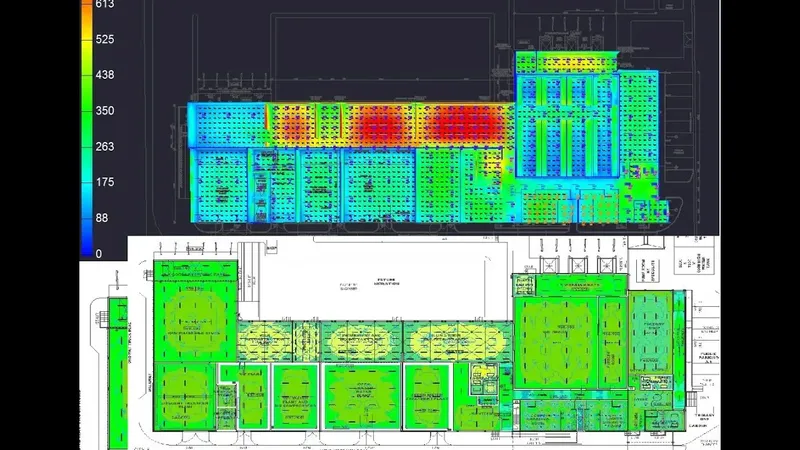
Review point values with the summary, and use the same colour scale when comparing options. A colour plot helps locate a weak zone, but the underlying numbers and criteria decide whether it passes. Ask for relevant glare viewpoints, boundary checks and operating scenes where the brief requires them. A report should identify what it did not assess rather than imply that a single lux result proves complete compliance.

5.Connect the Report to Case Evidence and Acceptance
The CPS Tianjin University swimming-pool case lists 18 new 300W luminaires replacing 27 old lamps, with optical simulation and installation commissioning. This illustrates why the report schedule must match the installed configuration. The published project summary is not a substitute for its complete point-by-point calculation and measurement records, and the fixture count alone cannot establish every performance claim.
For your project, agree the measurement locations, meter orientation, operating scene and acceptance basis before ordering. Record installed aiming, equipment identity and any deviations from the approved design. Compare early site readings with an appropriate initial model and assess maintained predictions on their stated basis. When requesting a lighting design review, send the report and layout revision together so the next action addresses a specific missing input or unverified result.
Confirm the brief and calculation basis before comparing headline lux values.
Resolve changed equipment or geometry before approving the installation.
Keep the final model, aiming schedule and site readings under matching revision records.
6.Technical Sources
Keywords: lighting calculation report, photometric report, DIALux report, AGi32 report, maintenance factor, maintained illuminance, IES files, calculation grid, lighting commissioning.