Contents
1. Start With Recognition During Movement
2. Check Uniformity and Vertical Coverage
3. Control Glare Without Losing Useful Light
4. Assess Drivers and Operating Scenes
1.Start With Recognition During Movement
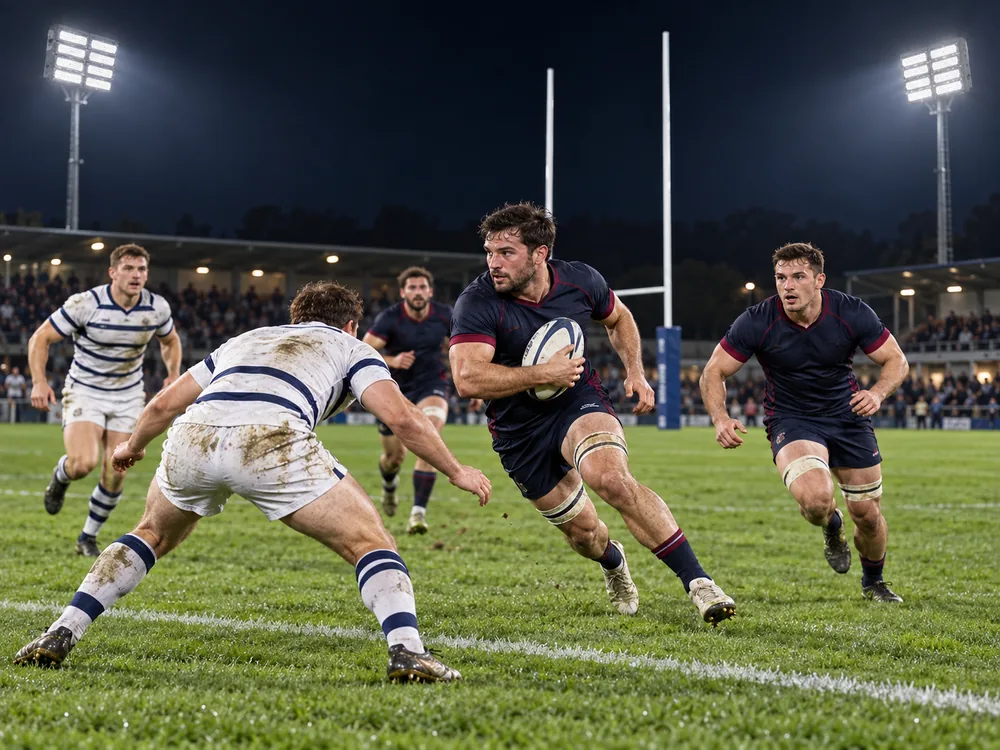
Consider a winger receiving a pass as a defender closes the gap. The ball moves against grass, jerseys, and a dark stand within a few seconds. A patch of weak light or an exposed LED array may make those transitions harder to read. This illustrative field check explains why rugby lighting needs more than an average lux reading. It does not establish that lighting alone prevents collisions.
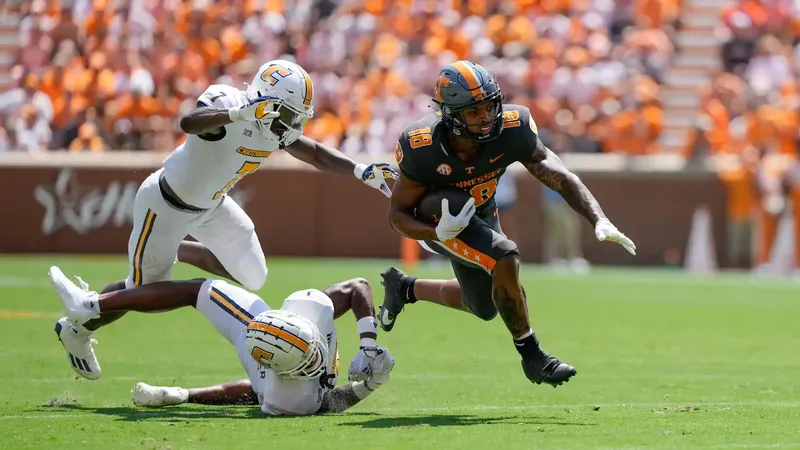
American football adds helmeted receivers, long passes, and different end-zone markings. Both sports need useful light on moving players and the ball, but their sightlines and field geometry differ. World Rugby’s pitch-planning guidance asks designers to establish sport, playing level, training use, and maintenance resources. Engineers should translate those operating needs into a measured lighting brief before specifying fixtures.
2.Check Uniformity and Vertical Coverage
Horizontal illuminance, Eh, describes light on the playing surface. Vertical illuminance, Ev, describes light arriving on upright planes and helps assess faces, jerseys, and camera-facing action. A bright ground grid can still leave players poorly modelled from one direction. Engineers should assess several vertical orientations rather than assume that one camera plane represents every player view.
Uniformity must also state its denominator. In the illustrative example below, Emin/Eavg describes the weakest point relative to the average, while Emin/Emax compares it with the brightest point. The photometric simulation guide introduces the calculation workflow. Designers must include in-goal or end-zone areas, not stop the grid at midfield or the main playing rectangle.
3.Control Glare Without Losing Useful Light
A receiver tracking a high pass can look toward a mast even when the ground-level calculation passes. CIE 112 provides an outdoor Glare Rating method for viewing directions below eye level. Its result cannot certify every upward ball-tracking view. The stadium glare article explains source exposure, while the field model must test the actual positions and directions used in play.
Mounting height, setback, optical distribution, and aiming work together. A shield can reduce unwanted source exposure, but it can also remove useful light if the selected optical file does not represent that configuration. The pole-placement comparison offers layout context, not rugby-specific mandatory coordinates. Engineers should compare overlapping beams and shadows before approving any arrangement.

4.Assess Drivers and Operating Scenes
LED sports floodlights can change output rapidly, yet driver current modulation may create camera banding or unstable slow-motion footage. “Flicker-free” is therefore a claim to verify at specified frame rates, shutter settings, and dimming levels. The flicker engineering guide covers this separate issue. Acceptable full-output footage does not prove that a reduced training scene behaves the same way.
Controls also need an operational review. The project should record match and training scenes, switching permissions, supply protection, and the response to a failed circuit. World Rugby’s tournament-management guidance treats loss of floodlighting as an issue requiring a match decision. Designers should agree the required resilience with the organiser rather than promise uninterrupted play from LED technology alone.
5.Commission the Field Against Its Brief
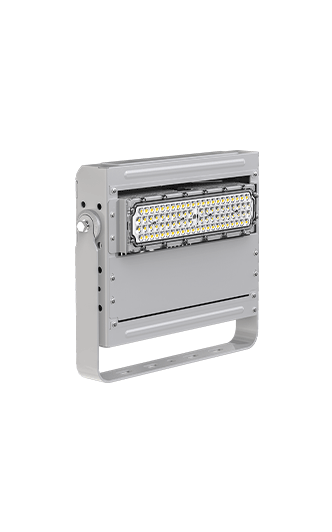
Product selection should follow the approved optical model. The CPS Dubhe Projection Light 1000W listing offers a modular housing, optical options, and an optional anti-glare hood. Those features support design choices, but they do not establish rugby or NFL compliance. The exact luminaire, driver, shield, and aiming settings must match the calculation and procurement schedule.
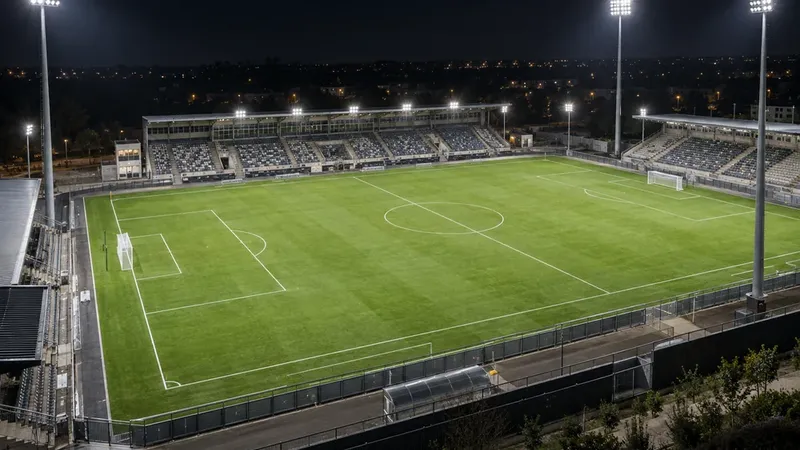
CPS describes its Grade III high-pole football project with four 18 m lifting poles and an average illuminance requirement of at least 550 lx. This is a soccer project record, not a rugby performance test. Its relevant lesson is coordinated optics, mounting, and scene control. For rugby and American football, retain calibrated Eh and Ev measurements, observer checks, camera tests, and the final aiming schedule.