Contents
1. How Solar Flood Lights Work
2. Separate System Layout from Control Mode
3. Check Energy Before Promising Runtime
4. Select Useful Light, Not Just Lumens
5. Install for Sunlight, Safety and Access
6. Maintain Panels, Batteries and Connections
7. Compare Whole-Project Costs
1. How Solar Flood Lights Work
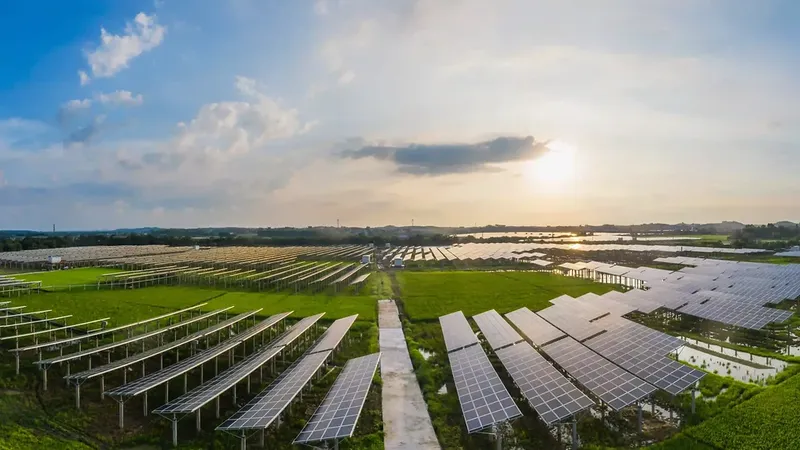
Solar flood lights combine a photovoltaic panel, battery, LED luminaire and controller to provide outdoor lighting without a dedicated grid connection. They can suit yards, entrances and remote sites, but useful light and dependable runtime depend on the complete system, not a headline wattage.
The panel produces direct-current electricity; the battery stores energy for later use, while the controller manages charging and lighting. Panel power is measured in watts. Conversion efficiency is a percentage, not a wattage. Compare rated power, usable storage and local solar conditions rather than assuming one panel technology guarantees better performance.

2. Separate System Layout from Control Mode
All-in-one and split systems describe component arrangement. Motion sensing and dusk-to-dawn operation describe control behaviour; either can be combined with different arrangements. A split panel allows independent solar orientation, but adds cable routes and connections. Integration simplifies assembly but can constrain panel position.
| Design choice | Practical benefit | What to verify |
|---|---|---|
| Integrated layout | Fewer separate components | Panel exposure and service access |
| Split layout | Independent panel placement | Cable length, connectors and voltage drop |
| Motion-responsive mode | Less energy between activations | Background level and real traffic |
| Dusk-to-dawn mode | Automatic night operation | Seasonal night length and energy budget |
On smaller screens, swipe within the table to view every column.
A sensor does not necessarily mean the light switches completely off between events. Specify background output, detection coverage and timing. Frequent activations can consume more energy than a quiet-site demonstration suggests.
3. Check Energy Before Promising Runtime
Size nightly runtime from energy in watt-hours (Wh), not battery amp-hours alone. Nominal battery energy equals voltage multiplied by amp-hours; usable energy is lower because discharge limits, temperature and conversion losses matter. Extra storage cannot indefinitely correct a daily charging deficit.
The illustrative comparison assumes a 100W panel, four equivalent full-sun hours and 70% net delivery to storage: 280Wh/day. These are planning assumptions, not CPS specifications or a weather guarantee. Both schedules use the stated electrical load; any additional controller demand must be included.
| Illustrative schedule | Nightly demand | Balance against 280Wh/day |
|---|---|---|
| 40W for 8 hours | 320Wh | 40Wh daily deficit |
| 40W for 3 hours; 10W for 5 hours | 170Wh | 110Wh daily surplus |
On smaller screens, swipe within the table to view every column.
A positive balance still needs storage reserve for poor charging periods. Verify runtime assumptions against the design season and actual programmed settings.
4. Select Useful Light, Not Just Lumens
Lumens describe emitted light; illuminance in lux describes light reaching a surface. Ask for coverage and minimum levels at the actual mounting height, including dark areas and spill beyond the site. Higher output does not automatically improve uniformity or reduce glare.
Choose colour temperature for the setting rather than treating cooler light as inherently brighter or better. Check outdoor protection evidence for the exact model. An ingress-protection (IP) rating addresses enclosure protection; it does not replace corrosion, mounting or battery-temperature checks.
5. Install for Sunlight, Safety and Access
Survey seasonal shading from trees, roofs and nearby structures. “Face south” is not a universal instruction: orientation depends on hemisphere, latitude, shading and the required operating season. The mounting structure must support the selected equipment and local wind exposure.
Agree cable routes, compatible connectors, isolation procedures and maintenance access with qualified installers. Follow the manufacturer’s instructions and local requirements rather than opening sealed battery compartments or improvising connections. A site-specific installation plan should cover both charging exposure and the area to be illuminated.

6. Maintain Panels, Batteries and Connections
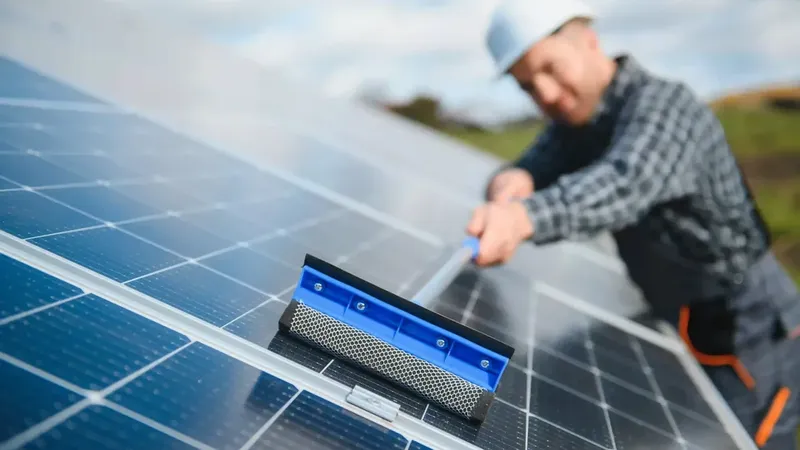
Solar flood lights are not maintenance-free. Use the specified panel-cleaning method and inspect accessible fixings, cables and connectors. Check for shading changes, damaged seals and reduced output. Do not infer a universal battery replacement interval from a generic lifespan claim.
When a light dims early, first review recent charging, panel cleanliness and the programmed schedule. Compare battery condition and charging behaviour with the model’s service procedure. Fault diagnosis should distinguish energy shortage from a damaged driver, connection or controller; leave electrical repairs to competent personnel.

7. Compare Whole-Project Costs
Avoiding a new grid cable can be valuable, but panels, batteries, installation and replacements still cost money. For scale, a hypothetical 40W grid light operating eight hours nightly uses 116.8kWh/year. At an assumed $0.20/kWh, that is $23.36 annually—not an automatic $600 saving.
Compare alternatives providing equivalent lighting and hours. Include trenching, service access, replacements and any backup supply. Lifetime return and payback are different calculations; both need complete assumptions. Do not count unconfirmed incentives or claim zero operating costs simply because sunlight is free.

8. Request a Documented System Proposal
Request the fixture’s photometric file, battery voltage and Wh rating, panel rating, lighting schedule, warranty and spare-part arrangements. For roads or paths, a solar street-light optic may fit better than a wide floodlight. Where mains is available, compare a grid-powered LED floodlight rather than assuming solar always wins.
Commission the installed system in its intended modes and record the settings. A convincing proposal demonstrates the required service; anonymous success stories and unsupported “best brand” claims do not.
9. Technical Sources
1. DOE: PV Performance and Efficiency — Efficiency is an energy-conversion percentage.
2. DOE: Solar Radiation Basics — Location, season, weather and shading affect the solar resource.
3. DOE: PV System Design Basics — Mounting and storage considerations.
4. IEC 60529: Enclosure Protection — Scope of the IP Code.
5. NIST: Building Life Cycle Cost Programs — Compare relevant initial and operating costs over time.
Core Keywords:
solar flood lights, solar-powered flood lights, solar flood light installation, battery energy, solar lighting controls, outdoor lighting maintenance