Contents
1. What Is Solar Light and How Does It Work?
2. Match the Light to the Architectural or Landscape Task
3. Weigh Installation Benefits Against System Limits
4. Read Specifications as Project Inputs, Not Guarantees
5. Use a Simple Energy Schedule Before Selecting Storage
6. Plan Installation, Commissioning and Maintenance
7. Assess Environmental Impact and Light Pollution Separately
1. What Is Solar Light and How Does It Work?
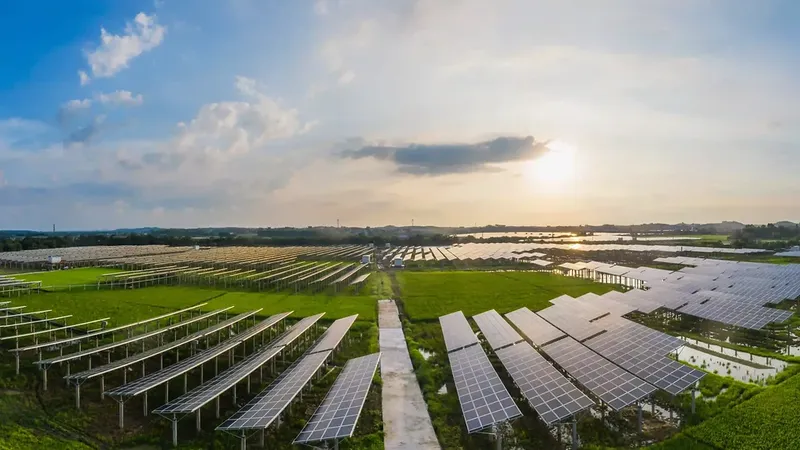
Solar lighting uses photovoltaic panels to generate electricity, stores it in a battery and supplies an LED through a controller after dark. In architecture and landscape projects, it can illuminate paths, entrances and selected features without a new grid connection at each standalone fitting.
The panel, battery, controller and luminaire form one system. Integrated units simplify packaging; separate panels allow the light to face its target while the panel faces suitable sunlight. Solar-powered indoor lighting needs an external collection system, not simply a garden fitting placed inside. Performance depends on matching useful light with available energy.

2. Match the Light to the Architectural or Landscape Task
Path and recessed lights should reveal the walking surface without dazzling approaching users. Wall and post lights can define entrances and boundaries. Spotlights accent selected features, while floodlights cover wider areas. Decorative lighting creates atmosphere but should not replace required safety or emergency lighting.
Choose optics, mounting height and aiming before fixing quantities. Access-route products such as Sunflower solar street lights belong to a different category from small wall or garden accents. A luminaire’s appearance or solar panel does not establish the illuminance it will deliver to a path, facade or sign.
3. Weigh Installation Benefits Against System Limits
Standalone solar lighting can avoid supply trenching and purchased electricity for the light. However, foundations, brackets, wind loading and safe access still need attention. Where a reliable connection already exists, the solar-versus-grid comparison may favour a different solution. Lower operating electricity cost does not guarantee a lower whole-project cost.
Cloud cover, seasonal shade and longer winter nights can reduce the energy margin. Batteries, controllers and seals also require maintenance; LED life alone does not define system life. Include replacement access and parts availability in the design instead of treating a sealed, attractive enclosure as maintenance-free.

4. Read Specifications as Project Inputs, Not Guarantees
Lumens describe emitted light; illuminance, measured in lux, describes light reaching a surface. Generic lumen bands cannot establish suitable path spacing or facade coverage. Use the proposed optics and mounting geometry, then verify the result against the project brief and applicable local requirements.
| Specification | Useful check | Avoid this assumption |
|---|---|---|
| Light and colour | Target illuminance, beam distribution and colour temperature | More lumens or cooler light is always better. |
| Battery and panel | Usable Wh, seasonal charging and output schedule | A mAh figure directly predicts lighting hours. |
| Ingress protection | IP66: powerful water jets; IP67: temporary immersion | Immersion protection automatically covers water jets. |
| Controls and service | Photocell, motion detection, timers and replaceable parts | Sensor type proves runtime or whole-system life. |
On smaller screens, swipe within the table to view every column.
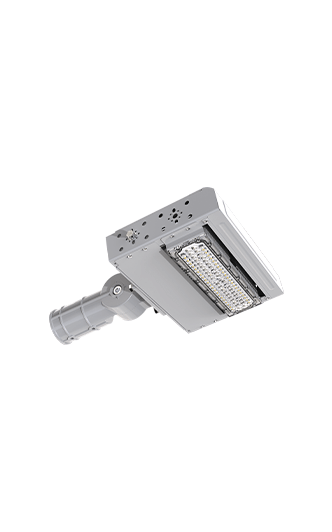
A photocell responds to ambient light; a passive infrared (PIR) sensor detects movement. These are different functions. Programmable periods, as offered on Hulk-E-3rd, can manage demand, but the agreed background level and switching behaviour must still suit the site. Check all installed connectors and mounting conditions, not only the enclosure’s IP marking.
5. Use a Simple Energy Schedule Before Selecting Storage
The illustrative design comparison below shows how quantities and schedules change demand. Wattages are hypothetical total battery-side loads per fitting, including electronics. They are not recommended lighting levels, CPS product ratings or a completed photometric design.
| Lighting task | Assumed quantity and load | Nightly schedule | Calculated demand |
|---|---|---|---|
| Pathway | 8 fittings × 2 W | 10 h | 160 Wh |
| Entrance walls | 6 fittings × 4 W | 6 h | 144 Wh |
| Landscape accents | 4 fittings × 5 W | 4 h | 80 Wh |
On smaller screens, swipe within the table to view every column.
The subtotal is 384 Wh per night. For independent solar fittings, each panel and battery must still meet its own load; this total is not a shared battery specification. Confirm usable storage and runtime together with local design-season charging. A larger battery cannot indefinitely compensate for insufficient daily replenishment.
6. Plan Installation, Commissioning and Maintenance
A site-specific installation plan should record panel shading, orientation, mounting positions, cable protection and access. Check drainage around recessed fittings and keep their installed protection appropriate to the exposure. Elevated or electrical work needs suitably qualified personnel; rooftop PV photographs do not demonstrate that every solar-light installation is simple DIY.
At commissioning, inspect aiming and glare from normal viewing directions, measure the intended surfaces and confirm the operating schedule. Verify low-energy behaviour rather than checking only that the LEDs turn on. Follow the specified panel-cleaning procedure, inspect fixings and seals, and plan battery servicing without damaging the enclosure.
7. Assess Environmental Impact and Light Pollution Separately
Solar power does not automatically prevent glare, upward light or spill into neighbouring property. Apply the DarkSky/IES principles: light only where useful, aim and shield it, limit output, control operating hours and favour warmer-colour light where appropriate. A 2700 K or 3000 K appearance can suit some landscapes, but colour temperature alone does not prove ecological suitability.
Avoid “zero-impact” claims. Environmental assessment should include materials, manufacture, transport, battery replacements and end-of-life handling, as well as operating electricity. A sound solar landscape lighting proposal combines the required visual result with an energy budget, service plan and controlled night-time footprint—not a panel and an unqualified sustainability promise.

8. Technical Sources
1. DOE: Photovoltaic System Design Basics — PV system components, mounting and storage.
2. DarkSky/IES: Responsible Outdoor Lighting — Useful, targeted, low-level, controlled and warmer-colour lighting.
3. Easy-Laser: IP Code and Classification — Manufacturer explanation of IEC 60529 water exposures.
4. NIST: Life-Cycle Analysis for Building Products — Include production, use, replacement and waste stages in assessment.
Core Keywords:
what is solar light, solar lighting, solar landscape lighting, architectural solar lighting, solar pathway lights, solar lighting installation, outdoor lighting design