Contents
1. Separate Club Guidance From Event Requirements
2. Compare Numbers With Their Scope Attached
3. Use the Actual Field and Viewing Directions
4. Agree Broadcast and Operational Acceptance
1.Separate Club Guidance From Event Requirements
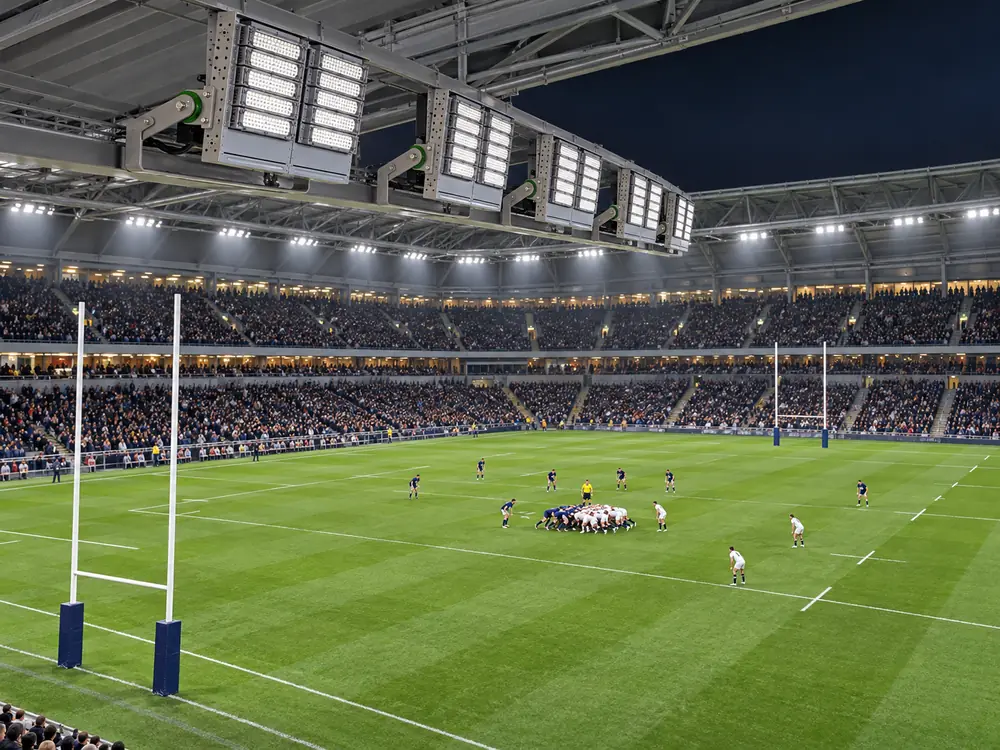
Consider an engineer asked to compare World Rugby lighting standards with NFL lighting requirements. One tender includes a club-level horizontal lux target. The other specifies televised match delivery. Putting the two numbers in one column would suggest a direct comparison, but the briefs may use different planes, maintenance assumptions, and acceptance conditions. The first engineering task is to establish what each document actually covers.
World Rugby’s public pitch-planning page asks clients to identify competition level, operating hours, and training or match use. It does not provide a universal numerical stadium-lighting table. National-union club guidance also has a defined scope. For example, the IRFU floodlighting publication explicitly excludes televised matches and major stadia. Its figures must not be presented as Rugby World Cup broadcast limits.
2.Compare Numbers With Their Scope Attached
The IRFU publication gives 200 lx and a uniformity value of 0.6 for its Class II club context. It includes the in-goal areas in the playing area. The guide contains legacy references, so designers should confirm current applicability with the union. The table below uses that scoped example alongside unit conversions and a maintenance calculation, not an invented NFL threshold.
For NFL lighting requirements, this review does not verify a current public league-wide lux schedule. That does not mean no NFL requirements exist. It means the project needs the approved venue, event, and broadcast criteria. ANSI/IES RP-6-24 is useful for non-professional sports design, but its published scope excludes professional facilities. It cannot be relabelled as an NFL compliance document.
3.Use the Actual Field and Viewing Directions
Rugby and American football both use rectangular fields, but their scoring areas, markings, goal structures, and viewing tasks differ. Engineers should model the actual approved layout and all required safety areas. The football pole-placement guide describes support options, while the DIALux and AGi32 guide introduces the link between geometry, optical files, and aiming schedules.
The calculation report should separate maintained horizontal illuminance from camera-facing vertical illuminance. It should define each uniformity ratio and each measurement plane. A vertical reading aimed at the main camera cannot automatically represent an end-zone camera or a player tracking a kick. Engineers also need the stadium glare review because brighter sources can reduce contrast in critical directions.

4.Agree Broadcast and Operational Acceptance
Broadcast lighting adds camera directions, shutter settings, colour reproduction, and temporal stability to the brief. Engineers should request numerical criteria and test methods from the responsible organiser and production team. The CPS flicker engineering article explains driver behaviour, but a general article cannot provide event approval. The final scene must be tested with the intended recording conditions.
Venue acceptance should also define permitted scene transitions and the response to supply or control faults. Engineers need to know which lighting groups share a circuit and what happens when one group fails. Resilience, restart behaviour, and operational permissions belong in the system brief. Neither a high wattage nor a nominal average lux value proves that these conditions are satisfied.
5.Build a Traceable Compliance Package
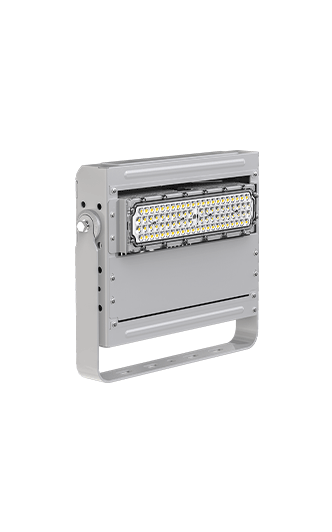
The CPS Dubhe 1000W product page describes configurable optics and mounting options. Procurement should connect the chosen version to verified photometric data and the field model. IP protection and mechanical durability also need project-specific review. A product listing can support equipment selection, but it must not be used as evidence of World Rugby or NFL certification without the relevant approval documents.
CPS reports a ≥550 lx project requirement and four 18 m lifting poles in its Grade III high-pole football case. That record concerns soccer, not either standard system compared here. It demonstrates why project context must travel with every quoted figure. A useful comparison ends with an agreed compliance matrix: applicable document, numeric target, calculation method, site test, responsible approver, and recorded result.