CPS Lighting supplies integrated smart lighting for public routes and outdoor infrastructure. For the Guangming Marathon Mountain–Lake Greenway in Shenzhen, China, CPS worked with the Shenzhen Urban Transport Planning Center to supply nearly 300 integrated smart lights, combining path lighting with equipment for connected greenway services.
The installation brought a consistent pole design to open routes, wooded bends and recreation areas. Modular assembly and internal cable routing supported the integration of lighting and other devices, while a management platform provided remote lighting control and operating information.

Integrated smart lights supplied
Lighting and connected services
Lighting status and timed dimming
1. A greenway serving recreation and local connections
The Mountain–Lake Greenway connects landscape features and links with urban and community greenways, supporting recreation, exercise and local movement. The project account records the start of operation on 24 March 2019, alongside the inaugural Guangming Town international half marathon.
| Project item | Published scope |
|---|---|
| Location | Guangming District, Shenzhen, Guangdong, China |
| Application | Greenway lighting and integrated public-service infrastructure |
| CPS supply | Nearly 300 integrated smart lights |
| Overall project responsibility | Planning, smart-system functional design and engineering implementation by Shenzhen Urban Transport Planning Center |
| CPS role | Cooperation with the centre to supply the integrated smart lights |
The overall engineering, procurement and construction (EPC) project was led by the transport planning centre. This distinction matters when reviewing the case: CPS’s documented supply role sits within the wider greenway engineering programme, with responsibilities coordinated across the project team.


2. Lighting a route through open and wooded settings
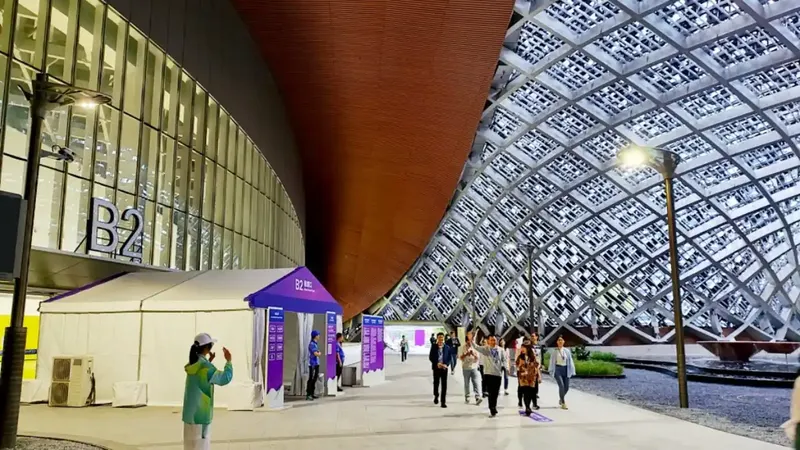
The photographs show straight stretches beside open land, bends enclosed by vegetation, wooden railings and routes used by runners. These conditions call for a layout that follows the path geometry. A uniform pole appearance can bring visual consistency, while the optics and positions still need to suit each section.
For a similar greenway, start with path width, curves, junctions, changes in level and nearby planting. Check how foliage and pole-mounted equipment affect light distribution and maintenance access. Lighting on a bend needs to support the view ahead as well as the surface directly beneath the luminaire.
The night photograph records an illuminated route, but the public account does not publish measured illuminance, uniformity, glare or an energy baseline. A new project should set its lighting criteria and operating scenes before modelling, then verify the installed result with agreed site measurements.


3. Connected services and remote lighting management
The project describes modular poles integrating smart lighting, video surveillance, information displays, public broadcasting, Wi-Fi and environmental monitoring. These are system-level function categories. The published record does not provide a complete device schedule for every pole, so the list should not be treated as an identical package fitted to all nearly 300 lights.
The lighting management platform is described as supporting remote adjustment, real-time lighting status, fault detection and location, and collection of equipment operating data. Scheduled switching and time-based dimming could be set around usage patterns. The source does not identify the communications protocol, dimming interface or exact commissioned schedule.
For new orders, separate the lighting control brief from requirements for cameras, displays, audio and network services. Define each device, its power and data connection, maintenance access and operator responsibility. This gives the supplier and project integrator a practical basis for agreeing the pole configuration.

CPS’s manufacturing resources and laboratory equipment support equipment and documentation reviews for new projects. Request configuration-specific photometry and relevant electrical, environmental and structural documentation; the presence of an integrated system does not establish every component’s certification.
4. Installed integrated smart pole system
This is a project-specific integrated pole system. The original case does not publish a catalogue model code, lamp wattage, pole height or optical specification. The photograph below shows the actual installation and is used with the documented configuration, rather than substituting an unrelated standard street light.

Integrated smart pole — Guangming project configuration
| Parameter | Project configuration or catalogue reference |
|---|---|
| Project supply | Nearly 300 integrated smart lights |
| Construction approach | Modular assembly with internal cable routing |
| Lighting functions described | Remote control, lighting status, fault location, timed switching and dimming |
| Other system functions | Surveillance, information display, broadcasting, Wi-Fi and environmental monitoring |
| Configuration boundary | Device allocation by pole and detailed electrical/optical specifications require project records. |
5. Plan a smart greenway lighting project
Send a site plan or CAD drawing, path widths, gradients and bends, proposed pole positions, mounting constraints and photographs of vegetation. Include the location, operating hours, lighting criteria, available power and data connections, plus the required services at each pole position.
Request a free DIALux simulation to review the proposed path-lighting layout using matching photometric data. Coordinate the lighting model with the device schedule and structural design. Agree control scenes, site verification and maintenance responsibilities before implementation.